Tâm lý học
The Dreamers of Vienna
Vienna, 1900. Freud, and the invention of the inner life.
TL;DR: The Dreamers of Vienna is a MindSnap Psychology collection: how a Viennese neurologist made the inner life a subject. A city of coffee houses and nervous illness, a method built by subtraction, a dream book printed in six hundred copies, a Wednesday circle that became a movement, and a theory that changed the culture while failing as testable science. Eight chapters, two minutes each.
Cập nhật lần cuối: tháng 8 năm 2026
Câu chuyện
Vienna, 1900. Freud, and the invention of the inner life.
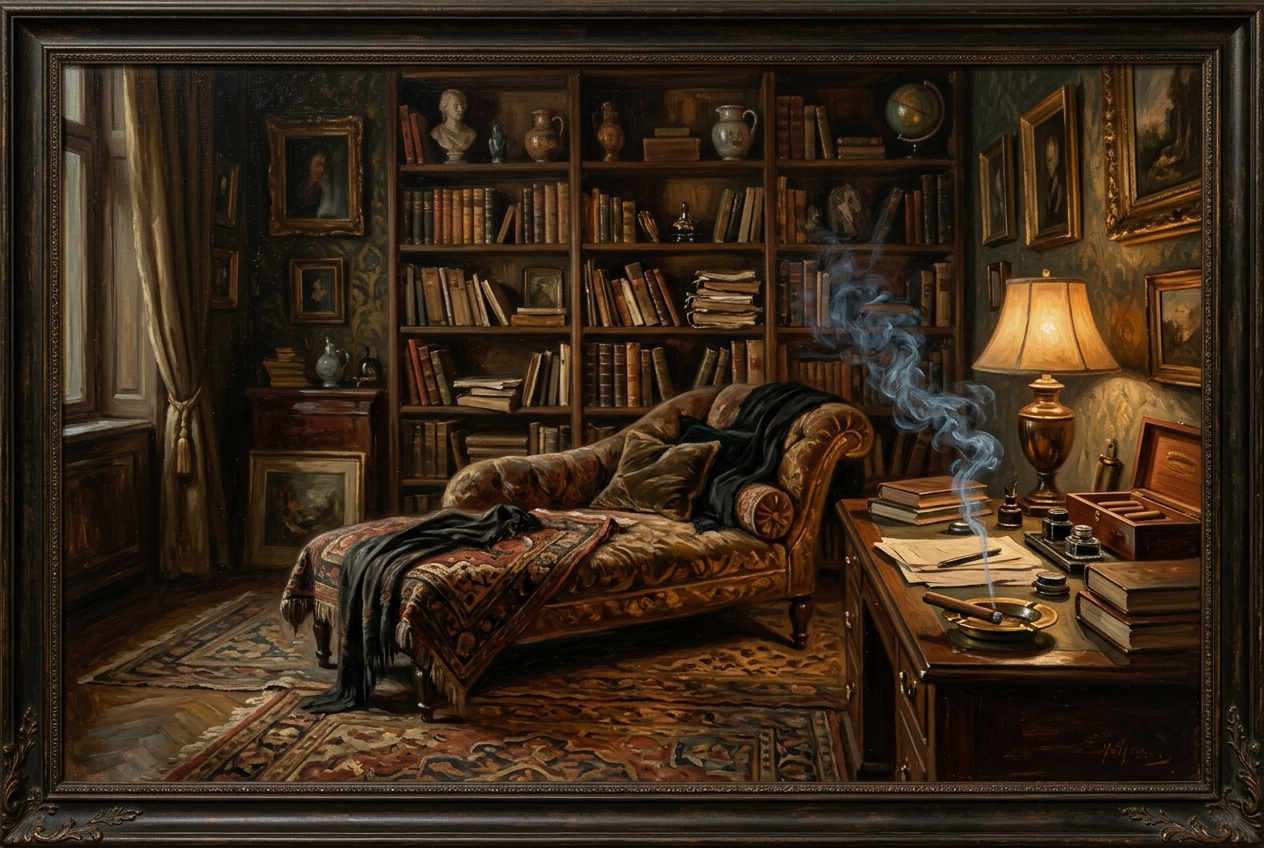
Vienna around 1900 was a capital of two million people, new boulevards and old anxieties, producing Mahler, Klimt, Schnitzler and Wittgenstein while its doctors treated an epidemic of what the age called nerves. Middle-class patients arrived with paralysis, blindness and lost voices that no lesion explained, and mainstream medicine answered with rest cures and electricity.
Sigmund Freud, trained in Ernst Brücke's physiology laboratory and marked by Charcot's demonstrations in Paris, tried the opposite: treat the symptom as a message. He borrowed the talking cure from Josef Breuer's case of Anna O, dropped hypnosis, dropped his hand on the patient's forehead, and arrived at free association. The Interpretation of Dreams followed in 1899, six hundred copies that took years to sell.
From 1902 four doctors met in his waiting room on Wednesday evenings. Within a decade psychoanalysis had journals, societies from Berlin to New York, and a habit of expelling its strongest critics: Adler in 1911, then Jung, whose collective unconscious and general theory of libido were treated as defection rather than hypothesis.
This collection tells that story and then asks the harder question. Popper, Grünbaum, Eysenck and modern memory research dismantled much of the theory: wish-fulfilment dreams, universal Oedipal stages, recoverable repressed memories. What survived is real too: talking therapy, transference, defences, and the plain fact that most of the mind runs where introspection cannot follow. It ends with the old man's last year in Hampstead, and with the vocabulary he left in everybody's mouth.
Các chương
Tám snap. Mỗi chương hai phút.
A boulevard built over demolished walls, coffee houses used as offices, and a fashionable diagnosis called neurasthenia. Why Vienna made psychoanalysis thinkable.
Vì sao câu chuyện này đáng kể trên bàn ăn tối
“The Interpretation of Dreams was printed in six hundred copies and took years to sell out.”
The book that reshaped how the West talks about the mind was close to ignored on publication in November 1899, with few reviews and several dismissive ones.
“Freud's escape from Vienna in 1938 was partly paid for by a French princess.”
Marie Bonaparte, a psychoanalyst herself, covered much of the Reich flight tax that the Nazi authorities demanded before the eighty-two-year-old was allowed to leave.
Tiếp tục khám phá
Những câu chuyện khác trong bộ sưu tập
Thích việc tự mình quyết định chứ?
MindSnap mang đến một ngả rẽ lịch sử 2 phút như thế này mỗi ngày, cùng một bài học, một câu đố nhỏ và một sự thật thú vị mỗi ngày.
Sự thật miễn phí mỗi ngày · giá hiển thị rõ ràng ngay từ đầu · hủy chỉ với một chạm