Why Port Cities Rule the World: Harbors, Trade, and Power Explained

Learning Science Writer
Last updated: August 2026
9 min read
TL;DR
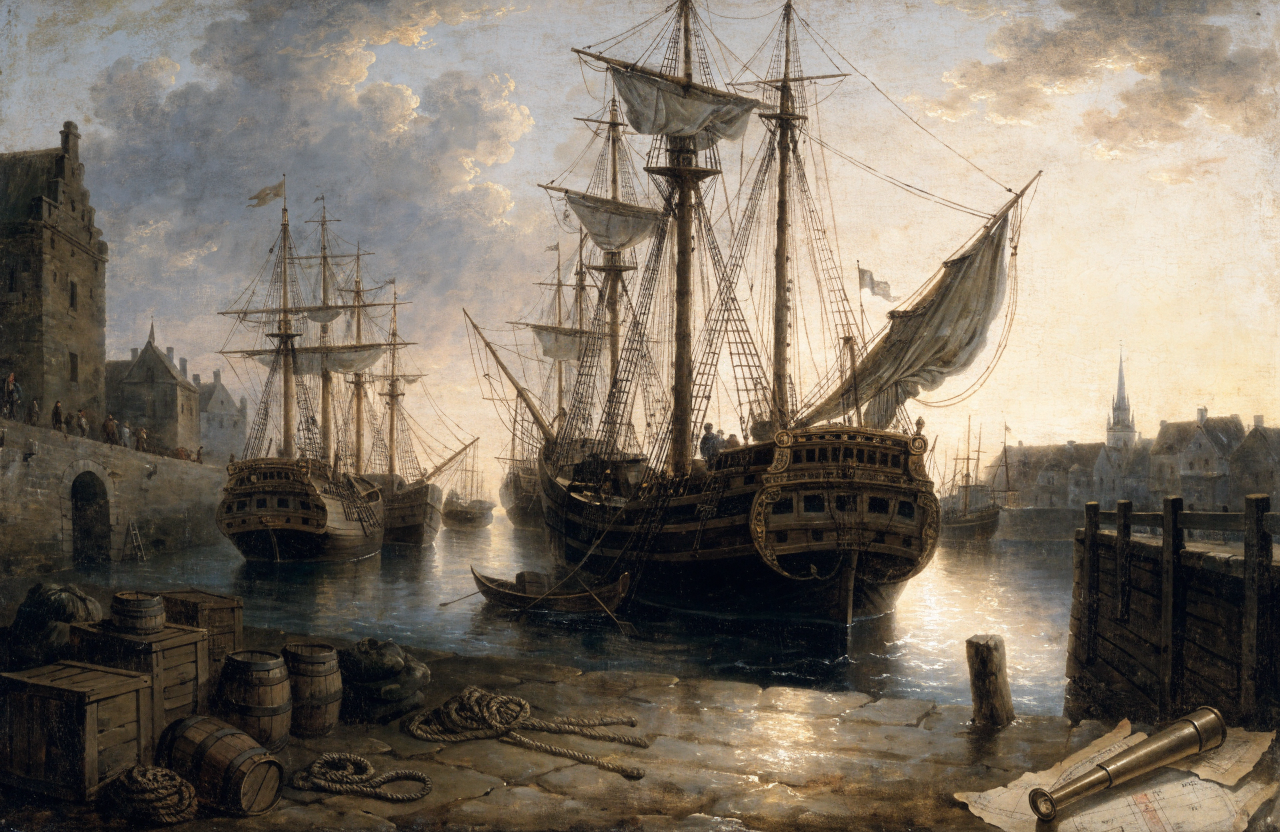
Water moves heavy things cheaply, so wherever ocean shipping meets land transport a city tends to grow rich. A great port needs three things at once: physical geography, deep sheltered water and a safe approach, a hinterland it can reach by river, rail or road, and institutions that make the cargo predictable. Venice, Amsterdam, Rotterdam and Singapore each combined all three in their period. Containerisation from the 1950s changed the winners by shifting the advantage to deep water and open land, which stranded old city-centre docks and created new giants. Around 80 to 90 percent of world trade by volume still moves by sea, which is why harbours remain the quiet foundation of the global economy.
Look at a list of the wealthiest cities in almost any century and an oddity appears: an implausible number of them sit where a river meets the sea. This is not coincidence, and it is not really about ships. It is about the cost of moving mass.
This is a structural explainer. No commentary on current disputes, no predictions. Just why harbours concentrate wealth, and what changes when the technology of shipping changes.
The physics underneath the economics
Moving a tonne of cargo over water has always been far cheaper than moving it the same distance over land, because water carries the weight for you. A pack animal must carry its load and its own food. A hull floats, and adding capacity costs little beyond a bigger hull.
In the pre-industrial world the difference was extreme. Grain could travel across a sea profitably while being uneconomic to cart a couple of hundred kilometres inland. That single ratio explains a great deal of settlement history. It is also why rivers shaped states so decisively, a subject we take up in rivers and empires.
Railways and then trucks narrowed the gap, but never closed it. Bulk goods, ore, grain, oil, cement, containers of manufactured goods, still overwhelmingly go by sea. Estimates commonly put around 80 to 90 percent of world trade by volume on ships, and the figure has been stubbornly stable for decades.
A port is where the cheap mode ends and the expensive one begins. That transfer point is where value accumulates: warehousing, finance, insurance, brokerage, shipbuilding, law. The city gets rich handling other people's goods.
What makes a harbour good
Deep, sheltered water
Depth is the constraint most people miss. A modern container ship can draw sixteen metres or more, so a port either has that depth naturally, dredges continuously, or loses the largest ships to a rival. Shelter matters as much: a bay, a fjord, an estuary or a spit that breaks the swell means cargo can be worked in bad weather, which is the difference between an occasional anchorage and a functioning port.
A safe approach
The water outside matters too. Sandbars, tidal ranges, ice and narrow channels all impose cost, whether through pilots, tugs, waiting for tides or seasonal closure. Historically, tricky approaches were a defensive asset and a commercial liability at once.
A hinterland
A harbour with nothing behind it is a stopover, not a hub. The great ports serve a productive interior they can reach cheaply, historically by navigable river, later by canal, rail and motorway. This is the deciding variable more often than the quay itself, and it is why landlocked economies pay a structural penalty, as covered in landlocked countries and trade.
Institutions
Geography sets the ceiling, institutions decide whether you reach it. A merchant choosing between two harbours wants predictability: honest customs, enforceable contracts, functioning insurance, courts that will hear a cargo dispute, and clearance measured in hours. Ports with worse water and better paperwork routinely beat ports with better water and worse paperwork.
Four ports and what each demonstrates
Venice: institutions substituting for land
Venice had a lagoon, mudflats, no farmland and no timber. It became one of medieval Europe's richest cities by building the things geography did not provide: the Arsenal, a shipyard capable of serial production centuries before industrialisation, commercial law, marine insurance, state-organised convoys and a merchant class fused with government. Its position at the head of the Adriatic put it where eastern goods entered Europe, and it defended that position ruthlessly.
Amsterdam: the port as financial machine
Seventeenth-century Amsterdam had a mediocre harbour and a shallow approach that required transferring cargo to lighters. It dominated anyway, because it turned shipping into a financial system: a bourse with real secondary-market liquidity, an exchange bank whose balances traded above coin, warehousing that let the city hold Europe's inventory, and a fleet built to carry bulk cheaply. Amsterdam profited less from being on the route and more from being the place where the route was priced. That same market produced the speculative episode in tulip mania explained and MindSnap's collection Tulip Fever. Disclosure: MindSnap is our app.
Rotterdam: the hinterland argument
Rotterdam's advantage is what lies behind it. It sits at the Rhine delta with barge access deep into industrial Germany and Switzerland, and it invested heavily in deep-water capacity built out towards the sea rather than trapped in the old city. Its container terminals serve a hinterland that no rival on that coast can match at the same cost.
Singapore: geography plus administration
Singapore has deep sheltered water beside one of the world's busiest straits, which is the geographic gift. The rest was built: transhipment infrastructure, efficient customs, bunkering, ship repair, legal and financial services, and clearance times that make it cheaper to move a box through Singapore than around it. It is the clearest modern demonstration that position without administration is not enough. The wider logic of the straits themselves is in maritime chokepoints explained.
Containerisation, the great reshuffle
Before the 1950s, general cargo was loaded piece by piece by large gangs of dockworkers. Loading and unloading could take as long as the voyage and represented a large share of total cost. Ports were therefore labour cities, and their docks sat in the middle of town where the workers lived.
The standardised steel container changed the arithmetic. Cargo could be sealed at a factory and moved by crane between ship, train and truck without being handled. Costs fell steeply, ships grew, and the advantage shifted decisively to whichever ports had deep water, large flat land for stacking boxes, and good rail and road links.
The consequences were brutal and geographic. Old central docks in cities like London and New York were unusable for containers and became derelict, then residential. Nearby sites with room and depth became giants. Long-distance shipping got so cheap that manufacturing could be spread across continents, which is the precondition for modern supply chains and for the specialisation described in what the Silk Road tells us about modern trade.
Why harbours still decide things
It is tempting to assume that digital trade has made all of this quaint. It has not. Data moves instantly, but the fertiliser, ore, grain, fuel and finished goods behind ordinary life still arrive on a ship, and they still have to be lifted from that ship onto land somewhere.
So the enduring lesson is unglamorous. Wealth concentrates where transport modes change, that point is fixed largely by geology and hydrography, and whether a city exploits it depends on institutions that can be built and can be squandered. Venice's lagoon, Amsterdam's shallow approach and Singapore's strait were all givens. What each did with them was not.
Geography decides where a port can exist. Institutions decide whether anyone chooses to use it.
Frequently asked questions

One snap tomorrow morning.
Two minutes in art, history, psychology, philosophy or economics, then the app tells you you're done.
Get MindSnap on iOSFree daily fact, forever. Pro is $9.99/month or $44.99/year.