The Milgram Experiment Explained: What the Obedience Study Really Showed

Arts & History Editor
Last updated: August 2026
8 min read
TL;DR
Between 1961 and 1963 Stanley Milgram ran a series of experiments at Yale in which ordinary volunteers were told to deliver what they believed were escalating electric shocks to a stranger. In the best known baseline condition, roughly 65 percent went to the maximum voltage. The number became one of the most quoted findings in psychology, and also one of the most misused. Milgram did not run one study, he ran many variations, and compliance swung from near total to almost none depending on the situation. The work drew serious ethical criticism at the time, and archival re-examinations have complicated the picture further. The honest lesson is not that everyone would do it. It is that the situation matters far more than we like to think.
In the summer of 1961, newspaper adverts in New Haven offered four dollars plus carfare for an hour of participation in a study of memory and learning at Yale University. Hundreds of men answered. What they walked into was not a memory study at all, and most of them left having learned something about themselves they had not asked to know.
The Milgram obedience experiments are probably the most cited psychology studies of the twentieth century, and among the most badly summarised. The famous number gets repeated, the caveats vanish, and what remains is a slogan. This is the version with the caveats put back in.
The setup
Each session had three roles. The volunteer was assigned the role of teacher. A second man, introduced as a fellow volunteer, played the learner. A calm figure in a grey technician's coat acted as the experimenter. Only the teacher was a genuine participant. The learner and the experimenter were working for Milgram.
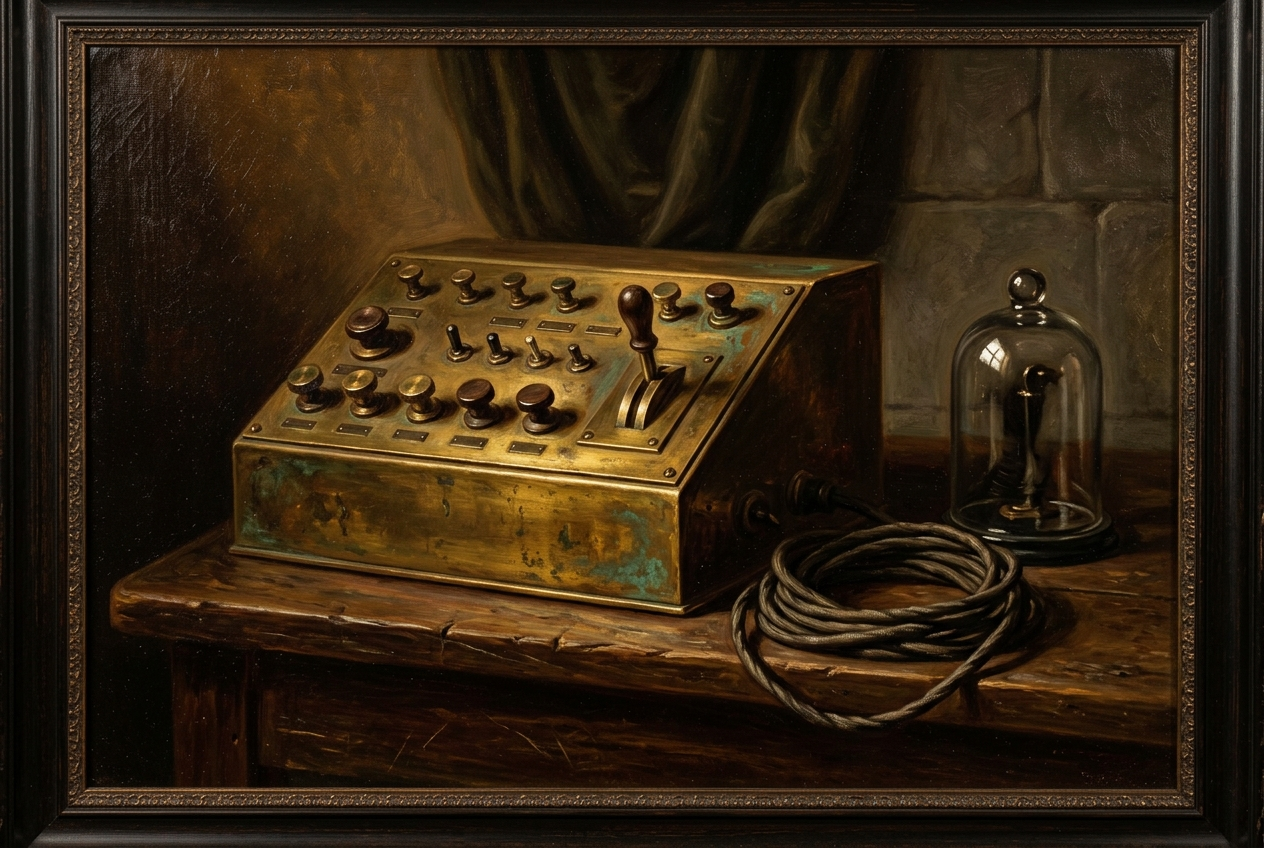
The teacher watched the learner being strapped into a chair in an adjoining room, then sat at an imposing device called a shock generator: a row of switches labelled from 15 volts up to 450, with descriptions running from slight shock through very strong to danger, severe shock, and finally two switches marked only with XXX.
The task was a word pairing test. Every wrong answer meant the teacher pressed the next switch up. As the voltage climbed, the learner's responses escalated on a script: complaints, then shouts, then demands to be released, a claim of a heart condition, and eventually silence. When the teacher hesitated, the experimenter used a fixed sequence of prods, ending with the flat statement that the experiment required them to continue.
No shocks were ever delivered. The generator was a prop. That is the part people often forget when they picture the study.
The number everyone quotes
In the condition that became famous, about 65 percent of participants continued all the way to the maximum switch. Nobody stopped before 300 volts. Before running it, Milgram had asked psychiatrists, students and colleagues to predict the outcome. Their estimates were dramatically lower, generally a tiny fraction going to the end.
That gap between prediction and result is arguably the real finding. Not that people are cruel, but that we are systematically bad at forecasting our own behaviour once we are inside a structure that tells us what to do next.
It is worth being precise about what compliance looked like. Obedient participants were not enthusiastic. Milgram's own notes and the recordings describe sweating, trembling, nervous laughter, repeated appeals to the experimenter to check on the learner. They kept going while visibly falling apart. Whatever the study captured, it was not casual indifference.
The variations that break the slogan
Milgram ran around two dozen variations, and this is where the popular summary collapses. Compliance was not a fixed property of human nature. It moved, sometimes enormously, when the situation changed.
- Move the learner into the same room, so the teacher could see him, and obedience dropped substantially.
- Require the teacher to physically press the learner's hand onto a shock plate, and it dropped further.
- Move the experiment out of Yale into a modest commercial office, stripping away institutional authority, and it fell again.
- Have the experimenter give instructions by telephone rather than in person, and full compliance collapsed, with some participants quietly skipping switches while claiming they had pressed them.
- Add two other apparent volunteers who refused to continue, and defiance became the overwhelming norm.
That last one deserves more attention than it usually gets. The single most powerful factor in producing refusal was seeing another ordinary person refuse first. If you want one practical takeaway from the whole programme, it is that.
The ethical storm
Criticism arrived quickly. The psychologist Diana Baumrind published a pointed response arguing that the study exposed participants to severe distress, that the deception was serious, and that the debriefing could not undo what people had learned about themselves. Milgram replied that participants were debriefed, reunited with the unharmed learner, and followed up afterwards, and that most reported being glad to have taken part.
Both positions have force, and the argument is not settled. What is settled is the consequence: this work is part of why institutional review boards and informed consent standards look the way they do now. A study of this design would not be approved today, which is precisely why it keeps being discussed rather than replicated.
What the archive added
From the 1990s onward, researchers worked through Milgram's papers and audio recordings at Yale. The psychologist Gina Perry's book on the subject documents a messier reality than the published accounts implied: experimenters improvising well beyond the four scripted prods, some participants apparently doubting the shocks were real, debriefing that was less thorough and less immediate than described, and results reported in ways that flattered the cleanest condition.
How much this undermines the core finding is genuinely contested. Critics say the headline number is not the clean measurement it was presented as. Defenders point out that partial replications and closely related paradigms have repeatedly found substantial obedience, and that the variation data still shows situational pressure doing real work. The careful position is that the phenomenon is real and the specific figures deserve less reverence than they get.
This is the same skepticism we apply elsewhere on this blog. Vivid stories survive because they are vivid, not because they are well sourced, which is a theme in philosophy facts that sound made up.
The myth worth dropping
The slogan version of Milgram is that the study proved anyone would have done it. That is not what the data says. Across conditions, obedience ranged from nearly everyone to almost nobody, and even in the baseline a substantial minority refused outright and walked out. The finding is about how much design choices in a situation, proximity, authority, institutional setting, visible allies, shift behaviour. Human nature is not the variable being measured. The room is.
Milgram framed his work against the trials of Nazi officials, and the connection is what made the studies famous. Historians have pushed back on the analogy, since a one hour laboratory session with a scientist in a coat is not a state apparatus operating over years. The link is suggestive, not evidentiary, and treating a lab result as an explanation of genocide flattens both.
Why we keep telling this story
Disclosure, since we are about to mention our own product: MindSnap is our app, so treat this as an interested opinion. We built a collection called The Obedience Files around exactly this material, because it is the rare psychology story that improves when you slow it down: the setup, the number, the variations, the criticism, the archive. It sits alongside our other flagship story-driven collections, and you can also request unlimited topics of your own.
If you would rather be in the chair than read about it, the interactive Turning Points scenario for New Haven 1961 puts you in the teacher's seat and then shows you what the real participants did at that switch. For the broader machinery of why narrative sticks better than summary, see why your brain loves stories, and for more moments where a small decision carried enormous weight, history's greatest what-ifs.
The most reliable way to make someone refuse an unreasonable order was to let them watch one other ordinary person refuse it first.
Frequently asked questions

One snap tomorrow morning.
Two minutes in art, history, psychology, philosophy or economics, then the app tells you you're done.
Get MindSnap on iOSFree daily fact, forever. Pro is $9.99/month or $44.99/year.