Hagia Sophia: The Building That Served Three Empires
Arts & History Editor
Last updated: August 2026
7 min read
TL;DR
Hagia Sophia was completed in 537 for the emperor Justinian in under six years, an astonishing pace for a building whose central dome was the largest of its kind in the world. The dome partially collapsed after earthquakes and was rebuilt higher and stronger, and buttresses were added over later centuries to hold the structure together. Its famous effect comes from a ring of windows at the dome's base, which makes the ceiling appear to hover on light. It stood at the centre of Byzantine imperial ceremony, was stripped in the sack of 1204, became a mosque after 1453 with minarets and calligraphy added, and set the template that Ottoman architects including Sinan spent a century answering.
In the year 532 a riot burned down the great church at the heart of Constantinople. Within weeks the emperor Justinian had ordered a replacement, and not a repair. He wanted a building unlike any that existed. Five years and ten months later, in December 537, it was consecrated, and it remained the largest enclosed space in the Christian world for the better part of a thousand years.
The speed is the part that still makes engineers uneasy. Medieval cathedrals in western Europe often took a century or more. Hagia Sophia went up in under six years, with thousands of workers, marble shipped from quarries across the eastern Mediterranean, and two designers, Anthemius of Tralles and Isidore of Miletus, who were mathematicians as much as builders.
The problem the dome had to solve
Domes were not new. The Romans had built the Pantheon four centuries earlier, a masterpiece that sits on a continuous circular wall. The difficulty Justinian's designers took on was different and much harder: putting an enormous round dome on top of a square hall, so the space beneath could be open rather than ringed by solid masonry.
Their solution used pendentives, curved triangular sections of masonry that gather the circular weight of the dome down onto four massive piers at the corners of the square. Half domes to the east and west extend the space and take some of the thrust outward, and arcades of columns open the sides. The result is a room of roughly 31 metres across at the dome, with almost nothing in the middle of it.
It was ambitious to the point of recklessness, and the building has told us so repeatedly. Arches deformed during construction. Earthquakes in 553 and 557 damaged the structure, and in 558 the eastern portion of the original dome came down. The replacement, designed by the nephew of one of the original architects, was built steeper and therefore more stable, and that is essentially the dome standing today. Further collapses in the tenth and fourteenth centuries required more repairs, and successive generations added heavy external buttresses that thicken the outside silhouette. Hagia Sophia is not a single moment of genius. It is a fifteen hundred year conversation between a daring idea and gravity.
Light where the stone should be
The reason visitors have been describing the interior in the same stunned language since the sixth century is a trick of engineering that produces an effect close to illusion.
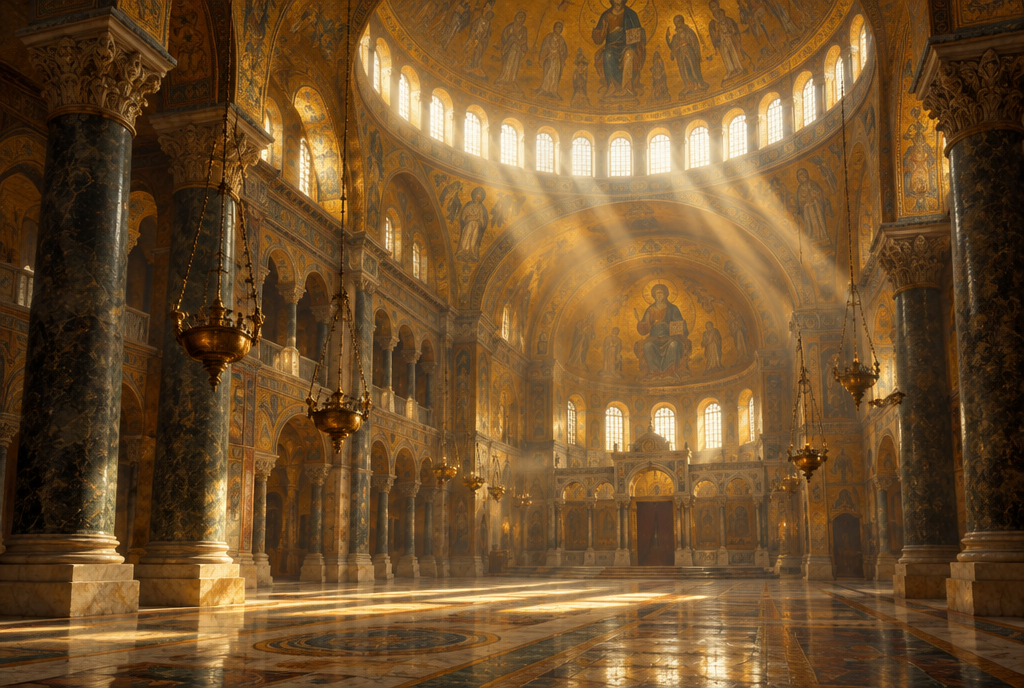
At the base of the dome, exactly where you would expect the thickest, most reassuring masonry, there is a ring of forty windows. Daylight pours in at the join, so the dome above appears to be separated from the building below by a band of brightness. Procopius, writing while Justinian was still on the throne, said the dome seemed not to rest on solid masonry but to be suspended by a golden chain from heaven. That was not poetic licence. It is a fair description of what the eye reports.
Add the original interior: acres of gold mosaic, porphyry and green marble columns, and polished stone surfaces that scatter light in every direction. The building was designed so that the material would seem to dissolve. Later mosaics, added over centuries, gave it some of the most refined figural work in the Byzantine tradition.
The stage of an empire
Hagia Sophia was not only a church. It was the ceremonial centre of the Byzantine state, and Byzantine government was conducted substantially through ceremony.
Emperors were crowned there. Processions moved between the palace and the church along fixed routes on fixed days. Ambassadors were brought in to be impressed, and the record suggests they generally were. When a delegation from Kyiv visited in the tenth century, the account of their journey describes worship in this building as the moment that decided them, which tells you what the space was designed to accomplish. For a wider view of the state that built and ran it, see what was the Byzantine Empire.
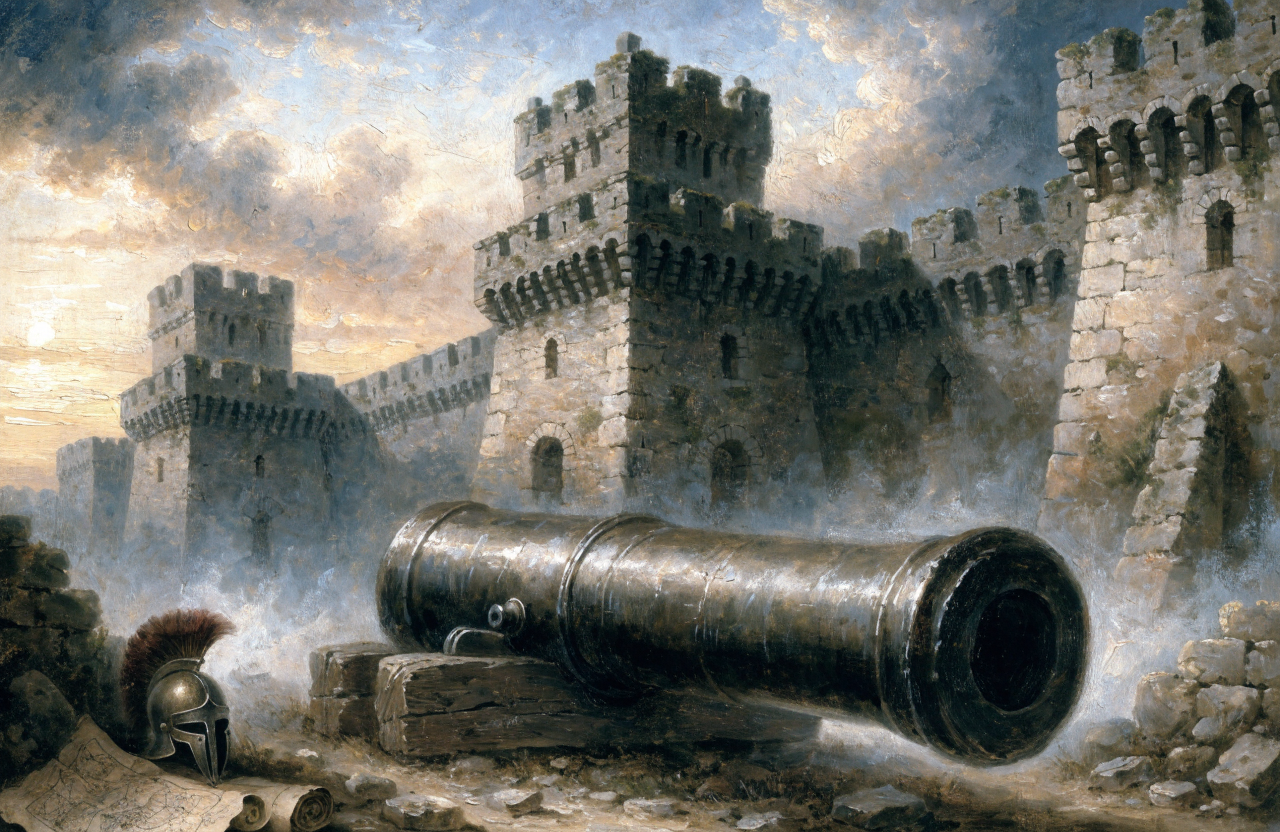
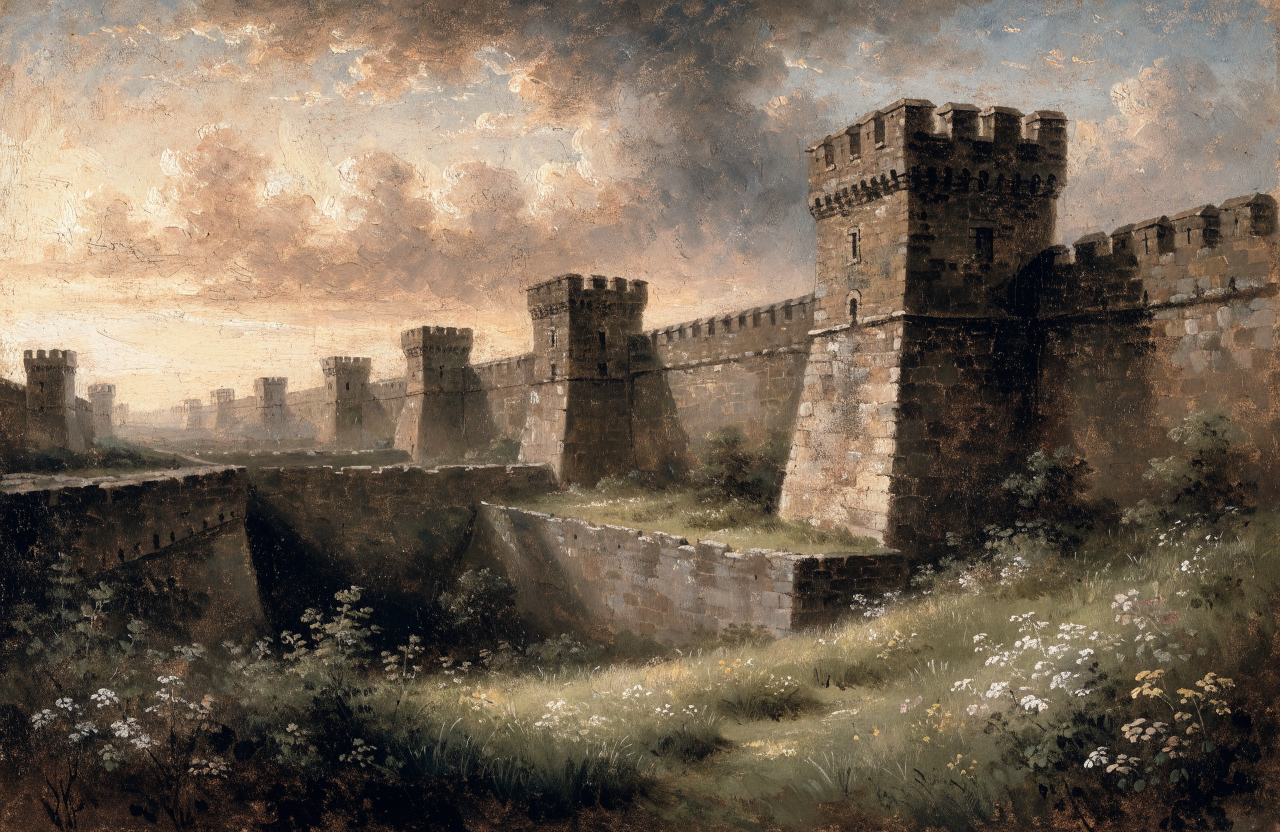
It survived the empire's crises largely because the city did. The layered fortifications that kept attackers out for centuries are described in the Theodosian Walls explained, and the building's fate was always tied to whether those walls held.
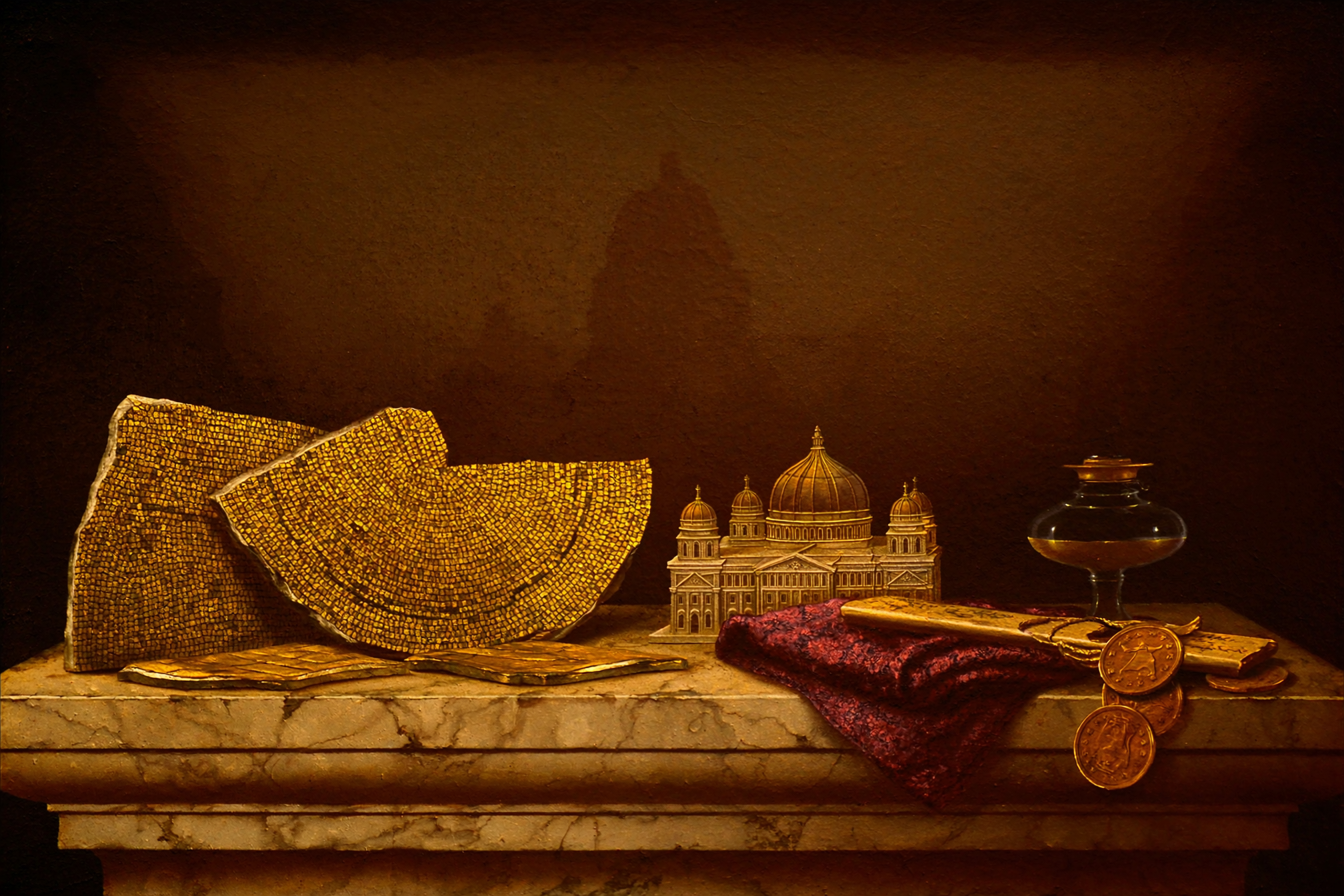
Once, they did not. In 1204 the armies of the Fourth Crusade took Constantinople and sacked it, and Hagia Sophia was stripped of silver, relics and furnishings. Much of the loot travelled west and some of it is still visible in European treasuries. The Byzantines recovered the city in 1261, but they never recovered the wealth, and a poorer empire could no longer maintain the building at its old standard.
1453 and a new life
When Constantinople fell to Mehmed II in 1453, the building was converted into a mosque. That story sits at the centre of our collection The Day the Middle Ages Ended, and the siege itself is covered in the fall of Constantinople in 1453.
The changes made over the following centuries are now inseparable from the building. Four slender minarets were added at different periods, the last of them by the great architect Sinan. A mihrab and minbar were installed and the orientation of worship adjusted. Enormous calligraphic roundels were hung in the nave, and in the nineteenth century Swiss architects carried out a major restoration that both stabilised the structure and documented what was there. Some mosaics were plastered over, which unintentionally preserved them, and later restorers uncovered several.
The structural work mattered as much as the decoration. Ottoman engineers, Sinan above all, took the maintenance of the building seriously, adding supports and repairing the shell after earthquakes. The dome that survives today survives partly because of that care.
The building everyone had to answer
Hagia Sophia's deepest influence is architectural. For Ottoman architects it became the benchmark: a vast domed hall with a unified interior volume, the problem every major imperial mosque was measured against.
Sinan spent a career working through the puzzle, arriving at designs where the load paths are clearer and the geometry more resolved than in the sixth century original. He is said to have regarded surpassing that dome as the test of his craft. Meanwhile the eastern Christian world carried the domed church east and north, and Byzantine models shaped religious architecture across a very wide region.
What survives, then, is not a monument frozen at a date. It is a structure that was rebuilt after collapses, propped up by later centuries, adapted to new use, stripped once and restored several times. That layering is the point. Buildings that last are buildings that were altered. If you enjoy history at the scale of a single decision, the scenarios in Turning Points are built out of moments exactly like the one in 532 when an emperor looked at a burnt ruin and chose to attempt something no one had built.
Frequently asked questions
One snap tomorrow morning.
Two minutes in art, history, psychology, philosophy or economics, then the app tells you you're done.
Get MindSnap on iOSFree daily fact, forever. Pro is $9.99/month or $44.99/year.