Who Were the Janissaries? Inside the Ottoman Empire's Elite Corps

Arts & History Editor
Last updated: August 2026
8 min read
TL;DR
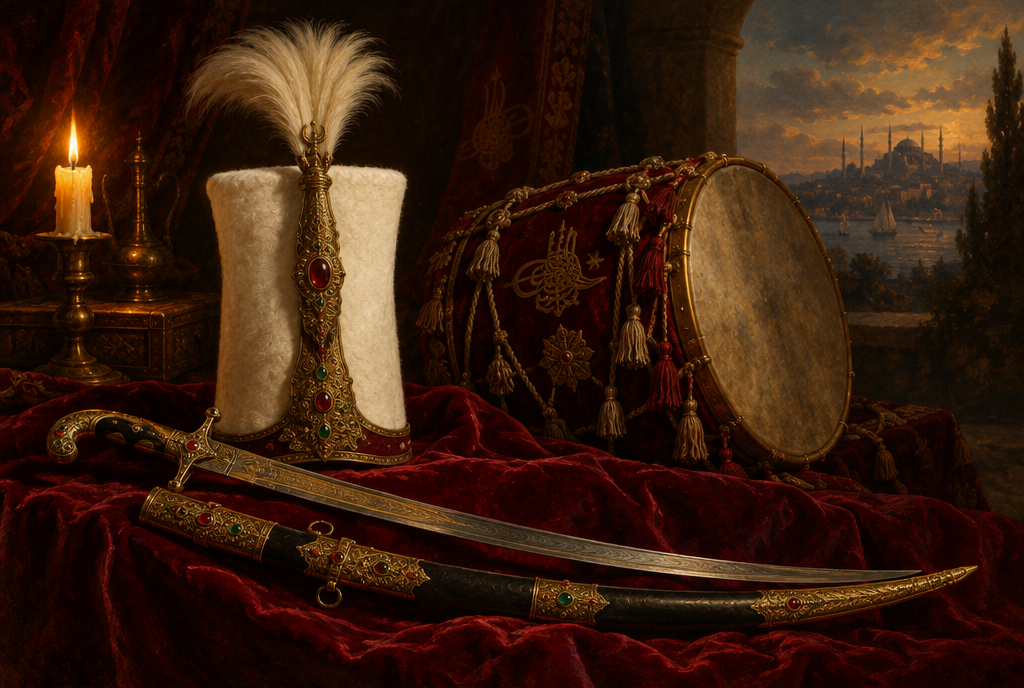
The janissaries were the Ottoman sultan's household infantry, recruited from the fourteenth century onward largely through the devshirme, a periodic levy of Christian boys from the empire's Balkan provinces. They were converted to Islam, educated, drilled, paid a salary and forbidden for long periods from marrying or holding outside trades, which made them dependent on the sultan alone and produced a standing professional army at a time when western European rulers still relied on feudal levies. They were central to the 1453 siege of Constantinople and were early and enthusiastic adopters of firearms. Over the following centuries they became a political force in their own right, capable of toppling grand viziers and sultans, and their privileges hardened into hereditary interest. In 1826 Mahmud II destroyed the corps in an event known as the Auspicious Incident.
For roughly four centuries, the most feared infantry in Europe and western Asia was composed of men who had been taken from their families as children, converted to a new religion, and raised to belong to nobody but a sultan. This was not a scandal that someone got away with. It was policy, it was administered carefully, and it worked well enough that families in some provinces eventually competed to have their sons taken.
That paradox is the reason the janissaries are worth understanding. They are the clearest example in premodern history of a state deliberately manufacturing loyalty rather than inheriting it.
Where they came from
The corps began in the fourteenth century, in the period when the Ottoman state was expanding out of north-western Anatolia and into the Balkans. Its name comes from the Turkish yeni cheri, meaning new soldiers.
Early Ottoman armies were built like most armies of their era: cavalry supplied by landholders who owed service in exchange for the right to collect revenue from a district. That system produces good horsemen and terrible reliability. A landholding cavalryman has a home, a family and interests, and he will go home when the harvest needs bringing in or when the campaign stops looking profitable.
The sultans wanted troops who could not go home. The solution became the devshirme, a levy conducted at intervals in Christian villages of the Balkans and later elsewhere. Officials selected boys, generally in their early teens, taking a small proportion from a given district and typically avoiding only sons. Muslim families were not subject to the levy, and neither were the sons of townsmen in certain categories. The boys were taken to Istanbul, converted to Islam, and assessed.
What happened next is the part that surprises people. The most promising were educated in the palace schools for administrative careers, and some of the empire's greatest grand viziers and architects came into imperial service exactly this way. The rest were trained as soldiers and enrolled in the janissary corps. By the sixteenth century a levied Balkan boy could realistically end up commanding armies or running the treasury, which is why over time some families came to see the levy as an opportunity rather than only a loss.
None of that makes the practice gentle. Children were removed from their parents by state order and their religion and language were replaced. Both things are true at once, and historians of the period generally hold them together rather than choosing one.
Why a slave army was loyal
In Ottoman legal terms the janissaries were the sultan's slaves, kapikulu, servants of the gate. The word imports the wrong picture for most modern readers. These were salaried, uniformed, privileged men, closer to a household guard with career prospects than to plantation labour.
The design of their lives explains the loyalty. They were paid regularly in cash from the treasury, at a time when most soldiers in Europe were paid in land, plunder or promises. For long stretches they were forbidden to marry, to grow beards in the manner of full civilians, or to carry on trades outside the corps. They lived in barracks, ate from a common kitchen, and were organised in units whose cooking pot was a genuine emblem of identity.
Cut off from family networks and dependent on the sultan for pay, promotion and status, they had every reason to serve the centre. The result was something western Europe would not reliably possess for another two hundred years: a standing, drilled, professional infantry that could be marched anywhere in any season, and that practised as a body rather than assembling as a crowd.
1453 and the siege that made their reputation
The janissaries were present at every major Ottoman campaign of the classical period, but the one that fixed their reputation was the siege of Constantinople in 1453.
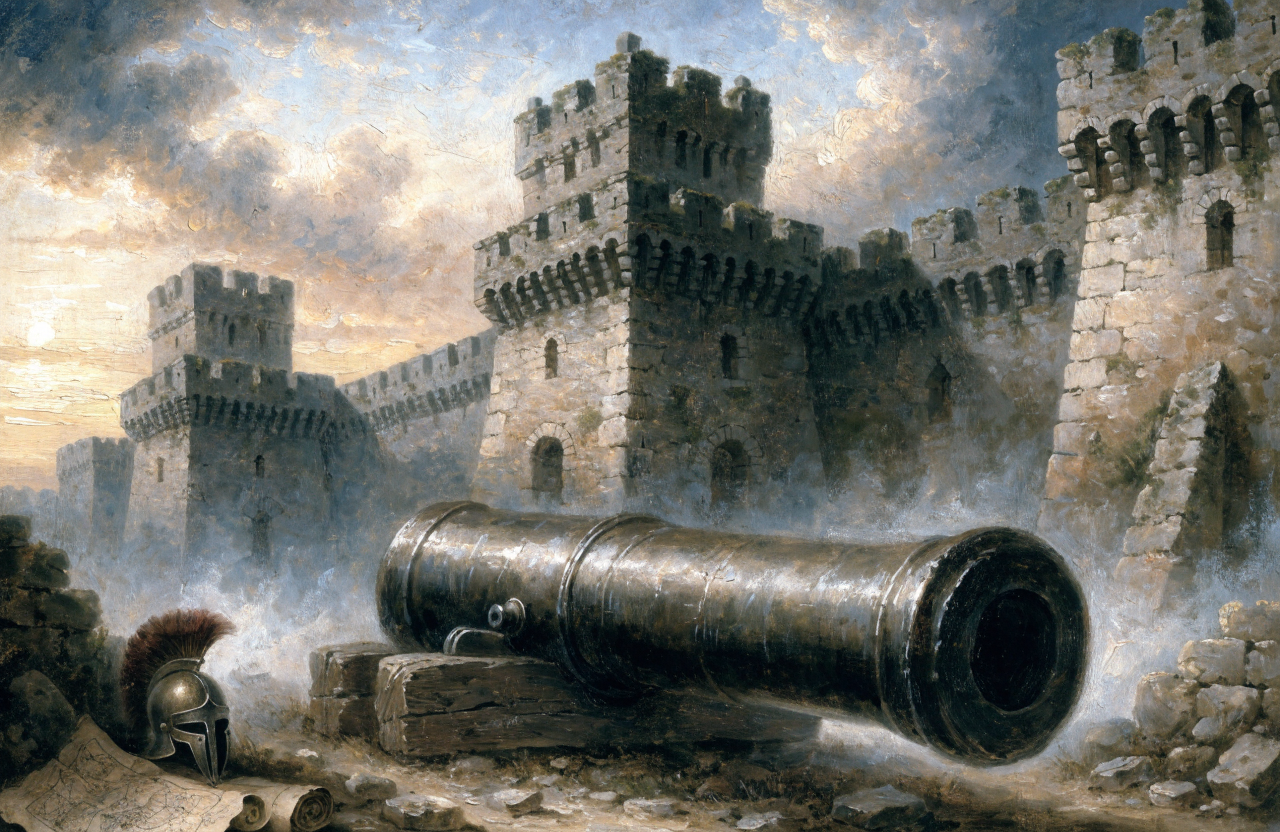
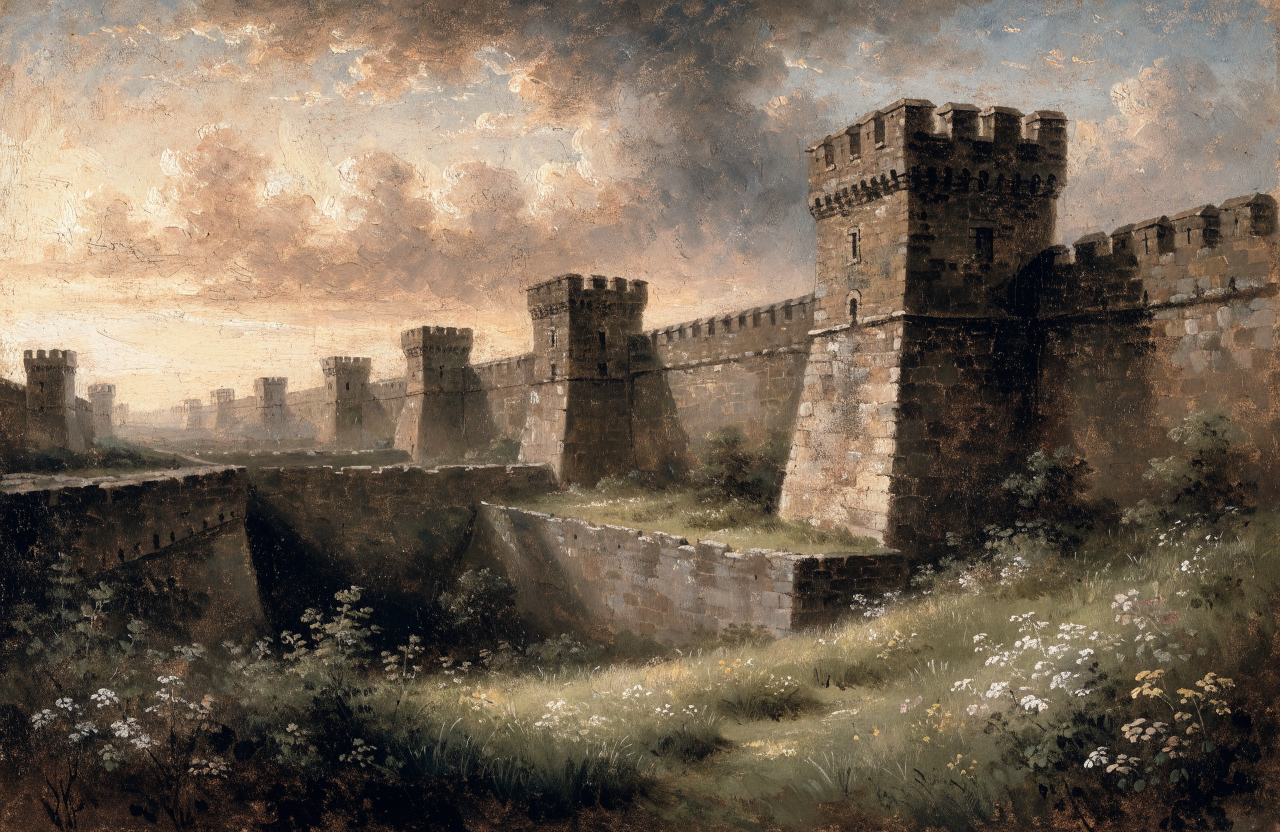
Mehmed II's army faced the strongest fortifications in the medieval world, described in the Theodosian Walls explained. Enormous cannon battered the land walls for weeks. Assaults were beaten back. In the final attack, waves of irregular troops and provincial soldiers went in first, and the janissaries were sent last, against a defence that had been fighting for hours. It was their advance at the weakened section of the walls that carried the position.
We cover the siege day by day in the fall of Constantinople in 1453, and the wider consequences run through our collection The Day the Middle Ages Ended. The state that lost the city that morning is the subject of what was the Byzantine Empire.
Early adopters of gunpowder
One reason the corps stayed dominant for so long is that it took firearms seriously earlier than most of its rivals.
Early handguns were awkward, slow to load and unreliable in wet weather, and armies built around noble cavalry often disliked them for reasons of both practicality and prestige. A salaried infantry corps with no aristocratic self-image had no such hesitation. Janissaries were using matchlock weapons in significant numbers through the later fifteenth and sixteenth centuries, combining massed fire from behind field fortifications with artillery in the centre and cavalry on the wings. Contemporary European observers wrote about the discipline of Ottoman infantry fire with a mixture of admiration and alarm.
This is a useful correction to a common assumption that gunpowder was a western European story. Some of the most effective early integration of firearms into battlefield tactics happened in the Ottoman army.
From army to political interest
An institution built to be loyal to the palace eventually discovered that it had leverage over the palace, and the second half of the janissary story is about what that leverage did.
Several changes drove the shift. Recruitment loosened, and over time Muslim-born sons of janissaries entered the corps, so the deliberate rootlessness that had produced dependence gave way to hereditary interest. The bans on marriage and outside trade eroded, and many janissaries became shopkeepers and artisans in Istanbul who also drew military pay. Their numbers grew far beyond what campaigning required, and pay tickets became property that could be bought, sold and inherited.
The corps thus became a large, armed, urban constituency with strong financial reasons to resist reform. Overturning the great cooking cauldrons in the barracks was the recognised signal of revolt, and revolts brought results. Grand viziers were handed over for execution. Sultans were deposed, and in 1622 Osman II was killed after attempting to build a rival force. Any ruler who proposed a modern, differently trained army was proposing to abolish the livelihoods of thousands of armed men in his own capital, and several found out what that cost.
1826: the Auspicious Incident
By the early nineteenth century the military gap between the Ottoman army and its European rivals had become impossible to argue about, and reform had become impossible to postpone. Selim III had tried, and was deposed and later killed. His successor Mahmud II watched that happen and drew conclusions.
Mahmud spent years building support carefully: cultivating loyal artillery units, winning religious authorities to his side, and choosing his moment. In June 1826 he announced the formation of a new European-style corps. The janissaries revolted as expected, and this time the state was ready. Loyal artillery bombarded the barracks, the revolt was crushed with heavy loss of life, and the corps was formally abolished. Ottoman chroniclers named the episode the Auspicious Incident.
It was the end of an institution that had lasted roughly four and a half centuries, and it is a fair marker for the beginning of the empire's modernising century.
Why they still matter
The janissaries are a case study in something states keep rediscovering. You can engineer an institution to be professional, loyal and independent of local interests, and it may work brilliantly for generations. But institutions acquire interests of their own, privileges become inheritances, and the body created to give a ruler freedom of action can end up limiting it more than the nobles it replaced.
If you like history at the scale of a single decision, that is the territory our Turning Points scenarios work in: you are placed at a real moment of choice, asked what you would do, and then shown what happened. Mahmud II in 1826, deciding whether the army in his own capital could be confronted, is exactly that kind of moment.
Frequently asked questions
One snap tomorrow morning.
Two minutes in art, history, psychology, philosophy or economics, then the app tells you you're done.
Get MindSnap on iOSFree daily fact, forever. Pro is $9.99/month or $44.99/year.