Why Is a Foot Called a Foot? The Strange Origins of Everyday Measurements

Curiosity Columnist
Last updated: August 2026
7 min read
TL;DR
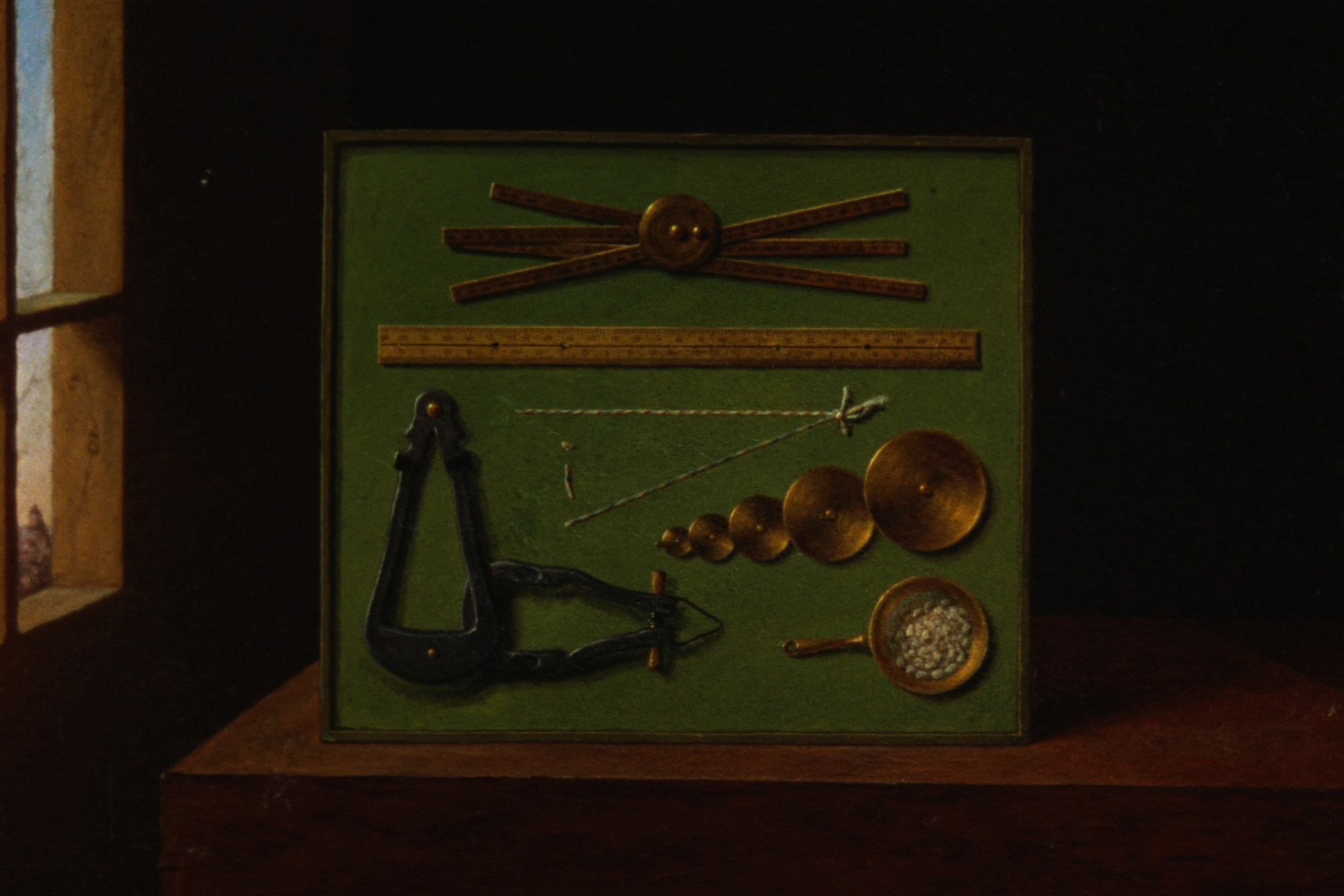
Almost every unit you use daily began as something you could point at. A foot was a foot. An inch was three barleycorns laid end to end. An acre was roughly what one man and one ox could plow in a day. A mile was a thousand Roman double paces. A carat comes from carob seeds, and horsepower was a marketing figure invented to sell steam engines to mine owners. None of it was precise, and that was fine until trade and science needed everyone to mean the same thing, at which point Europe went looking for a standard in the Earth itself and produced the meter. The story of measurement is really the story of trust.
Here is a fact that sounds like a joke: for most of recorded history, the answer to "how long is a foot" was "whose foot?"
Every unit in daily use started as a thing somebody could show you. A body part, a crop, a day's work. That made units instantly understandable and completely unreliable, and the slow project of fixing them in place is one of the more underrated achievements of the last few centuries. Let us take them one at a time.
The foot
It is exactly what it sounds like. Foot-based units appear across the ancient Mediterranean and northern Europe, and they varied wildly, from roughly 25 to over 33 centimetres depending on the region and the century. The Roman pes was about 29.6 centimetres. Medieval towns had their own feet, often physically marked on a wall in the market square so traders could check.
Which foot won was a political question rather than a scientific one. The English foot was gradually pinned down by statute and by physical standard bars kept in London, and the modern international foot was not defined as exactly 0.3048 metres until an agreement in 1959. Your foot is now legally defined by the meter, which is a quiet defeat for the human body.
The inch and the barleycorn
The inch takes its name from the Latin uncia, meaning a twelfth part, because it was one twelfth of a foot. But the oldest surviving English definition is agricultural. A statute attributed to Edward II declares that three barleycorns, round and dry, laid end to end, make one inch.
This is a lovely example of the medieval approach to standards: use something ordinary, abundant and roughly consistent. Barleycorns are all about a third of an inch, give or take a wet summer. The measure survives, incidentally, in shoe sizes, where each full size step is a barleycorn, which is why shoe sizing has always felt like it was invented by a farmer.
The yard
The yard has the best legends and the least evidence. One story says it was the distance from Henry I's nose to the tip of his outstretched thumb. Another ties it to the girth of a man's waist, and another to a standard rod kept for cloth measuring. The word itself comes from a root meaning stick or rod, which points at the mundane truth: it was probably a physical stick.
The royal-nose version is almost certainly a later embellishment, but it captures something real. Sovereigns did define measures, and holding the standard was a form of power. Whoever owned the yardstick owned the cloth trade.
The acre
The acre is my favourite because it is not a length or an area in origin. It is a workload. An acre was roughly the amount of land one man with a team of oxen could plow in a single day.
That is why the shape is odd. The traditional acre is a furlong long by a chain wide, a long thin strip, because turning a heavy ox-drawn plow was slow and you wanted as few turns as possible. The furlong itself is a furrow-long, the distance the team could pull before needing a rest. Your acre is a fossil of animal stamina, and a field system where the land was worked in strips.
The mile
Mile comes from the Latin mille passus, a thousand paces. A Roman pace was not one step but a double step, left and right, roughly 1.48 metres, which makes the Roman mile about 1,480 metres. Legions marched it, and surveyors marked it with stones, which is why milestones are called milestones.
The English mile drifted from the Roman one because it got tangled with the furlong. In 1593 Parliament settled it as eight furlongs, which is 5,280 feet, a number that looks arbitrary because it is: it is the compromise between a Roman unit and an agricultural one. The nautical mile went a different and more rational route, being one minute of latitude, roughly 1,852 metres, which is why it does not match. The Roman surveying network shaped a great deal more than distances, as I describe in how Roman roads shaped Europe.
Horsepower
This one is pure salesmanship, and I mean that admiringly. James Watt needed to sell steam engines to mine owners who currently used horses to pull water out of shafts. Telling them the engine produced a certain number of foot-pounds per minute meant nothing. Telling them it replaced ten horses meant everything.
So Watt measured what a strong horse could sustain at a mill and rounded to a usable figure: 33,000 foot-pounds per minute. Whether it was generous or stingy has been argued for two centuries, and a real horse can exceed it briefly. It survives because a customer could picture it, which is a decent lesson about explanation in general.
The carat
Gemstone weight comes from the carob tree. Carob seeds are unusually uniform, so Mediterranean traders used them as counterweights, and the word carat descends through Arabic and Greek from the seed. Modern research suggests carob seeds vary more than the tradition assumed, so the practice worked partly because everyone was wrong in the same direction.
The metric carat was fixed at exactly 200 milligrams in the early 20th century. Gold purity uses a related but separate scale, karat, where 24 parts means pure, from the same seed-counting habit applied to fractions rather than weight.
And then somebody measured the Earth
By the late 18th century the mess had become expensive. France alone was estimated to have thousands of local units, often with the same name and different values in neighbouring towns, which made trade a negotiation and fraud easy. Scientists could not compare results either.
The revolutionary solution was radical: take the standard from the planet, which belongs to nobody. The meter was defined as one ten-millionth of the distance from the North Pole to the equator along the meridian through Paris. Two astronomers, Delambre and Mechain, spent years surveying an arc between Dunkirk and Barcelona through a revolution and a war to fix it. Their figure was very slightly off, which is why the meter has since been redefined, first by a platinum bar, then by a wavelength of light, and now by the speed of light in a vacuum.
That progression is the whole story in miniature: from a king's arm, to a crop, to a planet, to a constant of nature. Each step trades intuition for trust between strangers.
Why any of this matters
Standard units are one of those inventions so successful they became invisible. You buy a kilo of flour without wondering whose kilo. You order a part from another continent and it fits. Every one of those small certainties replaced an argument that used to happen in a market square.
The words kept the old world inside them, which is the fun part. Say mile and you are counting Roman paces. Say acre and you are describing a day behind an ox. Language does this constantly once you start listening, as in everyday words with surprising origins, and our units of time are just as arbitrary and just as sticky, which is the subject of why a week has seven days.
If you enjoy this kind of thing, it is the natural habitat of a two-minute daily lesson, which is what our app MindSnap does: five flagship story-driven collections plus unlimited topics, so you can point it at whatever you are currently nosy about. Browse topics to see the range, or try a Turning Points scenario if you would rather make the decision than read about it.
Next time someone tells you something is three feet long, remember that the honest medieval answer would have been to ask which market square they measured it in.
Frequently asked questions
One snap tomorrow morning.
Two minutes in art, history, psychology, philosophy or economics, then the app tells you you're done.
Get MindSnap on iOSFree daily fact, forever. Pro is $9.99/month or $44.99/year.