9 Jobs That No Longer Exist: What Vanished Professions Reveal About Change

Curiosity Columnist
Last updated: August 2026
7 min read
TL;DR
Nine jobs that were once ordinary and are now historical curiosities: the knocker-upper who woke workers before alarm clocks were cheap, the lamplighter who lit streets by hand, the human computer who did calculations by pencil, the switchboard operator who connected every call, the ice cutter who harvested frozen lakes, the town crier who was the news, the linotype operator who set type in molten metal, the leech collector who waded for medical supply, and the pinsetter who reset bowling pins by hand. The pattern is not that machines destroyed work. In almost every case the task survived and moved: into a device, into a different job, or into a system nobody thinks of as work at all.
Some jobs do not get made redundant so much as absorbed. The task stays, the human step disappears, and within a generation nobody can quite believe the role existed. Here are nine of my favourites, plus the thing they collectively reveal.
1. The knocker-upper
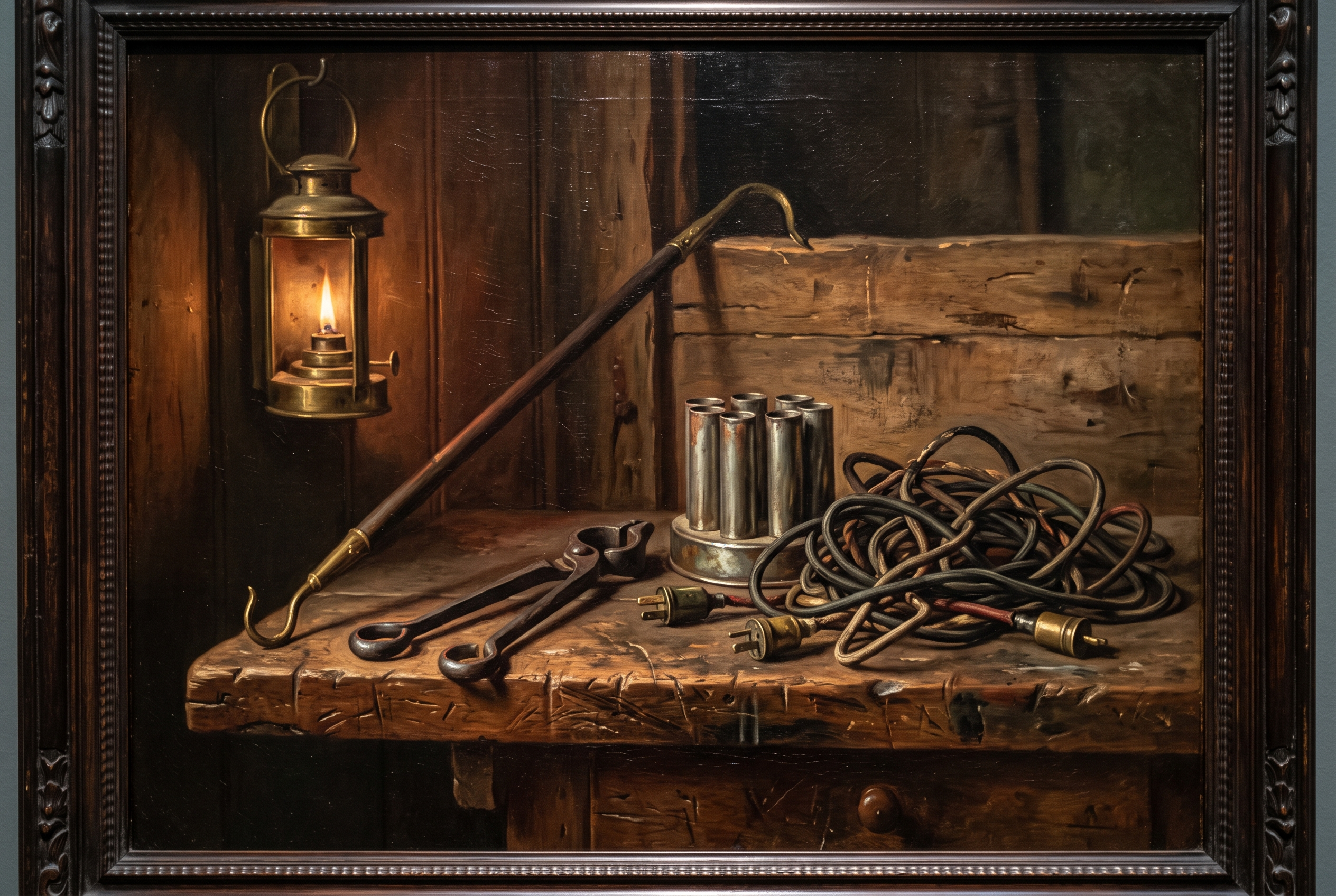
In British industrial towns, someone had to wake the shift. Knocker-uppers walked assigned streets before dawn tapping on bedroom windows with a long pole, sometimes topped with wire or a soft knob, and would not leave until they saw movement. Payment was by the week, and reputations depended on precision.
The surprising detail: a good knocker-upper avoided banging on doors specifically because it woke the neighbours, and waking people who had not paid was bad for business.
2. The lamplighter
Before electric streetlights, gas and oil lamps had to be lit individually at dusk and extinguished at dawn, each by hand, with a wick on a pole. Lamplighters walked fixed rounds every single evening in all weather, and in many cities they doubled as informal watchmen because they were the people who knew which streets were dark.
The surprising detail: a few gas lamps are still lit and maintained by hand in parts of London, kept as heritage rather than infrastructure.
3. The human computer
The word computer originally described a person. Observatories, insurance offices, artillery departments and space programmes employed rooms of people, many of them women, doing long arithmetic by hand and by mechanical calculator, checking each other's work and producing the mathematical tables that engineering ran on.
The surprising detail: the job did not vanish when machines arrived, it renamed itself. Many human computers became the first programmers, because they were the people who understood what the calculation was for.
4. The switchboard operator
Early telephone calls did not connect themselves. An operator listened, asked whom you wanted, and physically plugged a cord into a jack to complete the circuit. At scale this meant vast rooms of operators working panels with rehearsed speed and posture.
The surprising detail: operators knew everything. In small towns they were the de facto emergency service, the local directory and the one person who knew who was home.
5. The ice cutter
Before refrigeration, cold was harvested. Crews sawed frozen lakes into blocks in winter, hauled them by horse and rail, and packed them in insulated icehouses with sawdust so they would survive into summer. It was seasonal, dangerous and enormous: a genuine international trade in frozen water.
The surprising detail: ice from New England lakes was shipped as far as India, and enough of it arrived intact to make the voyage profitable.
6. The town crier
The crier was the news, the courts and the government announcement channel in one person. Official proclamations were read aloud in public because most people could not read them and because there was no other distribution system. Criers often had legal protection, since harming the messenger meant interfering with the state.
The surprising detail: notices were sometimes nailed to the door of an inn after being read, which is one route by which the phrase posting the news reached us. Words outlive their jobs, a habit we indulged in everyday words with surprising origins.
7. The linotype operator
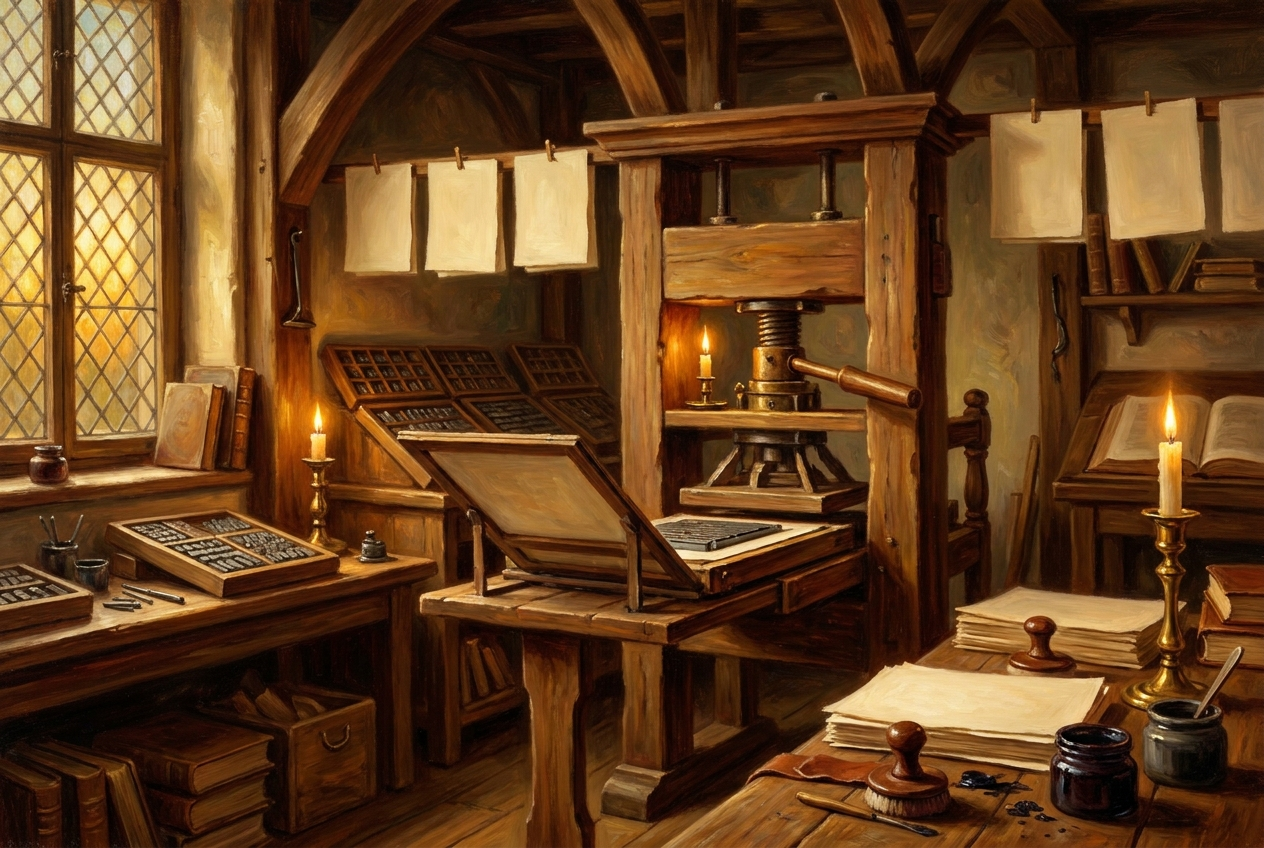
For most of the twentieth century, newspaper text was set by operators at Linotype machines, typing lines that were cast in molten lead as single metal slugs. It required typing accuracy, mechanical judgement and a tolerance for working beside a small pot of liquid metal. Phototypesetting and then digital layout ended it within about a decade.
The surprising detail: the standard mash of keys used to mark a spoiled line, etaoin shrdlu, occasionally slipped into print and became an accidental signature of the era. The deeper story of mechanised text starts earlier, in how the printing press changed the world.
8. The leech collector
When bloodletting was mainstream medicine, someone had to supply the leeches. Collectors, frequently poor women, waded into ponds and let the animals attach to their own legs, then removed them for sale to apothecaries. Demand was high enough in the nineteenth century that some regions saw local leech populations collapse.
The surprising detail: medicinal leeches never entirely disappeared from medicine. They are still used occasionally in reconstructive surgery to encourage blood flow in reattached tissue.
9. The pinsetter
In bowling alleys before automation, a person crouched behind the lane, cleared fallen pins, reset them by hand and rolled the ball back. It was often a job for teenagers, it was paid by the game, and it involved being in the same small space as a heavy ball travelling fast.
The surprising detail: the automatic pinsetter arrived in the 1950s and is a decent candidate for the machine that most improved workplace safety while attracting the least attention.
The pattern behind all nine
Read them as a set and the story is less dramatic than the usual one about machines taking jobs.
- The task usually survives. Streets are still lit, calls still connect, calculations still get done. What disappeared was the human step in the middle.
- Adjacent skill migrates. Human computers became programmers. Switchboard knowledge became telephony engineering. The people closest to the process often understood it best.
- Disappearance is uneven. Hand-lit lamps and medicinal leeches both persist in small niches, because obsolete is rarely total.
- The timeline is faster than it looks. Linotype dominated for most of a century and vanished in roughly ten years.
The practical version of this, for anyone who worries about the current round of automation: the durable asset is not a task, it is the understanding of why the task exists. That is a reasonable argument for staying broadly curious, which is the entire premise of our topics page. Related reading, if you like this angle: the economics of everyday things does the same trick with prices instead of professions.
Disclosure, since we are the people publishing this: MindSnap is our app, and it runs short daily lessons across five flagship story collections plus unlimited topics. Vanished trades are exactly the kind of thing it is good at, but you can also just keep reading here for free.
One last thought. Somebody, somewhere, was the last professional knocker-upper, and almost certainly did not know it at the time.
Frequently asked questions
One snap tomorrow morning.
Two minutes in art, history, psychology, philosophy or economics, then the app tells you you're done.
Get MindSnap on iOSFree daily fact, forever. Pro is $9.99/month or $44.99/year.