How Coffeehouses Changed Europe
Arts & History Editor
Last updated: August 2026
7 min read
TL;DR
Coffee reached western Europe in the middle of the 17th century, and within a few decades the coffeehouse had become an institution unlike anything before it: a room where a penny bought entry, newspapers, and the right to argue with strangers regardless of rank. Oxford and London led, and specialised houses grew into other things entirely. Lloyd's of London began as a coffeehouse where shipping men swapped news, and the auction houses and stock trading of the City took shape at particular tables. Scientists used them as laboratories in public. Rulers tried to shut them down, correctly identifying them as places where opinion was manufactured. The habits they created, reading the news and debating it with people you did not choose, outlived the rooms.
In 1650 a man named Jacob opened a shop in Oxford selling a bitter black drink almost nobody in England had tasted. Two years later Pasqua Rosee set up a stall in a London churchyard doing the same. Within fifty years London had hundreds of coffeehouses, and the way information moved through Europe had changed shape.
The drink is the least interesting part of this story. What mattered was the room.
A new kind of room
Before the coffeehouse, sociable public space in England meant the tavern or the inn, which meant beer, which meant that extended conversation trended downhill. Coffee did the opposite. People stayed for hours and got sharper rather than looser.
More importantly, the coffeehouse had an unusual social rule. You paid a penny at the door, took any free seat, and joined whatever conversation you found. Rank was suspended inside, at least in principle. A merchant, a physician, a poet and a ship's captain might share a table and contradict one another. House rules were sometimes posted in verse, forbidding quarrels over precedence and requiring that whoever swore first buy the coffee.
The nickname stuck for good reason: penny university. For the price of a cup you got the newspapers, the pamphlets, the gossip from the docks and an argument with people who knew things you did not. Nobody had previously sold access to a conversation.
The information machine
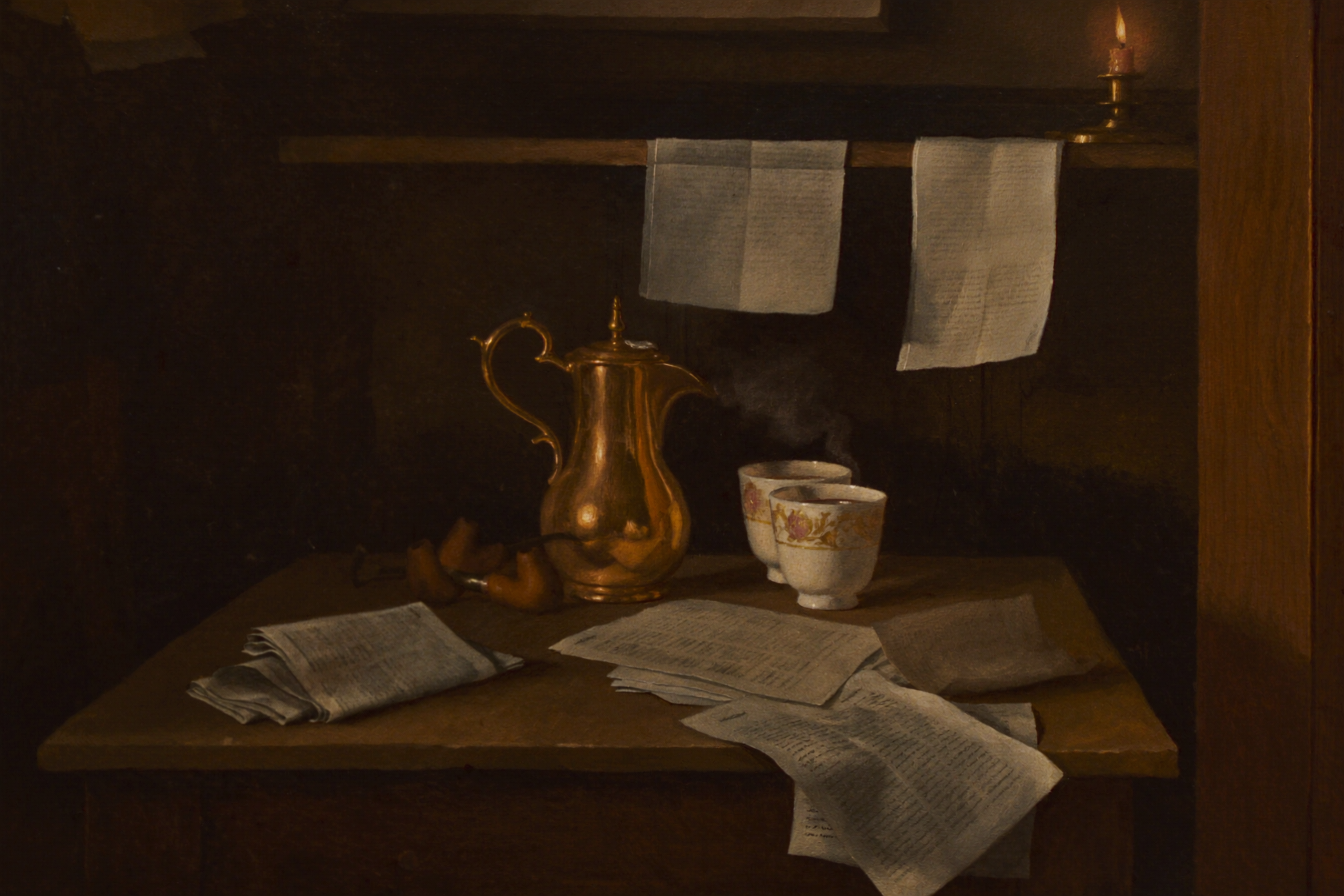
Coffeehouses arrived at the same moment as cheap printed news, and the two fused. Papers and newsletters were expensive for an individual and trivial for a house that could put a copy on the table and let a hundred customers read it. Proprietors subscribed to everything, and some paid for handwritten news from correspondents abroad.
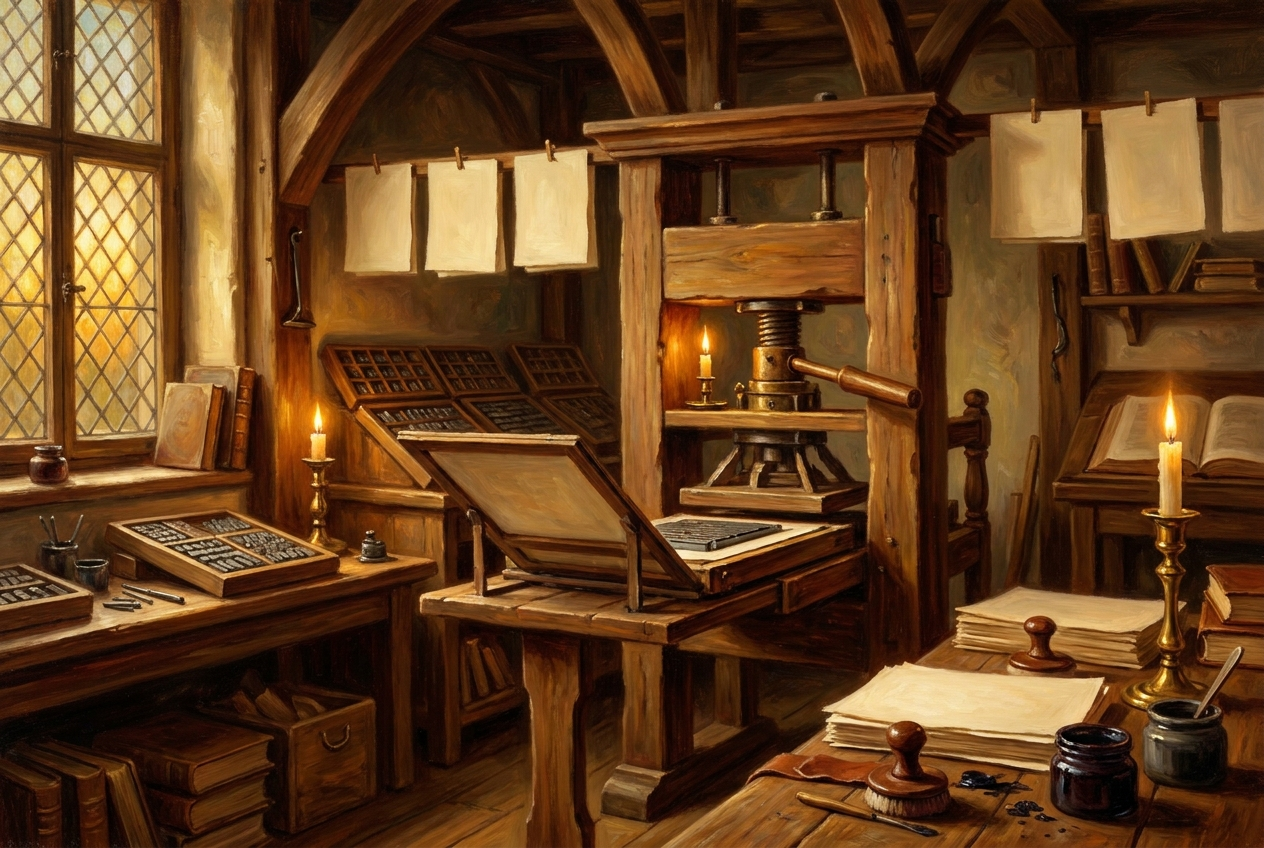
This produced something new: a public that read the same reports on the same morning and discussed them out loud. Historians of the period describe this as the emergence of a public sphere, and the coffeehouse is its physical address. Print supplied the raw material, the room supplied the argument. It is the second act of the transformation that began with movable type, which I cover in how the printing press changed the world.
Houses also specialised, which turned them into infrastructure. Regulars in a given trade adopted a particular house, and after a while its address became the place where that trade's business was actually done.
Businesses that grew out of tables
The clearest case is insurance. Edward Lloyd's coffeehouse, open from the late 1680s near the Thames, attracted shipowners, captains and merchants. Lloyd cultivated the trade by collecting reliable shipping news and publishing lists of vessels and their movements. Men who wanted to spread the risk of a voyage found the people willing to underwrite it at those tables, signing their names beneath the details of the ship. Lloyd's of London grew directly out of that room, and the practice of writing your name under a risk is why we still say underwriter.
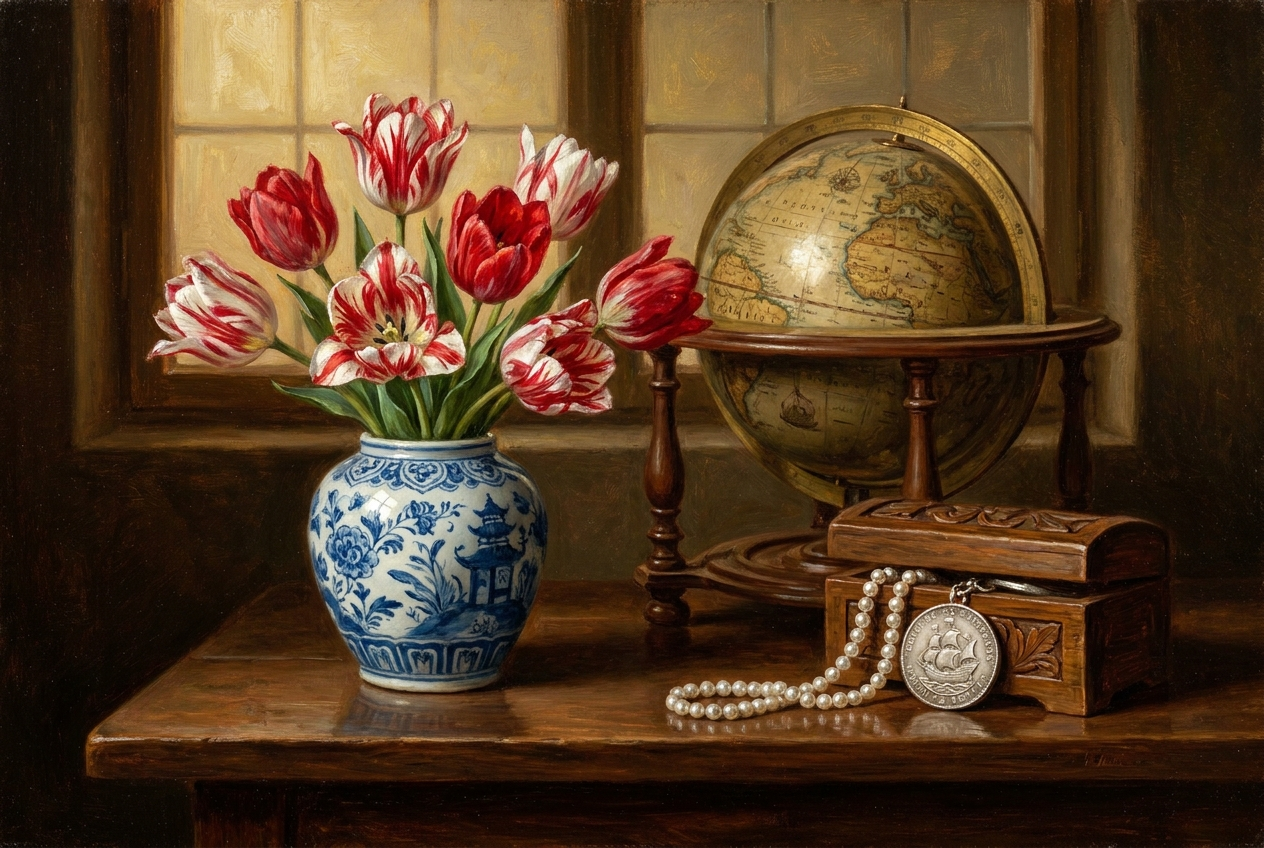
Stock dealing followed a similar path. When brokers were excluded from the Royal Exchange for rowdiness, they decamped to Jonathan's and Garraway's in Exchange Alley, where prices were posted and shares changed hands. The institutions that became London's stock market and its great auction houses all trace back to particular coffeehouses. This was the same era in which Amsterdam was inventing much of modern finance, a story told in the Dutch Golden Age.
It is worth noticing what the coffeehouse replaced. Medieval commerce had been organised by guild, where membership, training and price were controlled by the trade itself, a system I describe in how medieval guilds worked. The coffeehouse was the opposite principle: open entry, information for anyone who paid a penny, and deals struck with strangers. The shift from closed craft to open market runs straight through these rooms.
Science in public
The natural philosophers used coffeehouses as an extension of their laboratories. Fellows of the Royal Society, founded in 1660, would adjourn from meetings to nearby houses and carry on. Lectures were given in them. Instruments were demonstrated on their tables. Dissections and experiments were performed for paying audiences.
The exchange ran both ways, which is the part usually left out. Practical men in these rooms, navigators, instrument makers, apothecaries and brewers, had knowledge that gentlemen scholars lacked. A room where a mathematician had to explain himself to a ship's captain is a room where bad ideas get tested faster.
Why rulers tried to ban them
Authorities across Europe grasped very quickly what these places were, and disliked it. In 1675 Charles II issued a proclamation for the suppression of coffeehouses, describing them as resorts where idle and disaffected persons spread false and scandalous reports. The order was withdrawn within weeks after protest, and the houses carried on. Similar attempts were made elsewhere, sometimes on political grounds and sometimes on medical or moral ones.
The reasoning was sound even if the policy failed. A coffeehouse was a place where opinion was formed in public by people who had read the same news, and no ruler had ever had to contend with that before. Suppressing the rooms proved harder than tolerating them, largely because they had already become how commerce worked.
The model spread with local variations. Vienna's cafes became famous for their newspapers and their lingering, and by the early 20th century a table in one could function as an office for a writer or a physician. Paris cafes hosted their own literary and political circles. The specific institution differed. The underlying invention, a semi-public room where information circulates cheaply, did not.
What the coffeehouse left behind
The classic English coffeehouse faded in the 19th century, partly into private clubs with membership lists, partly into tea drinking, partly into the formal exchanges and offices that its own conversations had created. Its habits survived it.
Three in particular. Reading the day's news as a shared activity rather than a private one. Expecting to encounter arguments from people whose position differs from yours. And treating information as something you go somewhere to collect, rather than something that finds you.
That last habit is the one modern feeds have quietly reversed, which is why choosing what to learn each day is now a deliberate act rather than a default. If you like history delivered as episodes with people and stakes in them, that is exactly how our app MindSnap is built: two-minute story-driven lessons across five flagship collections plus unlimited topics, and the Turning Points scenarios put you in the position of someone facing the decision before you learn what they chose.
Four hundred years on, the penny university remains a decent standard for a day's learning: something worth knowing, and someone to tell it to.
Frequently asked questions
One snap tomorrow morning.
Two minutes in art, history, psychology, philosophy or economics, then the app tells you you're done.
Get MindSnap on iOSFree daily fact, forever. Pro is $9.99/month or $44.99/year.