Byzantine Iconoclasm Explained: When an Empire Banned Its Own Art

Arts & History Editor
Last updated: August 2026
8 min read
TL;DR
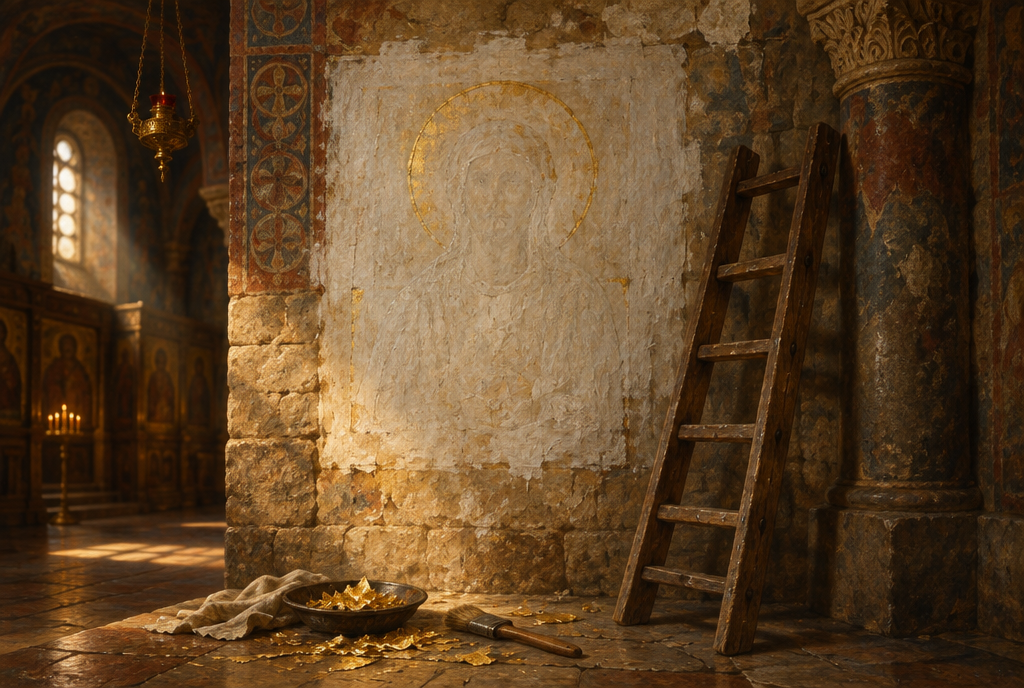
For more than a century, the Byzantine Empire argued with itself about whether holy images were sacred or sinful. In two waves, roughly 726 to 787 and 814 to 843, emperors known as iconoclasts restricted and destroyed religious images, arguing that venerating painted figures slid into idolatry. Their opponents, the iconophiles, insisted that icons were windows to the holy and that refusing them denied the reality of the incarnation. The fight mixed theology with power: military defeats, imperial authority and the influence of monasteries all played a part. It ended in 843 with the restoration of icons, still celebrated in the Orthodox Church as the Triumph of Orthodoxy. Much early Byzantine art was lost, but some survived in remote places like Saint Catherine's Monastery at Sinai, and the settlement shaped Byzantine art for the rest of the empire's life.
Imagine walking into a church you have known since childhood and finding the golden face of Christ scraped from the wall, a plain cross painted where it used to be. For many people in the Byzantine Empire in the eighth century, that was not imagination. It was Sunday.
This is the story of Byzantine iconoclasm, a word that literally means image breaking. It is one of the strangest episodes in the history of art: an empire famous for its glittering mosaics that spent the better part of a century arguing about whether it should have them at all.
An empire of images
To understand why this mattered, you have to understand what icons meant. By the early eighth century, images of Christ, the Virgin and the saints were everywhere in the Byzantine world, which I have written about more broadly in what was the Byzantine Empire. They hung in homes and churches, were carried into battle and processions, and were kissed, bowed to and prayed before. Some were believed to work miracles.
To their devotees, icons were not decoration. They were a meeting point between heaven and earth. To their critics, that was precisely the problem.
The first wave: 726 to 787
The traditional starting point is the reign of Emperor Leo III. Around 726, according to later sources, he began to act against images, and a famous icon of Christ above the Chalke Gate of the imperial palace in Constantinople was said to have been taken down. How dramatic his measures really were is debated, because most of our accounts were written later by the winning side, who had every reason to paint the iconoclasts as villains.
What is clearer is that under his son, Constantine V, iconoclasm became firm policy. A church council held at Hieria in 754 condemned the making and veneration of religious images. Some monasteries, strongholds of icon devotion, faced harsh pressure, and some monks were persecuted.
Then the tide turned. In 787, under the Empress Irene, the Second Council of Nicaea restored the veneration of icons, drawing a careful line: images could be honored, but worship in the fullest sense belonged to God alone.
The second wave: 814 to 843
The peace did not last. In 814, Emperor Leo V revived iconoclasm, and a second period of restrictions followed under several emperors, ending with Theophilos. This second wave is often described as less violent than the first, but it was no less serious in intent.
Throughout both waves, people hid icons. Families tucked them away at home. Monks carried them to safer regions. Stories of icon hiders became a treasured part of the later tradition, and like many such stories, they mix memory with legend.
Why did emperors do it?
Historians still argue about the causes, and honest answers come with caveats. Several threads usually appear together.
- Theology. Iconoclasts pointed to the biblical ban on graven images and argued that the divine could not be captured in paint. Iconophiles replied that because God had become human in Christ, he could be depicted.
- Military anxiety. The empire had suffered heavy defeats, including in wars with the Arab caliphates. Some historians suggest emperors read these as divine punishment for idolatry.
- Imperial authority. Icons and the monasteries that championed them were independent sources of spiritual prestige. Controlling images may have been a way to concentrate religious authority around the emperor.
- Wider currents. Debates about images were circulating across the region at the time. How much these directly influenced Byzantium is uncertain.
No single explanation settles it. Most likely, sincere belief and hard politics were tangled together, as they so often are.
The Triumph of Orthodoxy
The end came quietly, through a woman. After Emperor Theophilos died in 842, his widow, the Empress Theodora, ruled on behalf of their young son. In 843 she oversaw the restoration of icons. The victory was celebrated with a procession on the first Sunday of Lent, and that day is still marked in the Orthodox Church as the Triumph of Orthodoxy.
It was a turning point in the truest sense. From then on, the image was settled as central to Byzantine faith. Art historians often trace the confident, carefully organized church decoration of the following centuries back to that settlement.
What was lost and what survived
The losses are hard to measure precisely, but they were real. Much early figurative religious art from the heart of the empire did not survive this period, whether destroyed, painted over or simply not made. In some churches, crosses replaced figures.
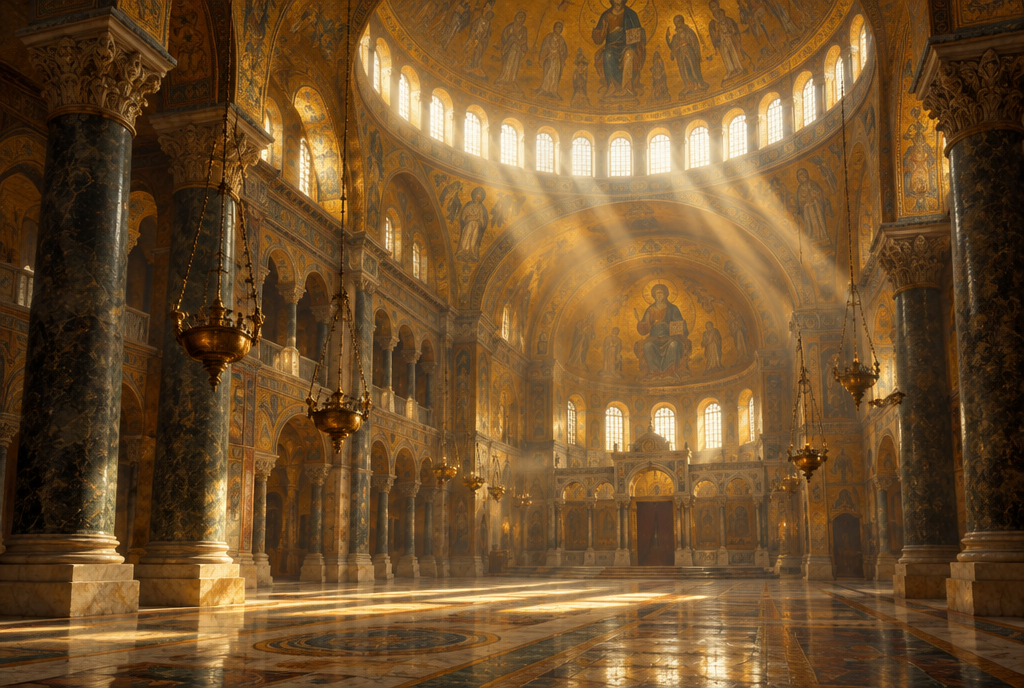
Yet some treasures escaped. Saint Catherine's Monastery at Mount Sinai, far from imperial control, preserved some of the oldest surviving icons in the world, including a celebrated early image of Christ. And in Constantinople, the great church of Hagia Sophia later received the stunning figurative mosaics visitors still admire, many of them created after 843 as a statement that the images had come home.
Why societies turn on their own art
Byzantium was not unique. The Protestant Reformation saw statues smashed and church walls whitewashed across parts of Europe. Revolutions have toppled monuments. Again and again, societies decide that images carry too much power to leave alone. The very fury of iconoclasm is, in a strange way, a tribute to art: nobody destroys what they believe to be meaningless.
The empire that argued so bitterly about its icons survived for another six centuries, until its capital fell in 1453, a story told in The Day the Middle Ages Ended, one of MindSnap's five flagship story collections. MindSnap is our app, and alongside those collections it offers unlimited topics. If you enjoy standing at moments like 843 and wondering what you would have decided, try our Turning Points feature, where you make the call before learning what really happened.
Frequently asked questions
One snap tomorrow morning.
Two minutes in art, history, psychology, philosophy or economics, then the app tells you you're done.
Get MindSnap on iOSFree daily fact, forever. Pro is $9.99/month or $44.99/year.