Who Was Constantine XI, the Last Roman Emperor?

Arts & History Editor
Last updated: August 2026
8 min read

TL;DR
Constantine XI Palaiologos was the last emperor of the Eastern Roman Empire, often called the Byzantine Empire. Before taking the throne in 1449 he ruled the Morea in southern Greece, where he proved an energetic and capable governor. As emperor he inherited little more than the city of Constantinople and a few scattered territories, an empty treasury and a powerful Ottoman neighbor. When Mehmed II besieged the city in 1453, Constantine refused offers to surrender or flee and died during the final assault on 29 May. His body was never securely identified, which gave rise to the legend of the Marble Emperor, who sleeps beneath the city waiting to return. His death closed a line of Roman rulers that reached back, through many breaks and changes, to Augustus.
There is a moment that historians keep returning to. Before dawn on 29 May 1453, as the Ottoman army poured through a breach in the walls of Constantinople, the last Roman emperor is said to have thrown off his imperial regalia and charged into the fighting as an ordinary soldier. Nobody can say for certain how he died. That uncertainty is part of why Constantine XI has fascinated people for more than five centuries.
A younger son of a shrinking dynasty
Constantine was born in 1405 into the Palaiologos family, the dynasty that had ruled what remained of the Eastern Roman Empire since the thirteenth century. He was one of several sons of Emperor Manuel II, and nothing about his birth suggested he would one day wear the crown.
By his lifetime, the empire was a shadow of its former self. The great territories of earlier centuries had been lost. What remained was the capital, some islands, and the Morea, the Peloponnese peninsula in southern Greece, which was governed by members of the imperial family with the title of despot.
Despot of the Morea
Constantine made his reputation in the Morea. Working from the hill city of Mistra, he and his brothers ruled the region, and Constantine stood out as the most energetic of them. He pushed back against rival lordships, extended Byzantine control over much of the peninsula, and rebuilt the Hexamilion, a defensive wall across the narrow isthmus of Corinth.
That ambition had limits. In 1446 an Ottoman army under Sultan Murad II broke through the Hexamilion, and Constantine was forced to accept Ottoman overlordship and pay tribute. It was an early lesson in the hard arithmetic of his world: courage and good governance could only stretch so far against a much larger power.
An emperor in 1449
When his elder brother, Emperor John VIII, died childless in 1448, Constantine was the leading candidate to succeed him. He was proclaimed emperor at Mistra in January 1449 and traveled to Constantinople. Unusually, there is no clear record that he was ever formally crowned in the city, a detail that later added to his mystique.
What he inherited was close to impossible. The treasury was nearly empty. The population of the capital had fallen sharply over the previous century. The city was surrounded by Ottoman territory on both sides of the water. And the church was bitterly divided over a proposed union with Rome, which many hoped would bring Western military help and many others saw as a betrayal of their faith.
The siege of 1453
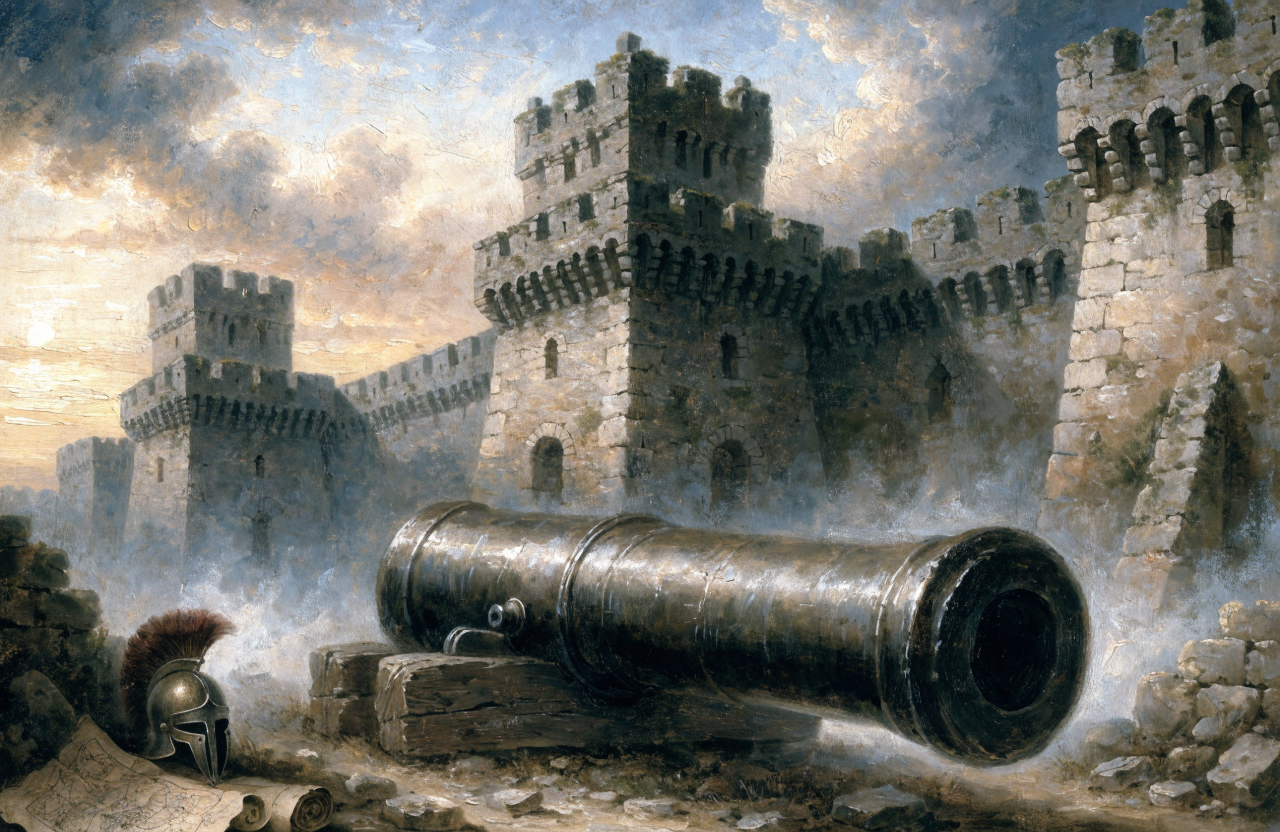
In 1451 a young and ambitious sultan, Mehmed II, came to the Ottoman throne. Within two years he had built a fortress on the Bosphorus, assembled a large army, and commissioned enormous cannon. I wrote a separate portrait of him in who was Mehmed the Conqueror.
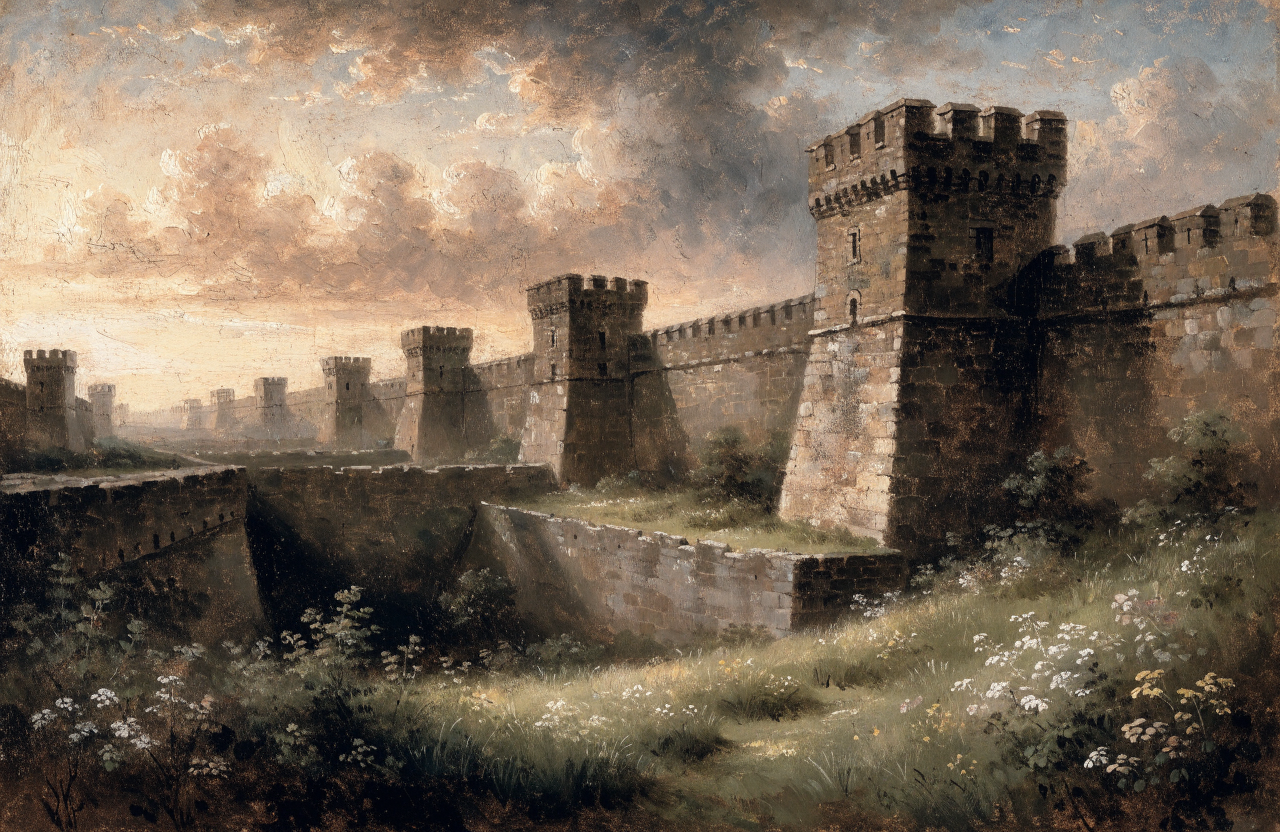
Constantine appealed to the West for help, with limited results. A contingent of Genoese soldiers under Giovanni Giustiniani Longo arrived and played a vital role, and Venetian residents of the city joined the defense. Even so, the defenders were heavily outnumbered. Their greatest asset was the ancient land walls, the remarkable system described in the Theodosian Walls explained.
Through roughly seven weeks of bombardment and assaults, Constantine is described by contemporary accounts as being constantly on the walls, encouraging the defenders and organizing repairs. According to these accounts, he was offered terms that would have let him leave the city, and he refused. Whether every speech attributed to him is accurate is debated, but the broad picture of an emperor who chose to stay is consistent across sources.
The final charge
The decisive assault came in the early hours of 29 May. When Giustiniani was badly wounded and withdrew, the defense in his sector faltered, and Ottoman troops broke into the city. What happened to Constantine next is uncertain. The most famous version says he removed his imperial insignia and plunged into the fighting, dying anonymously among his soldiers.
Other accounts disagree. Some describe his head being presented to the sultan, others say his body was identified by his boots, which bore imperial eagles. Historians treat all of these with caution. What is clear is that the emperor died that day, and with him the Roman state in Constantinople. The wider story of the siege is told in the fall of Constantinople in 1453.
The legend of the Marble Emperor
Because there was no grave and no certain body, legends filled the gap. The best known is the story of the Marble Emperor. In this tradition, an angel rescued Constantine at the moment of his death, turned him to marble, and hid him in a cave beneath the city, near the Golden Gate. One day, the story goes, he will awaken and return.
Legends of sleeping kings are found in many cultures, from King Arthur to Frederick Barbarossa. They tend to appear where a loss was sudden and deeply felt. For centuries, the Marble Emperor gave Greek-speaking communities a way to imagine that the story had not truly ended.
Why he is called the last Roman emperor
It can seem strange to call a fifteenth century Greek-speaking ruler Roman. But the Byzantines never called themselves Byzantine. That name was popularized by later historians. They called themselves Romans, and their state was the continuation of the eastern half of the Roman Empire, governed from the city that Constantine the Great had founded as a new capital in the fourth century.
There is a striking symmetry here. The city was founded by one Constantine and lost under another. The line of emperors had been broken, contested and transformed many times, yet it traced its legitimacy back through a long chain of rulers to Augustus. When Constantine XI died, that chain came to an end.
How to explore the story further
If you want to follow the siege step by step, the chain across the Golden Horn, the ships dragged over land, the last days on the walls, our collection The Day the Middle Ages Ended tells it in short chapters. You can also try Turning Points, where you face a decision a historical figure faced before discovering what really happened.
Constantine XI did not save his city. He probably could not have. But the way he met an impossible situation is why he is remembered not as a footnote, but as the last emperor of Rome.
Frequently asked questions

One snap tomorrow morning.
Two minutes in art, history, psychology, philosophy or economics, then the app tells you you're done.
Get MindSnap on iOSFree daily fact, forever. Pro is $9.99/month or $44.99/year.