What Was the Hundred Years' War? A 116-Year Conflict Explained

Arts & History Editor
Last updated: August 2026
9 min read
TL;DR
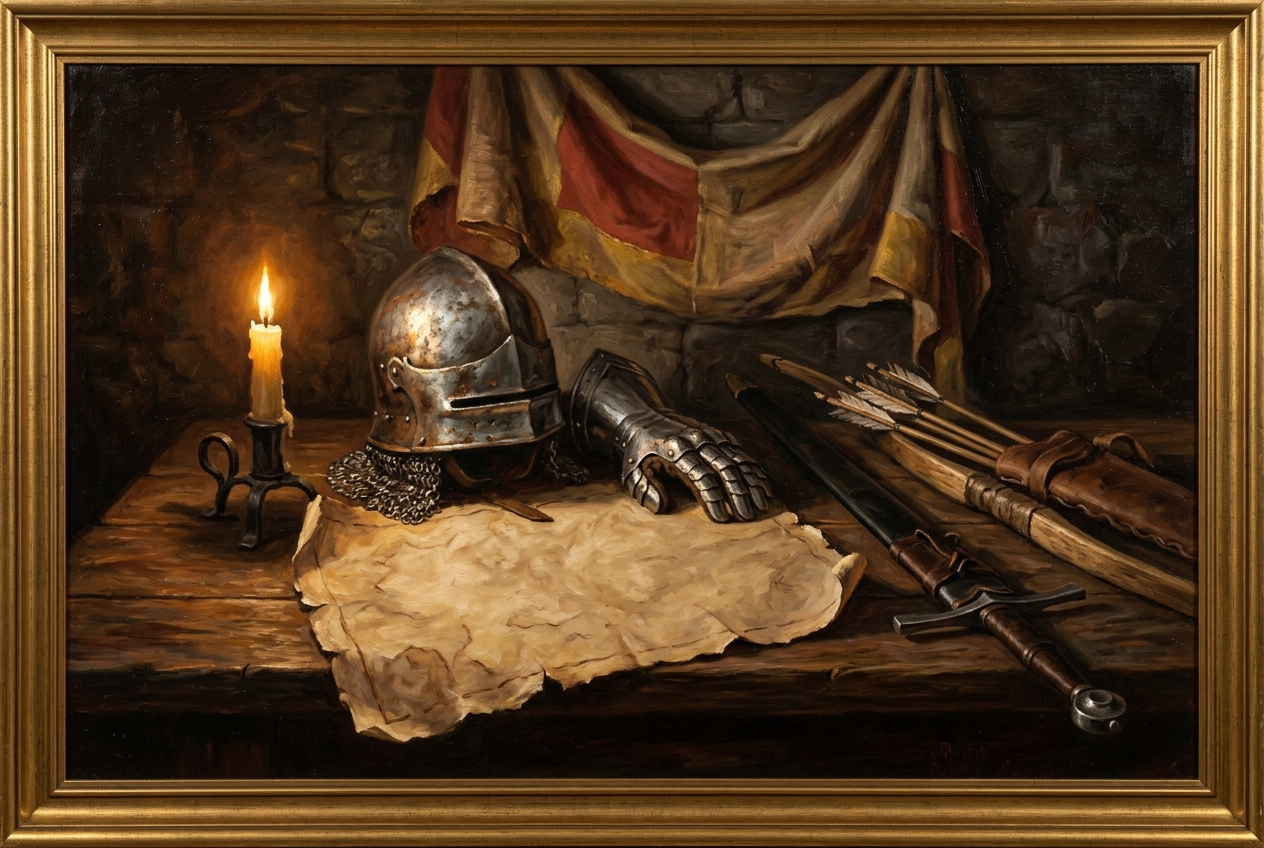
The Hundred Years' War ran from 1337 to 1453, which is 116 years, and it was not one continuous war but a series of campaigns, truces and collapses strung along a single unresolved question: who had the right to the French crown. England won the famous battles, Crecy in 1346, Poitiers in 1356, Agincourt in 1415, largely through longbows and defensive discipline, and still lost the war, because holding French territory required money and administration that England could not sustain. The Black Death tore through the middle of it. Joan of Arc turned the mood in 1429. When the fighting stopped in 1453, the same year Constantinople fell, two of the props of the medieval order came down together.
Start with the arithmetic, because it tells you something. The Hundred Years' War lasted one hundred and sixteen years. Nobody at the time called it that. The name was applied by historians long afterwards, tidying a sprawl of campaigns into a single story, and the tidying is exactly what you have to undo to understand it.
For most of those 116 years, nobody was fighting. There were truces that held for decades, kings who lost interest, seasons when the money ran out. What persisted was not an army in the field but a claim that neither side would abandon.
The quarrel underneath
In 1328 the last Capetian king of France died without a son. The French nobility gave the crown to Philip VI of Valois, a cousin through the male line. Edward III of England had a claim through his mother, Isabella, who was the dead king's sister, and a claim through a woman was exactly the sort of thing that could be argued either way for a century.
There was a second, older irritation. English kings held land in France as vassals of the French king, chiefly in Gascony, which meant the King of England had to kneel to the King of France for part of his own inheritance. That arrangement was intolerable in principle and unworkable in practice. Add Flanders, where English wool fed Flemish looms and both crowns wanted the loyalty of the weavers, and the war has its shape: a dynastic claim resting on a territorial grievance resting on a trade dependency.
In 1337 Philip declared Gascony forfeit. Edward responded by claiming the French throne outright. Neither man imagined he had started something his great-grandchildren would still be paying for.
Three wars wearing one name
Historians usually split it into phases, and the phases are more honest than the single title.
- The Edwardian phase, 1337 to 1360, in which Edward III won Crecy and his son captured the French king at Poitiers, ending in a treaty that traded the throne claim for enlarged English lands.
- The Caroline phase, 1369 to 1389, in which Charles V of France quietly reversed nearly all of it by refusing to give battle and taking castles back one at a time.
- The Lancastrian phase, 1415 to 1453, in which Henry V won Agincourt, was recognised as heir to the French crown, died young, and left an infant son to hold a position that then unravelled.
Notice the rhythm. England wins the set pieces and gains ground. France declines the set pieces and takes the ground back. That pattern repeats twice, which ought to have taught someone something.
Why the longbow mattered, and why it was not enough
At Crecy in 1346 and again at Agincourt in 1415, English armies that were outnumbered and often hungry destroyed French armies built around mounted nobility. The explanation people remember is the longbow, and the longbow is genuinely part of it. A trained archer could loose arrows faster than a crossbowman could reload, and a few thousand of them could make a stretch of open ground unsurvivable.
The fuller explanation is ground and discipline. The English chose positions with hedges, stakes, mud and narrow frontages, dismounted their own men-at-arms, and waited. The French, whose social order was built on the charge, charged. At Agincourt the field was so churned by rain that armoured men fell and could not rise. These were not miracles of technology. They were battles won by making a cavalry charge impossible before the cavalry arrived.
And still it did not settle anything. Winning a battle killed a generation of French nobles and captured some prisoners worth ransoming. Holding France required garrisons, taxes, officials and consent from people who did not give it. England could win afternoons. It could not afford decades. Gunpowder eventually completed the reversal, as French artillery reduced the walls that had made English positions defensible, a shift explored in our story collection The Day the Middle Ages Ended.
The plague in the middle of it
In 1348 the Black Death arrived and killed a large share of the population on both sides. Armies could not be raised, taxes could not be collected, and the war simply stopped for a while because there were not enough people to fight it.
It also changed the terms. Labour became scarce and therefore expensive, which loosened the bonds tying peasants to land and lords, and set off revolts in both kingdoms as governments tried to tax populations that had discovered their own value. The war did not cause that transformation, but it ran through it, and the two together did more to end feudal Europe than either would have alone. We cover the wider consequences in how the Black Death changed Europe.
Joan of Arc and the change of mood
By 1428 the English and their Burgundian allies held Paris and much of the north, and the French heir was an uncrowned young man with a doubtful reputation. Then a teenage girl from Domremy arrived at his court saying she had been sent to save France.
What she did in the following year is documented and still startling. Orleans, under siege and close to falling, was relieved in days. A campaign along the Loire cleared the way to Reims, where Charles VII was crowned in the cathedral where French kings were meant to be crowned, which mattered enormously in a war fought over legitimacy. Joan was captured in 1430, tried, and burned at Rouen in 1431.
She did not win the war, and the tidy version that says she did is one of the myths about the Middle Ages worth putting down. What she changed was belief. After Reims, the French crown had the symbolic standing it had lacked, and the slow work of reconquest had a story people would pay for. The rest was artillery, money and the Burgundian switch of sides in 1435.
1453, twice over
In July 1453 a French army with a well-handled artillery train destroyed the last English field force in Gascony at Castillon. There was no treaty and no ceremony. The English simply held nothing but Calais, and the war stopped because there was nothing left to contest.
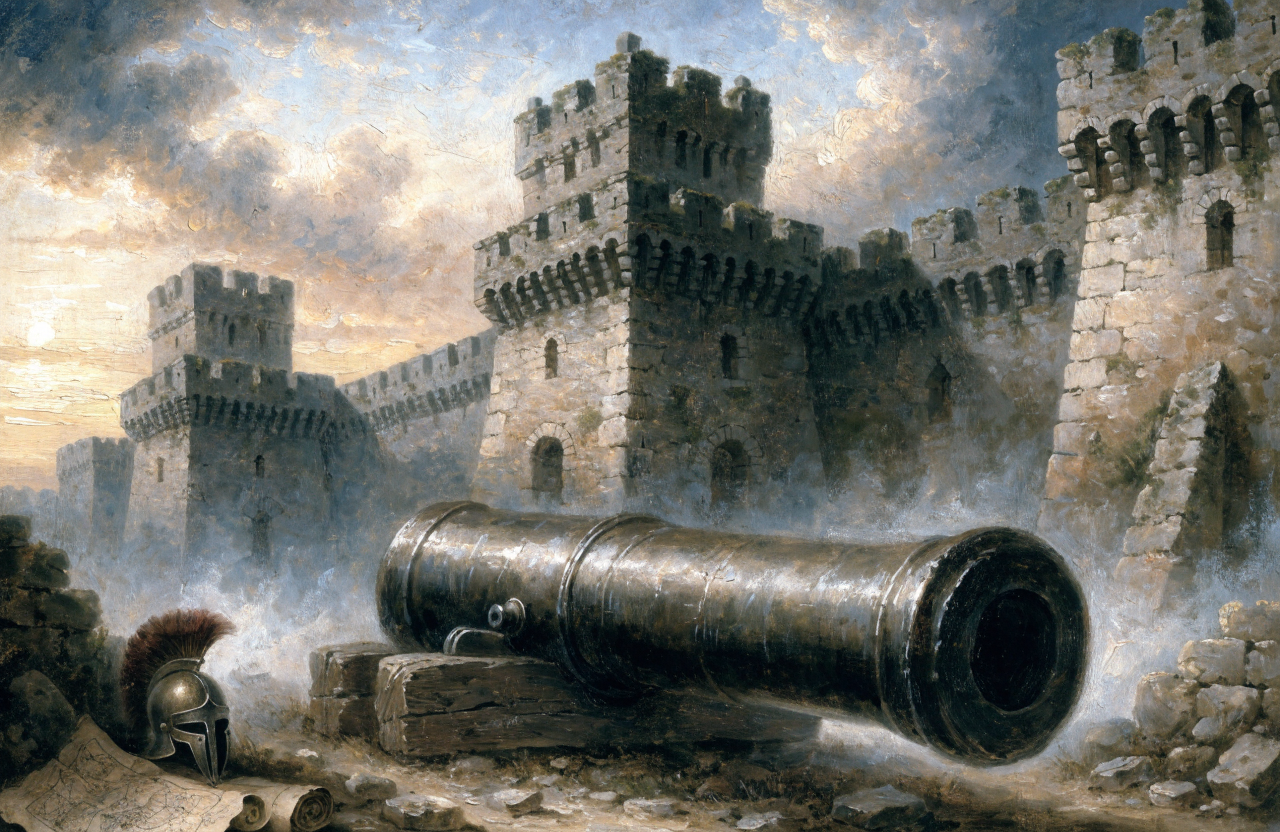
Four months earlier, cannon of a different kind had brought down the walls of Constantinople. The coincidence is an accident of the calendar, and it is still the reason 1453 works as a marker. In the same year, the last Roman city fell to gunpowder and the greatest dynastic quarrel of medieval Europe ended in favour of a centralising state with a standing army and a treasury. Two medieval certainties, the impregnable wall and the decisive noble charge, were finished in one season. Our Turning Points scenarios put you inside decisions like those before you know how they resolved. Disclosure: MindSnap is our app, so treat that as a description rather than a recommendation.
What the war left behind
France emerged with a permanent army, a taxation system to pay for it and a monarchy that no longer had to ask the nobility for permission. England emerged with a bankrupted crown, a class of unemployed soldiers and a disputed succession that became the Wars of the Roses within two years. Both emerged more like nations and less like collections of feudal obligations, partly because a century of describing the enemy as foreign is an efficient way of inventing a people.
That is the useful lesson from a war too long to hold in one thought. Nothing here was decided by the famous battles. It was decided by who could still pay for the next campaign after everyone was tired, which is nearly always the answer.
England won the battles anyone can name. France won the century, which is the only unit of measurement that counted.
Frequently asked questions
One snap tomorrow morning.
Two minutes in art, history, psychology, philosophy or economics, then the app tells you you're done.
Get MindSnap on iOSFree daily fact, forever. Pro is $9.99/month or $44.99/year.