7 Myths About the Middle Ages People Still Believe

Curiosity Columnist
Last updated: August 2026
8 min read
TL;DR
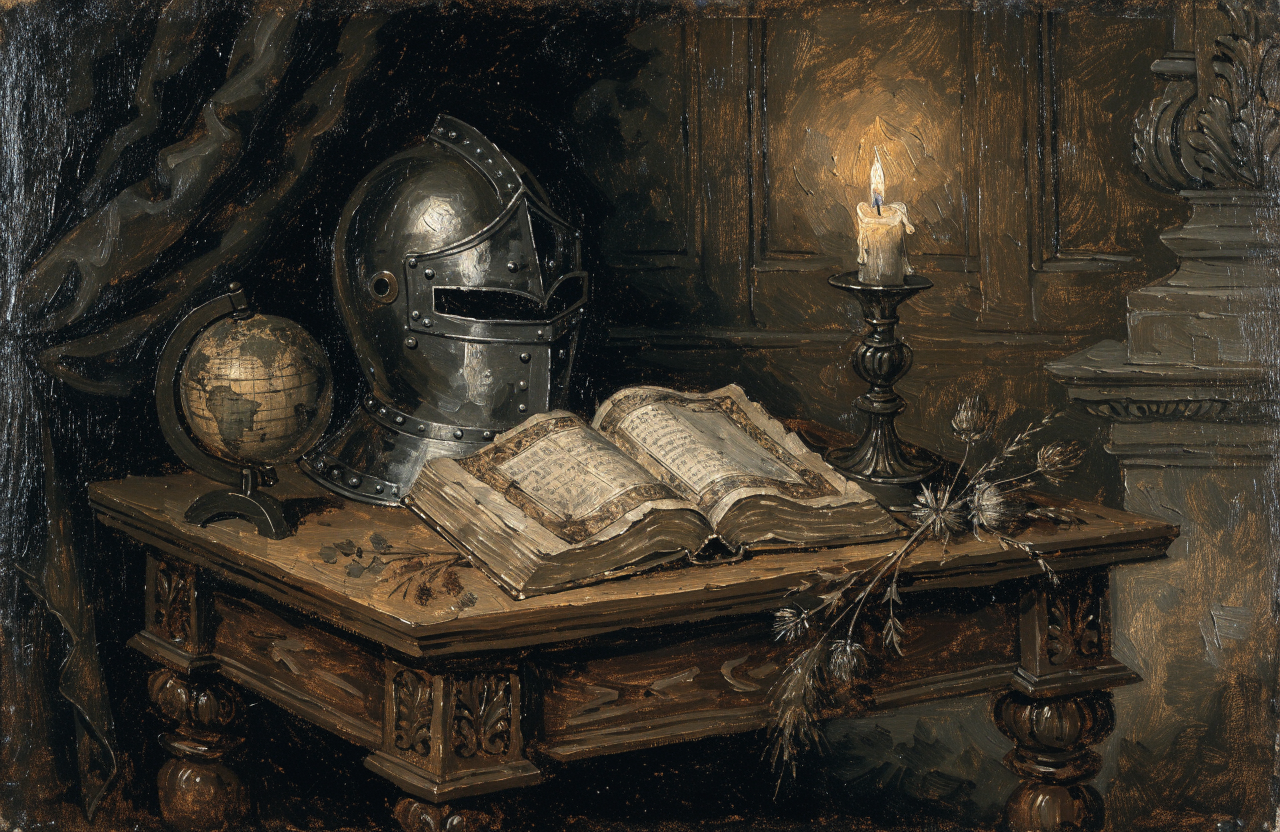
Almost everything the average person believes about the Middle Ages comes from later centuries inventing a dark backdrop to stand in front of. Educated medieval Europeans knew the Earth was round. People did not drop dead at thirty, that number is an average dragged down by infant deaths. Medieval towns ran bathhouses. The Church funded the universities where natural philosophy was studied. Trained knights in fitted plate could run, mount a horse and get up off the ground. Ordinary people travelled for trade, work and pilgrimage. And the phrase Dark Ages originally meant that historians had few sources for one period, not that the lights had gone out across a thousand years.
The Middle Ages have the worst public relations of any era in history. A thousand years, three continents' worth of contact, the founding of universities, the building of cathedrals that still hold records, and the popular summary is: mud, plague, superstition, and someone shouting about the Earth being flat.
Most of that image was manufactured later, largely by Renaissance writers who needed a dark backdrop to look bright against, and then by nineteenth-century popularisers who found the caricature useful. Here are seven of the most durable myths, and what the sources actually show.
Myth 1: everyone thought the Earth was flat
This one is not merely wrong, it is close to the opposite of the truth. A spherical Earth was standard among educated Europeans throughout the medieval period, inherited from Greek astronomy and never seriously abandoned. Bede wrote about it in the eighth century. Sacrobosco's thirteenth-century textbook on the sphere was a university staple for generations. Dante's cosmology depends on a round Earth, and readers were expected to follow.
The flat-Earth medieval was largely a nineteenth-century invention, popularised in fiction and polemic and repeated until it felt like common knowledge. The genuine dispute in Columbus's era was not shape but size: he badly underestimated the circumference, and his critics, who were using better figures, were right to doubt him.
Myth 2: people died at thirty
This is a statistics error rather than a historical claim. Life expectancy at birth was low because infant and child mortality was appalling. Averaging a large number of deaths in the first years of life together with the deaths of people in their sixties gives you a number in the thirties that describes nobody's actual lifespan.
The more useful measure is life expectancy conditional on surviving childhood, and it is dramatically higher. Someone who reached adulthood in medieval Europe had a reasonable prospect of living into their fifties or sixties, and old age was a recognised stage of life with its own literature, legal provisions and complaints. Chaucer, Eleanor of Aquitaine and any number of abbots and monarchs lived to ages that would be unremarkable now.
The honest summary: childhood was lethal, adulthood was risky, and the arithmetic of averages does the rest.
Myth 3: nobody washed
Medieval towns of any size had public bathhouses, and they were popular enough that moralists complained about them, which is the historian's most reliable evidence that something was widespread. Soap was manufactured and traded. Household accounts record washing linen. Monastic rules specified bathing schedules, and the fact that they had to be specified tells you it was expected rather than exotic.
Standards were not modern, and access varied enormously between a merchant's townhouse and a labourer's cottage. But the image of a uniformly filthy population avoiding water on principle belongs to a later period. Ironically, bathhouse culture declined most sharply in the early modern centuries, partly out of fear of contagion after repeated epidemics, so the peak of European aversion to bathing came after the Middle Ages ended.
Myth 4: the Church banned science
The medieval Church was the institution that paid for it. Universities at Bologna, Paris, Oxford and elsewhere emerged within a church framework, and natural philosophy, which is what the study of the physical world was called, was a normal part of the curriculum. Cathedral schools trained the mathematicians. Bishops and clerics ran the observatories and did the astronomy, because computing the date of Easter was a real institutional problem requiring real calculation.
Named figures make the point better than generalities. Robert Grosseteste worked on optics and argued for experiment. Roger Bacon, a friar, wrote extensively on the same. Nicole Oresme, a bishop, produced work on motion and coordinate representation that reads startlingly early. Albertus Magnus catalogued plants and animals with an observational care that would satisfy a naturalist.
None of that means the relationship was free of conflict. Particular ideas were condemned in particular places, and Galileo's trial is genuinely a story of institutional power crushing an argument, but it happened in the seventeenth century, not the medieval one. Collapsing centuries of complicated patronage and dispute into a ban is bad history in the same way collapsing modern research funding into a slogan would be.
Myth 5: knights in armour could barely move
A full harness of fitted fifteenth-century plate weighed roughly as much as a modern soldier's loaded kit, and crucially the weight was distributed across the body rather than hung from the shoulders and hips. Fifteenth-century fight manuals show armoured men wrestling, grappling and throwing each other on the ground. Modern reconstruction work, including experiments filmed for museums, shows people in accurate reproductions running, climbing, lying down and getting up unaided.
The lumbering tin can comes from two places: cheap film props built for appearance rather than articulation, and the very heavy specialised jousting armour used for one sporting event, which was never battlefield equipment. Real field armour was made to measure by craftsmen whose customers' lives depended on being able to move in it.
Myth 6: medieval people never left their villages
Some never did. Plenty did, and in far greater numbers than the myth allows. Pilgrimage was a mass phenomenon, with routes, guidebooks, hostels and a souvenir industry in badges. Merchants moved between fairs across regions and seas. Masons, carpenters and scribes travelled for work, which is why architectural styles spread. Students crossed borders to attend universities that taught in a shared Latin. Soldiers, sailors, monks and diplomats covered enormous distances.
Long-distance contact reached much further than Europe. Goods, techniques and ideas moved along the trading networks that connected the Mediterranean to Asia, a system we sketched in the spice routes. Nor was movement always voluntary or benign: pandemic disease travelled the same roads and ships, which is exactly why the plague spread as fast as it did, a story we told in how the Black Death changed Europe.
Myth 7: the Dark Ages were dark
The label was coined to describe a shortage of written sources, not a shortage of civilisation. Historians applied it to the earlier centuries after the western Roman collapse because so little documentation survived, and it was originally a statement about the historian's evidence rather than the era's achievements. It then got stretched over the entire medieval millennium by people who had not read the footnote.
Meanwhile the period produced Gothic cathedrals, the university, the mechanical clock, the heavy plough, spectacles, double-entry bookkeeping and a legal tradition still visible in modern courts. Beyond western Europe, the same centuries include the intellectual flourishing of Baghdad and Córdoba, Byzantine scholarship, Song China's technological run and the wealth of Mali. Most professional historians now avoid the phrase entirely, and when they do use it, it means the narrow early-medieval sense.
Related myth for free: the Roman Empire did not fall in one dramatic afternoon either. We picked that apart in fall of Rome myths.
Why the caricature survives
Partly because it is useful. Every era likes a dark predecessor to measure itself against, and a simple story travels better than a complicated one. Partly because film and television need visual shorthand, and mud reads faster than nuance. And partly because the corrections are less quotable than the myths, which is a genuine problem for anyone trying to spread them.
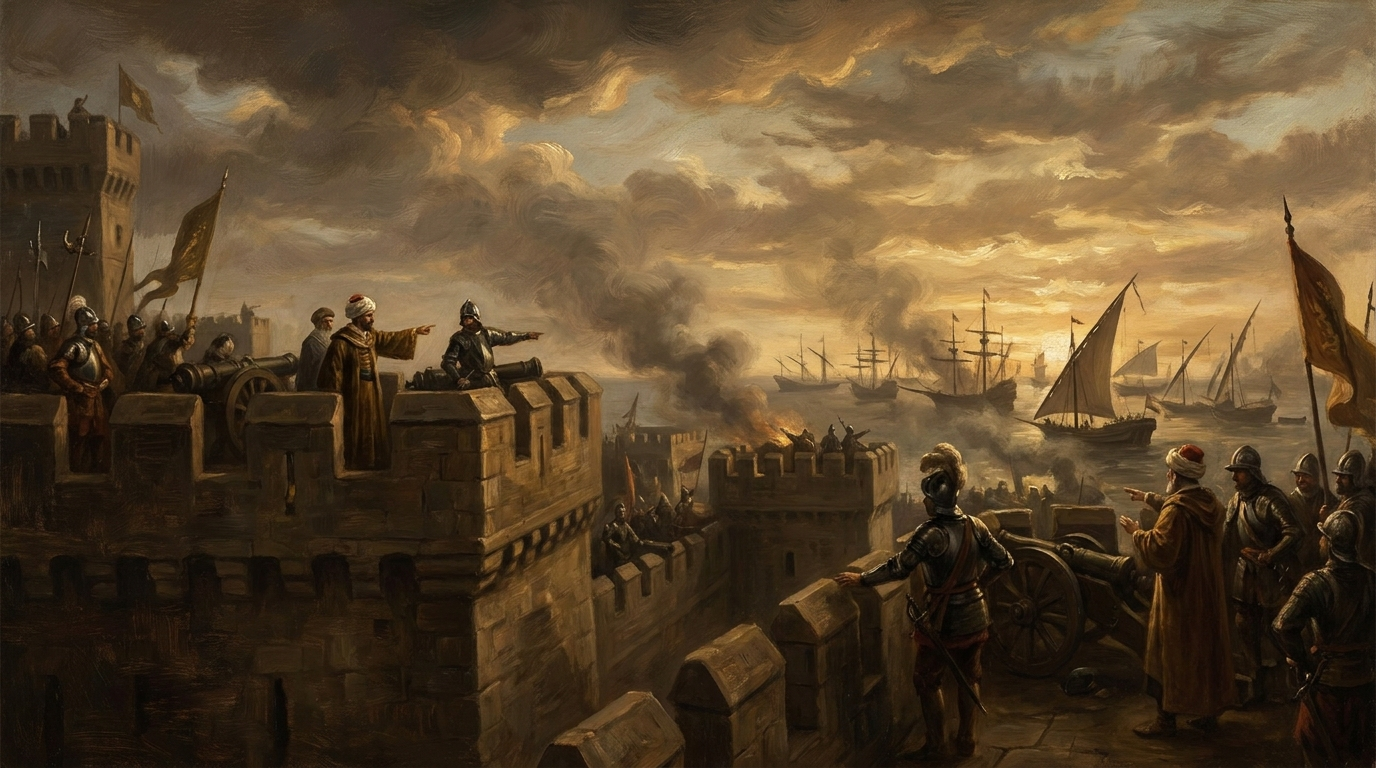
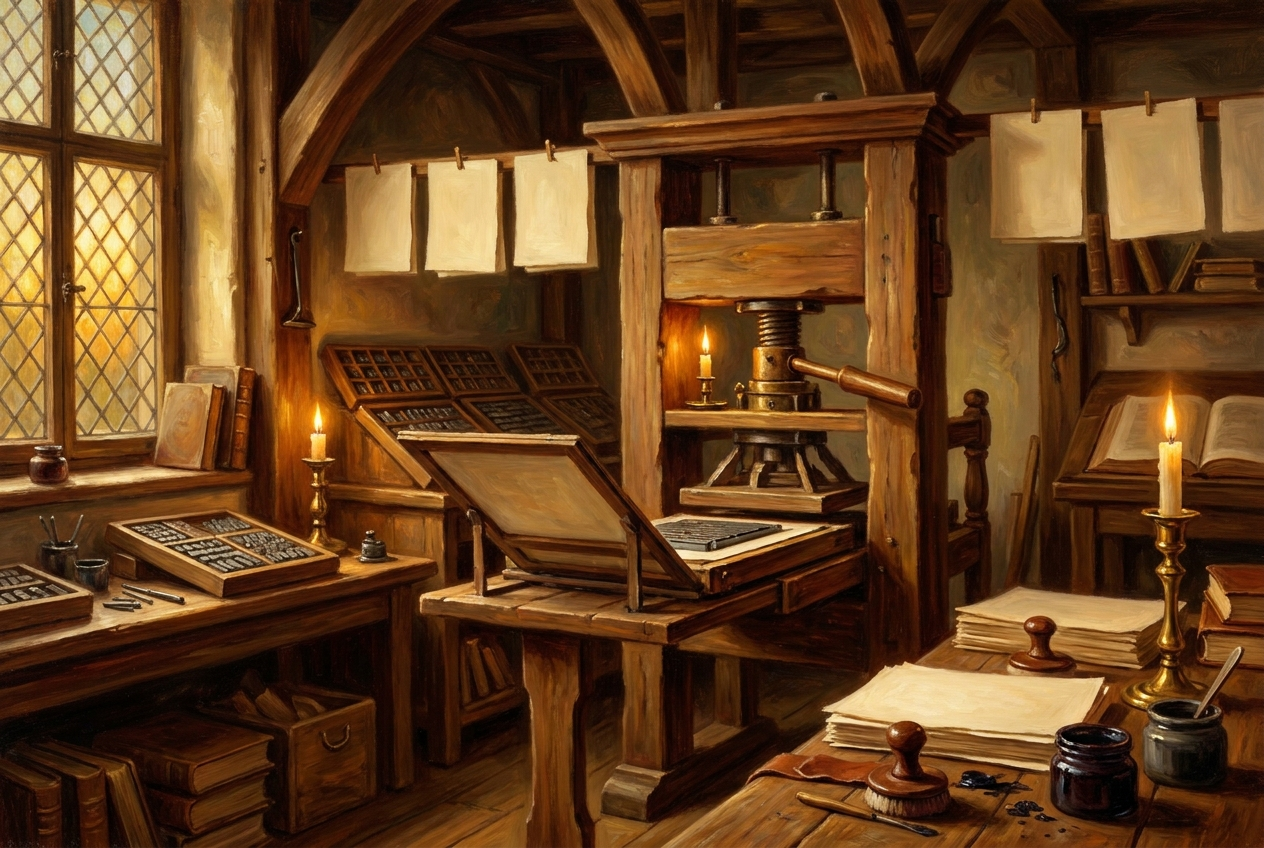
The period's actual ending is a better story than the caricature. Movable type broke the monopoly on copying text, which we covered in how the printing press changed the world, and 1453 rearranged the eastern Mediterranean in a single spring. We built a whole chapter series around that year in the collection The Day the Middle Ages Ended. Disclosure: MindSnap is our app, so that collection is ours, and you can also try the format in a couple of minutes through the Turning Points scenarios.
Take one myth to the next dinner you go to. The armour one gets the best reaction, because everybody has seen the film version and nobody has seen a fifteenth-century wrestling manual.
Frequently asked questions
One snap tomorrow morning.
Two minutes in art, history, psychology, philosophy or economics, then the app tells you you're done.
Get MindSnap on iOSFree daily fact, forever. Pro is $9.99/month or $44.99/year.