What Was the Amber Road? Europe's Forgotten Trade Route

Arts & History Editor
Last updated: August 2026
8 min read

TL;DR
The Amber Road was not one paved highway but a long network of overland paths and river corridors linking the Baltic coast, where amber washes ashore, with the Adriatic and the wider Mediterranean. Amber is fossilized tree resin, light, beautiful and easy to carry, and it was prized across the ancient world: amber appears among the goods in Tutankhamun's tomb, the Greeks linked it to the sun, and Roman writers describe a boom in demand in the first century CE, with an expedition sent north under Nero to fetch it. The route followed geography: river valleys such as the Vistula and the Morava, gaps through the mountains, and trading settlements that grew where goods changed hands. The lasting lesson is that valuable, lightweight goods can sustain very long trade corridors, and that geography, more than any ruler, decides where those corridors run.
Walk along a beach on the Baltic coast after a winter storm and you might find something that looks like a small piece of honey turned to stone. Hold it to the light and it glows. Rub it on wool and it will pick up scraps of paper. People have been collecting these pieces for thousands of years, and for much of that time they were worth carrying across an entire continent.
That journey created one of Europe's oldest long distance trade routes. Historians call it the Amber Road. It is far less famous than the Silk Road, but it follows the same logic, and it tells a very old story about how precious things move.
What amber is, and why people wanted it
Amber is fossilized tree resin, tens of millions of years old. The largest natural deposits in Europe lie around the southeastern Baltic, where amber is released from the seabed and washed up on shore. It is warm to the touch, easy to carve, and sometimes contains trapped insects or plant fragments, which made it seem almost magical.
Demand reached far beyond the north. Amber beads and objects have been found in Bronze Age graves across Europe, and amber was among the goods buried with Tutankhamun in Egypt, although the exact origin of every ancient piece is not always certain. The Greeks told myths linking amber to the tears of the sisters of Phaethon, who crashed the chariot of the sun, and their word for it, elektron, is the root of our word electricity, because rubbed amber builds a static charge.
In Rome amber became a luxury fashion. Pliny the Elder, writing in the first century CE, complained that a small amber figurine could cost more than a healthy slave. He also recorded that under Emperor Nero an expedition travelled north to the amber coast and returned with a huge quantity, used to decorate games in the capital. As with many ancient numbers, historians treat the details with some caution, but the scale of Roman appetite is clear.
Not a road, but a corridor
The name suggests a single highway. The reality was a braided network of paths, river routes and portages that shifted over the centuries. Goods rarely travelled the whole distance with one trader. Instead they passed from hand to hand, community to community, gaining value with every stage.
One well known corridor ran south from the Baltic coast near the mouth of the Vistula, up river valleys into central Europe, through the Moravian region along the Morava valley, and on toward the Danube. From there traders crossed toward the head of the Adriatic, where the Roman city of Aquileia became a major center for working amber into jewelry and small carvings.
Why the route ran where it did
This is where geography does the deciding. Nobody drew the Amber Road on a blank map. It followed the easiest paths through a difficult landscape.
- Rivers as highways. Valleys like the Vistula and the Oder offered flat ground, water, and in places navigable stretches. Following a river was the safest way through forest.
- Gaps in the mountains. The Moravian Gate, a low pass between mountain ranges, gave a natural opening between the northern plains and the Danube basin.
- Crossing points. Fords and river junctions became places where people met, traded and rested.
- Settlements that grew with trade. Where goods changed hands, markets, workshops and towns followed. Carnuntum on the Danube and Aquileia on the Adriatic both prospered partly through this traffic.
The route did not create the geography. The geography created the route, and people then settled along it.
What moved in both directions
Amber went south, but trade is rarely one way. Archaeologists find Roman coins, bronze vessels, glass and other manufactured goods in northern regions, suggesting that amber was exchanged for Mediterranean products. Along the way the route also carried ideas, styles and techniques, which is often the most lasting cargo of any trade corridor.
The pattern: light, valuable goods travel far
Look at the great trade routes of history and a pattern appears. Heavy, cheap goods like grain or stone rarely travelled long distances over land, because the cost of carrying them quickly exceeded their value. Light, valuable goods could bear the journey. Silk, spices, incense, gold and amber all fit that description.
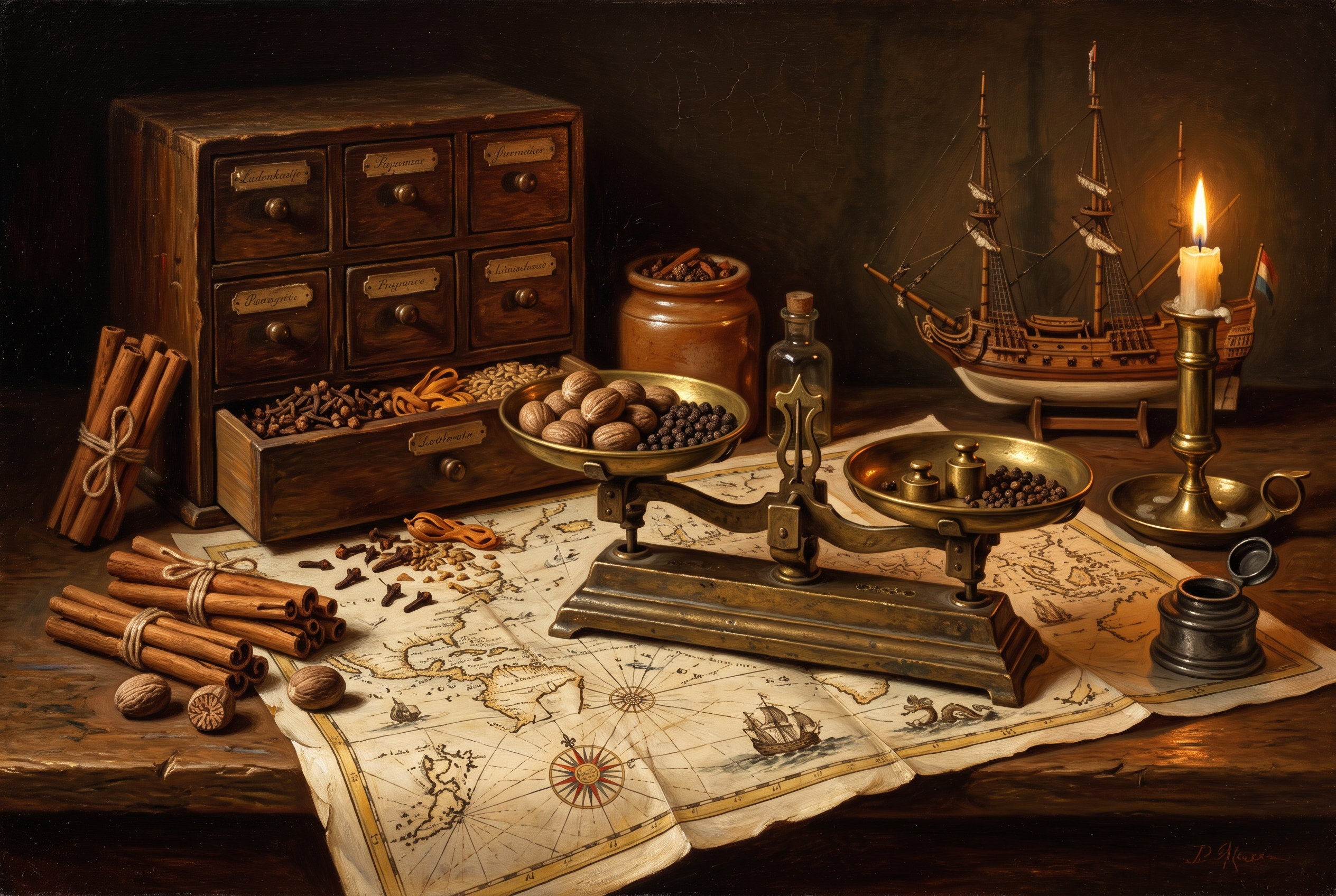
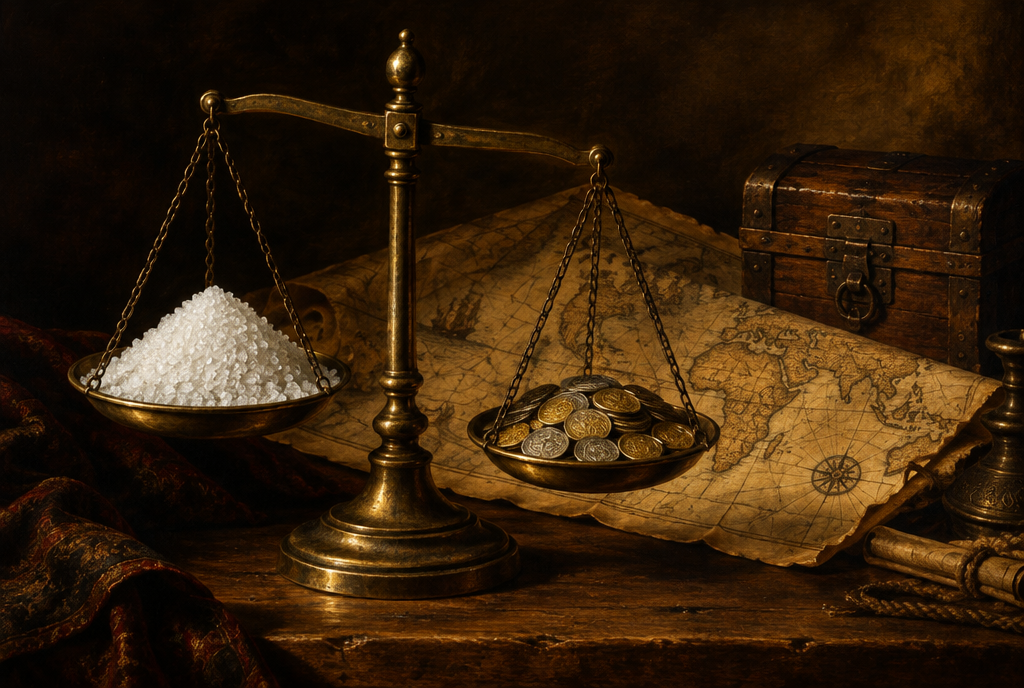
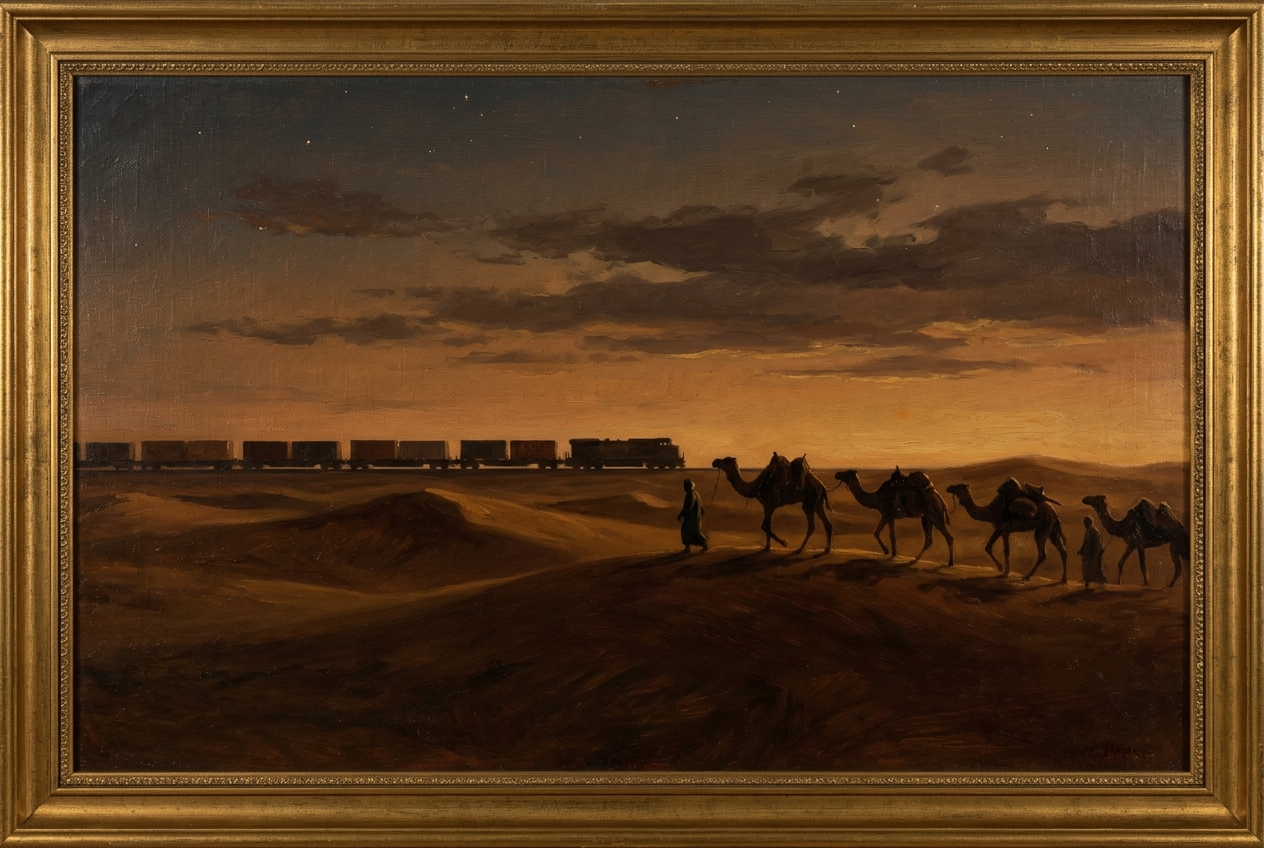
The same logic runs through the spice routes, where pepper and cloves crossed oceans, and through how salt shaped trade and empires, where a scarce essential built fortunes. You can see it again on the Silk Road and its modern echoes. In each case the value of the good decides whether a route exists, and geography decides where it goes.
The Amber Road also shows how routes fade. As political borders changed, as new sea routes opened and as fashions shifted, the old overland corridor lost its importance. Amber never stopped being beautiful, but it stopped being the reason people crossed Europe.
Why it is worth remembering
The Amber Road is a reminder that long before modern states, Europe was already connected by networks of exchange that followed rivers and passes rather than borders. It is a story about patience, geography and the pull of something rare.
If you enjoy histories told this way, a quick disclosure: MindSnap is our app, and it is built around two minute story lessons across five flagship collections plus unlimited topics. Its Turning Points feature lets you step into moments where trade, geography and power changed direction, and choose before you learn what actually happened.
Frequently asked questions
One snap tomorrow morning.
Two minutes in art, history, psychology, philosophy or economics, then the app tells you you're done.
Get MindSnap on iOSFree daily fact, forever. Pro is $9.99/month or $44.99/year.