Orban's Cannon: The Giant Gun That Helped End the Middle Ages

Arts & History Editor
Last updated: August 2026
8 min read

TL;DR
Orban was a cannon founder, usually described as Hungarian, who first offered his services to the Byzantine emperor in Constantinople. The emperor could not pay what he asked, so Orban went to the Ottoman sultan Mehmed II, who could. He cast an enormous bronze bombard that needed large teams of oxen and a prepared road to move, and could fire only a few times a day. During the siege of 1453 it and other Ottoman guns battered the ancient Theodosian Walls. The wider lesson is that gunpowder artillery made high medieval walls obsolete and helped close the medieval world.
In the early 1450s, a craftsman arrived in Constantinople with something to sell. His name, as the chroniclers give it, was Orban, and his trade was casting cannon. He was usually described as Hungarian, though some sources suggest he came from elsewhere in the lands of the Hungarian crown. What is clear is that he knew how to make big guns, and that he went looking for a buyer in the one city that most needed to worry about them.
An offer the emperor could not afford
Constantinople in those years was the shrunken capital of a shrunken empire. Its last emperor, Constantine XI Palaiologos, ruled a city of great walls and very little money. According to the Byzantine historian Doukas, Orban offered his services to the emperor, who granted him a small salary but could not pay what the founder considered his work was worth, or supply the materials a large gun required. Even that small stipend was reportedly not paid reliably.
So Orban did what skilled mercenaries have always done. He took his craft to the other side. The young Ottoman sultan, Mehmed II, was already planning to take the city, and he was willing to pay handsomely. Doukas records that when Mehmed asked whether Orban could cast a gun capable of breaking the walls of Constantinople, the founder answered that he could build one to shatter the walls of Babylon itself.
The first test
Mehmed first set Orban to work on a large gun for Rumeli Hisarı, the fortress he had built on the European shore of the Bosphorus to control shipping. In late 1452 a Venetian ship that tried to pass without stopping was struck and sunk. The message to the city was unmistakable. The sultan's new engineer could hit what he aimed at, and the waters around Constantinople were no longer safe.
Casting a monster
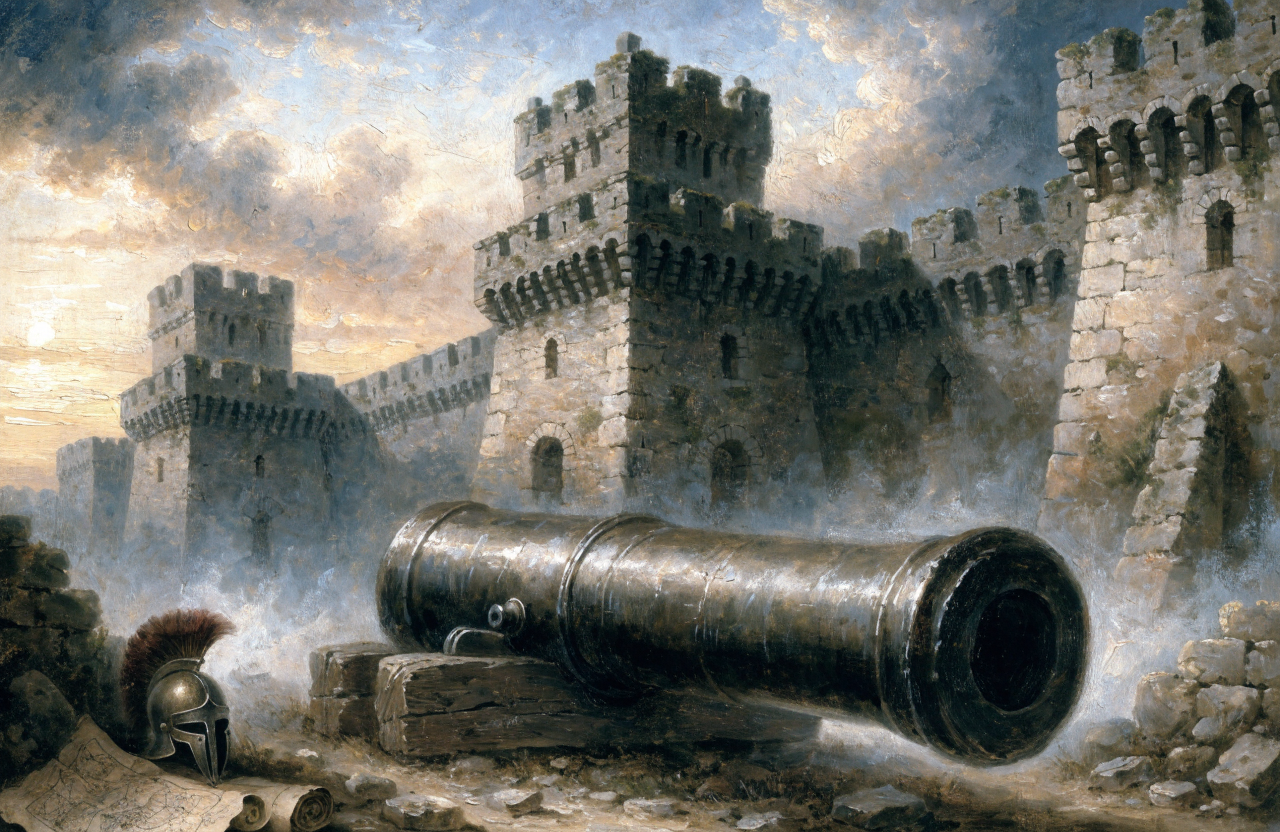
Then came the great bombard. It was cast in bronze at Edirne, the Ottoman capital, in a huge mould dug into the ground. Contemporary accounts describe a barrel of extraordinary size, commonly cited in modern histories at around eight metres long, firing stone balls reported to weigh in the region of several hundred kilograms. The exact figures vary between sources, and chroniclers were not measuring with modern precision, so these are best treated as ranges rather than specifications. Either way, it was one of the largest guns the world had yet seen.
When it was test-fired near Edirne, the chronicler Kritoboulos and others describe a blast heard for miles and a stone ball that travelled a long way before burying itself in the ground. People were warned in advance so that the noise would not cause panic. Whether every detail is exact or not, the point of the demonstration was psychological as much as technical.
Moving the unmovable
A gun that size could not simply be wheeled to the front. Accounts describe teams of dozens of oxen hauling it on linked wagons, with hundreds of men walking alongside to steady it and many more going ahead to level the road and reinforce bridges. The journey of roughly 200 kilometres from Edirne to the walls of Constantinople reportedly took around six weeks in early 1453. The logistics were as impressive as the casting: an empire was building a road for a single weapon.
Slow, dangerous and devastating
Giant bombards had serious weaknesses. Orban's gun had to cool between shots and be carefully reloaded and re-aimed, and it could reportedly fire only about seven times a day. Its aim was imprecise. Gunners poured oil into the barrel to help it cool. Bronze under that kind of strain can crack, and some accounts say the great gun did crack during the siege. One tradition even says Orban himself was killed when a gun burst, though that story is uncertain.
It was also not alone. The Ottomans deployed a substantial artillery train, with many smaller guns alongside the giant bombards, grouped against the weakest sections of the land walls. That combination mattered more than any single cannon. The big gun delivered shattering blows; the rest kept up a steady pounding day after day.
What it did to the Theodosian Walls
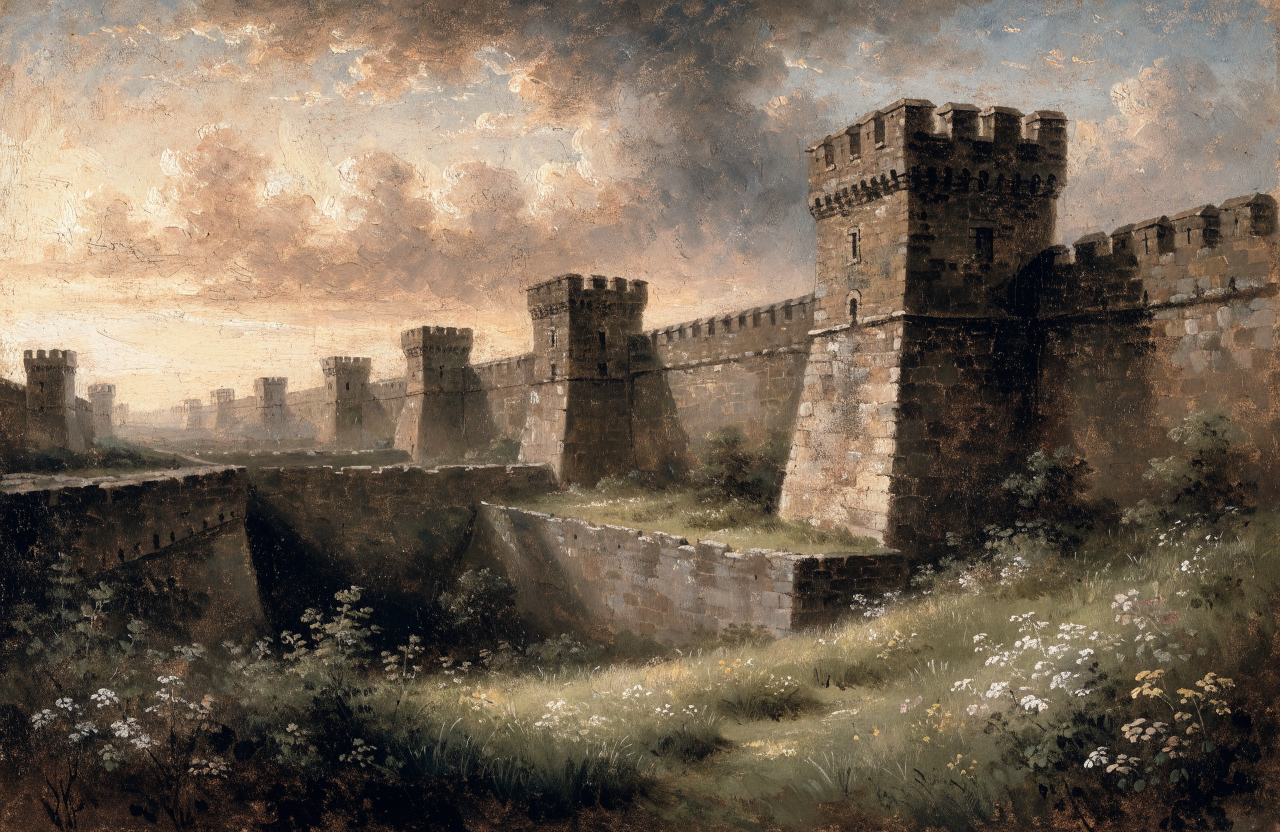
The Theodosian Walls had protected Constantinople for about a thousand years. Their triple line of moat, outer wall and inner wall had defeated armies of every kind. They were designed against battering rams, siege towers and throwing engines. They were tall and relatively thin at the top, which made them excellent against climbing enemies and vulnerable to stone balls fired at speed.
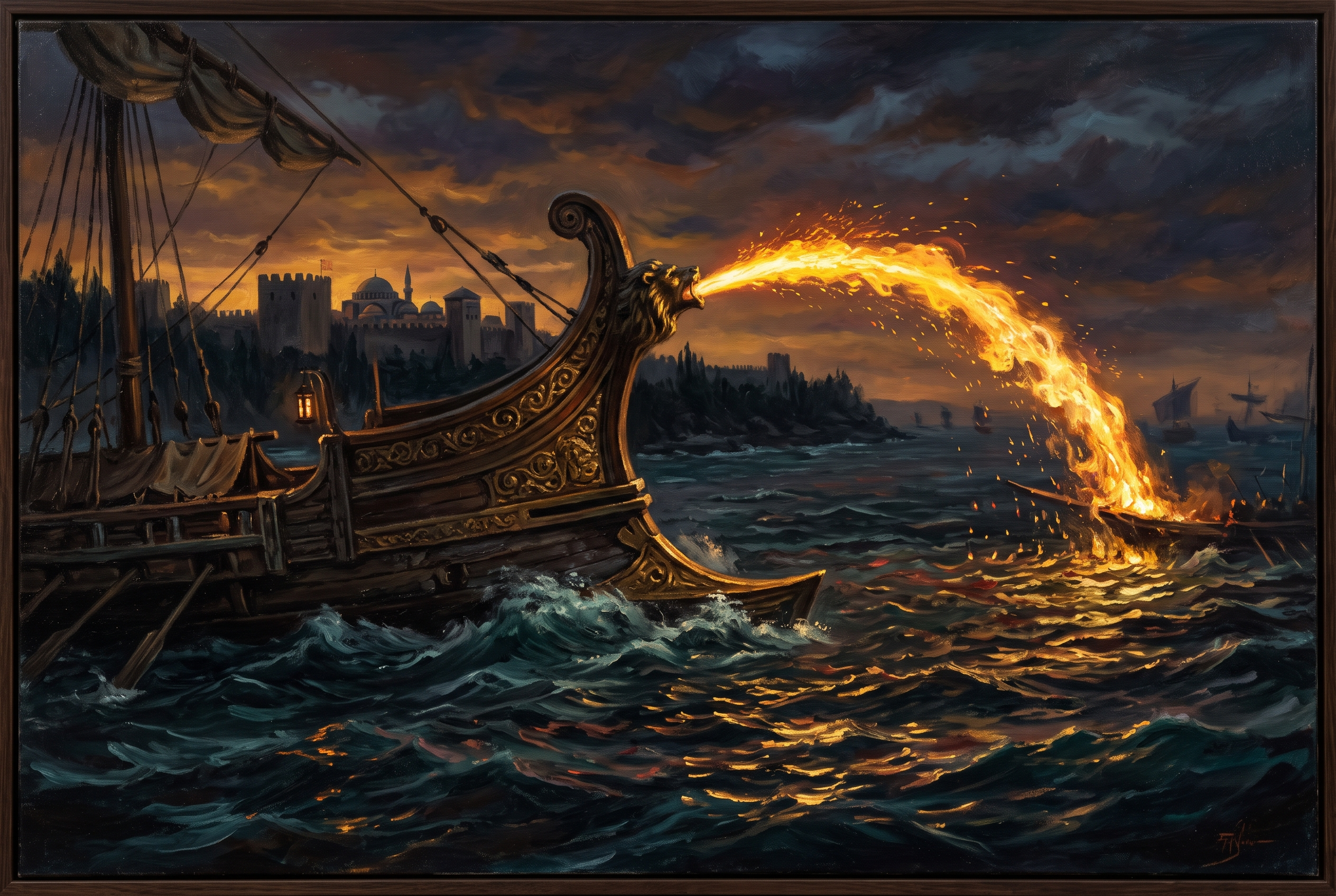
From April 1453 the bombardment began to bring down sections of the outer wall. The defenders, led in part by the Genoese commander Giovanni Giustiniani, worked every night to fill breaches with timber, rubble, earth and barrels, creating improvised stockades that actually absorbed cannon fire rather well. For weeks they held. The city had also relied for centuries on other advantages, including the chain across the Golden Horn and the reputation of weapons like Greek fire. None of it could stop the slow grinding of the guns.
On 29 May 1453, after about fifty-three days of siege, the final assault came through the battered walls, and the city fell. The full story of that day is told in our piece on the fall of Constantinople. Orban's cannon did not win the siege on its own. Numbers, planning, ships dragged overland and the exhaustion of the defenders all played their part. But the guns turned walls that had been nearly impregnable into walls that could be broken.
Why it helped end the Middle Ages
Historians often use 1453 as one of the markers for the end of the medieval period, and Orban's cannon is a big reason why the date feels symbolic. The high curtain wall and the tall tower were the defining military architecture of the Middle Ages. Gunpowder artillery made them obsolete. Within decades, military engineers across Europe began building lower, thicker walls with angled bastions designed to deflect shot and mount guns of their own, the style later called the trace italienne.
Power shifted too. Castles had allowed local lords to defy kings; great guns were expensive, and only states with serious money and organisation could cast, move and supply them. Artillery favoured centralised rulers over fortified nobles, one of the currents that carried Europe toward the early modern world.
We tell this story chapter by chapter in our collection The Day the Middle Ages Ended, where one chapter is devoted to the sultan and his gunsmith. If you want to feel how the decisions of that spring might have gone differently, Turning Points lets you step inside moments like this and choose for yourself. MindSnap is our app, so take the recommendation for what it is.
The founder who changed sides
There is something haunting in the shape of Orban's story. The skill that broke Constantinople was first offered to Constantinople. A little more money, a little more foresight, and the emperor might have had the gun on his own walls. Instead a city that had outlasted a thousand years of enemies fell partly because it could not afford one craftsman. It is a small human detail inside a huge turning point, and that is often where history is most memorable.
Frequently asked questions
One snap tomorrow morning.
Two minutes in art, history, psychology, philosophy or economics, then the app tells you you're done.
Get MindSnap on iOSFree daily fact, forever. Pro is $9.99/month or $44.99/year.