What Really Happened to the Library of Alexandria?

Arts & History Editor
Last updated: August 2026
8 min read
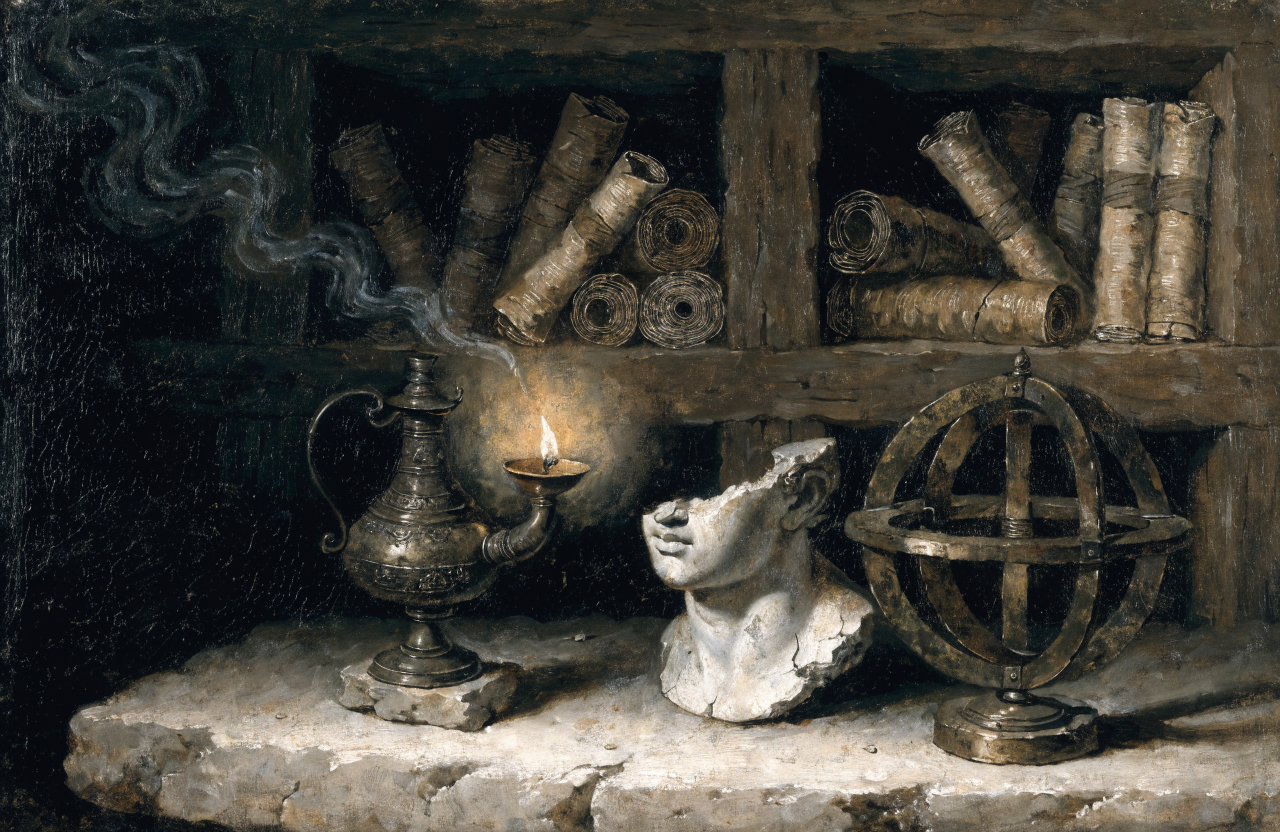
TL;DR
There was no single catastrophe. The Library of Alexandria was part of the Mouseion, a royally funded research institution where scholars were paid to eat, argue and edit texts, and its collection grew through the Ptolemies' aggressive book buying and copying. A fire during Julius Caesar's campaign in 48 BC damaged books near the harbour, and ancient accounts disagree on how much. The institution's real decline was administrative: the expulsion of scholars under Ptolemy VIII in the 140s BC, the loss of royal patronage after Rome took over, centuries of shrinking budgets, and the gradual decay of papyrus that nobody was paid to recopy. Much of the content survived through copies elsewhere. The lesson is that knowledge is usually lost to indifference rather than to flames.
Everybody knows the story. A mob, or a Roman, or a caliph, sets fire to the greatest library in the world, and the accumulated learning of antiquity goes up in one night, setting civilisation back a thousand years. It is a marvellous story. It is also, in almost every particular, wrong.
What happened is slower, less cinematic and considerably more unsettling, because it is the kind of thing that could happen again next year without anyone noticing.
What the library actually was
First, correct the picture in your head. This was not a public building with a reading room. The library was a component of the Mouseion, the House of the Muses, founded in the early third century BC under the first Ptolemies, probably on the advice of scholars brought in from the Greek world.
The Mouseion was closer to a state-funded research institute attached to the royal palace complex. Scholars were given a salary, meals, lodging and freedom from other work. They lived together, taught, and quarrelled about textual variants. A satirist of the period mocked them as pampered birds in a cage, squabbling in the Muses' birdcage, which tells you both that they were well kept and that they were disliked for it.
The output was real and it was philological as much as anything. The scholars there assembled and edited the texts of Homer, imposed order on the Greek literary canon, compiled catalogues, and produced work in geometry, astronomy and geography that shaped the following fifteen hundred years. Eratosthenes measured the circumference of the earth while employed there. The point of the money was to make such work possible.
The Ptolemies' obsessive book collecting
The collection was built with an acquisitiveness that would embarrass a modern archive. The ambition, as ancient writers describe it, was nothing less than a copy of every book in the world.
- Ships arriving at Alexandria were reportedly searched for books. Any found were taken to the library, copied, and the copy returned to the owner while the original stayed.
- Agents were sent abroad with money to buy whatever they could find, which reportedly produced a lively market in forgeries sold to buyers who were paying by the scroll.
- Athens was persuaded to lend the official texts of the great tragedians against an enormous deposit. Alexandria kept the originals and forfeited the money, which was plainly the plan.
- There was a serious translation programme, including Egyptian and Near Eastern material, and the tradition of the Greek translation of Hebrew scripture belongs to this environment.
Scroll counts in ancient sources run from tens of thousands to half a million and cannot be reconciled. Part of the confusion is that a long work occupied many scrolls, and the catalogue apparently distinguished unsorted from edited holdings. Treat all the numbers as rhetorical. The collection was enormous by the standards of the time, and that is as precise as the evidence allows.
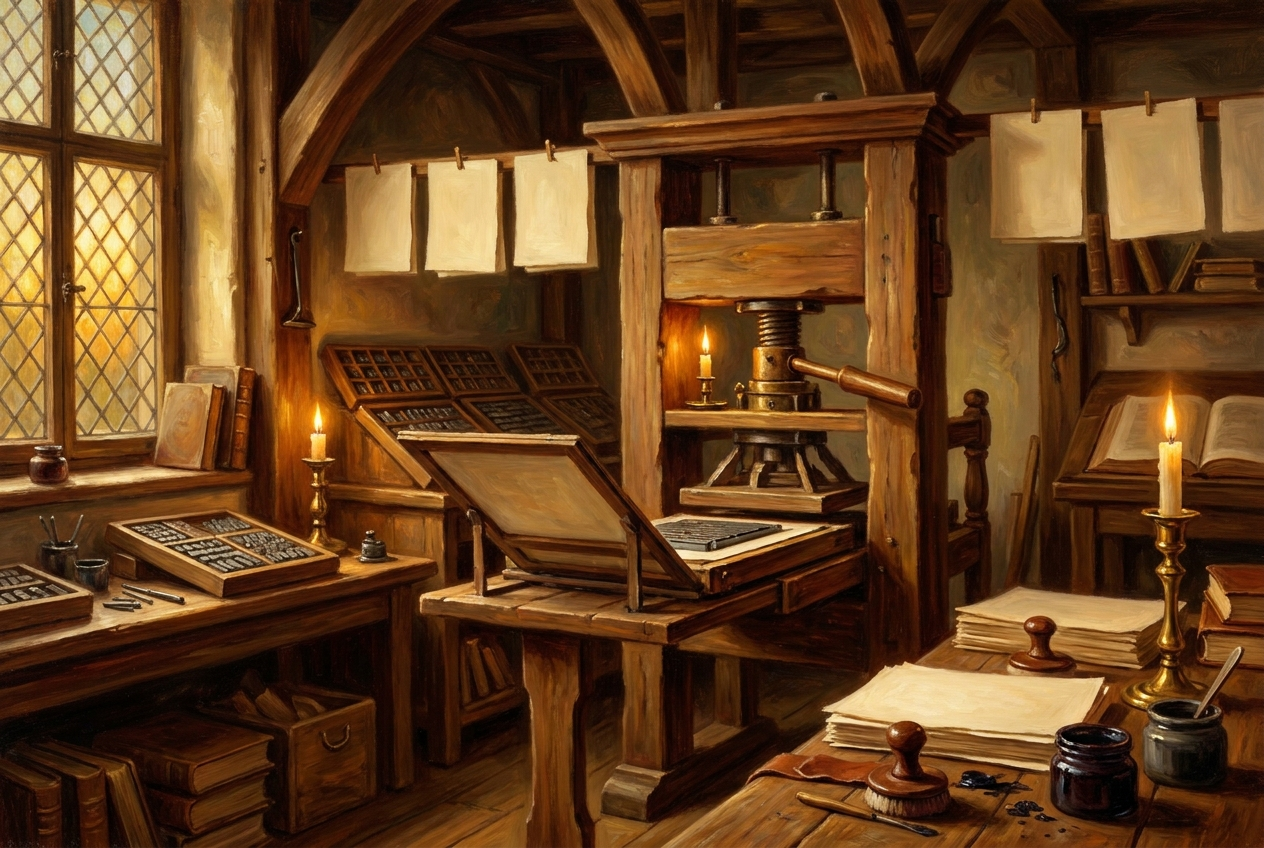
Every one of those scrolls was papyrus, which is the crucial physical fact. Papyrus in a damp climate has a working life measured in a few generations at best. A library of papyrus is not a warehouse but a treadmill: it survives only while someone pays scribes to copy the deteriorating rolls. Stop paying, and the collection quietly dissolves whether or not anyone ever lights a match. It took the invention of print, centuries later, to break that dependency, a shift I wrote about in how the printing press changed the world.
Caesar's fire, 48 BC
Now the famous incident. In 48 BC Julius Caesar was in Alexandria, entangled in a dynastic war between Cleopatra and her brother, and found himself outnumbered near the harbour. He ordered his own ships fired to stop the enemy fleet taking them. The fire spread ashore.
That much is reasonably secure. What burned is not. Caesar's own account of the campaign mentions the fire in the dockyards and says nothing about a library, which is either evidence that the library was untouched or evidence of a man not volunteering awkward details. Later writers differ. Some describe a great loss of books. Seneca cites a figure of forty thousand scrolls destroyed. Others refer to warehouses near the docks holding books intended for export or awaiting shelving, which is a very different loss from the research collection in the palace quarter.
The strongest argument against total destruction is simply that the institution carried on. Strabo visited Alexandria a few decades later and describes the Mouseion as functioning. Scholars continued to be appointed there for centuries. Whatever burned in 48 BC, it did not end the place.
The decline that nobody made a legend of
The damage that actually mattered arrived as administration, and it began before Caesar ever saw Egypt.
In the 140s BC, during a vicious dynastic struggle, Ptolemy VIII turned on the intellectual establishment of Alexandria. The head of the library was replaced by a military appointee, and scholars were expelled or fled the city, scattering to Rhodes, Pergamon, Athens and elsewhere. For a research institution, losing your researchers is worse than losing your shelves. Books without scholars are storage. Scholars without books rebuild.
Then the patronage model failed. The library existed because Hellenistic kings wanted the prestige of hosting the best minds in the world and would pay for it. Once Egypt became a Roman province, that competitive incentive disappeared. Rome had its own libraries and its own status contests. Alexandria became provincially important rather than uniquely so, and provincial institutions get provincial budgets.
From there it is centuries of erosion. Appointments became honorific. Emperors occasionally cut the privileges of members. Buildings in the palace quarter were damaged in the third-century wars and civil disorder that afflicted the city, and there is no sign anyone rebuilt the library on its old scale. Copying programmes lapsed. The papyrus did what papyrus does.
The later candidates for villain also do not hold up as an explanation for the library's end. The destruction of the Serapeum temple in 391 AD and the murder of the philosopher Hypatia in 415 AD were real and grim events in a city tearing itself apart, but by then the great collection had not existed in any meaningful form for generations. The tale of a seventh-century caliph ordering the books burned to heat the city's baths appears only in sources written some five hundred years after the supposed event, and historians treat it as legend. Budget cuts, not barbarians.
What survived, and how
The consoling half of the story is that the library's real product was not the objects. It was edited texts, catalogues and scholarship, and those travelled.
The expelled scholars of the 140s BC carried Alexandrian methods to rival centres. The editions produced at the Mouseion became the basis for copies made everywhere else, which is why the Homer you can buy today descends from decisions made by those men. Later, Byzantine scribes, monastic scriptoria and Arabic translators in Baghdad and elsewhere preserved and transmitted Greek learning that would otherwise have vanished. The physical labour of that survival, letter by letter, is the subject of illuminated manuscripts explained.
What we did lose is genuine and painful: most Greek tragedy, much lyric poetry, whole shelves of history and science known now only from titles and quotations. But those works were not lost in one night in Alexandria. They were lost because at some point, in many places, nobody copied them again. Copying was expensive, and each generation chose what to spend on.
That is the same pattern of misremembering that turns a complicated period into a single slogan, which is why we went looking at the myths about the Middle Ages.
Disclosure, since we are about to mention ourselves: MindSnap is our app. The flagship collection The Day the Middle Ages Ended follows exactly this thread, the fall of Constantinople and the scholars who fled westward with their manuscripts, as a story rather than a summary.
The takeaway
The Library of Alexandria did not fall. It was defunded, depopulated, neglected and allowed to rot, over roughly six centuries, by people who had other priorities and no sense that they were doing anything historic. A fire is an event you can blame someone for. Indifference is a process, and it is much harder to notice while it is happening to you.
Frequently asked questions
One snap tomorrow morning.
Two minutes in art, history, psychology, philosophy or economics, then the app tells you you're done.
Get MindSnap on iOSFree daily fact, forever. Pro is $9.99/month or $44.99/year.