How the Medici Bankrolled the Renaissance

Arts & History Editor
Last updated: August 2026
8 min read
TL;DR
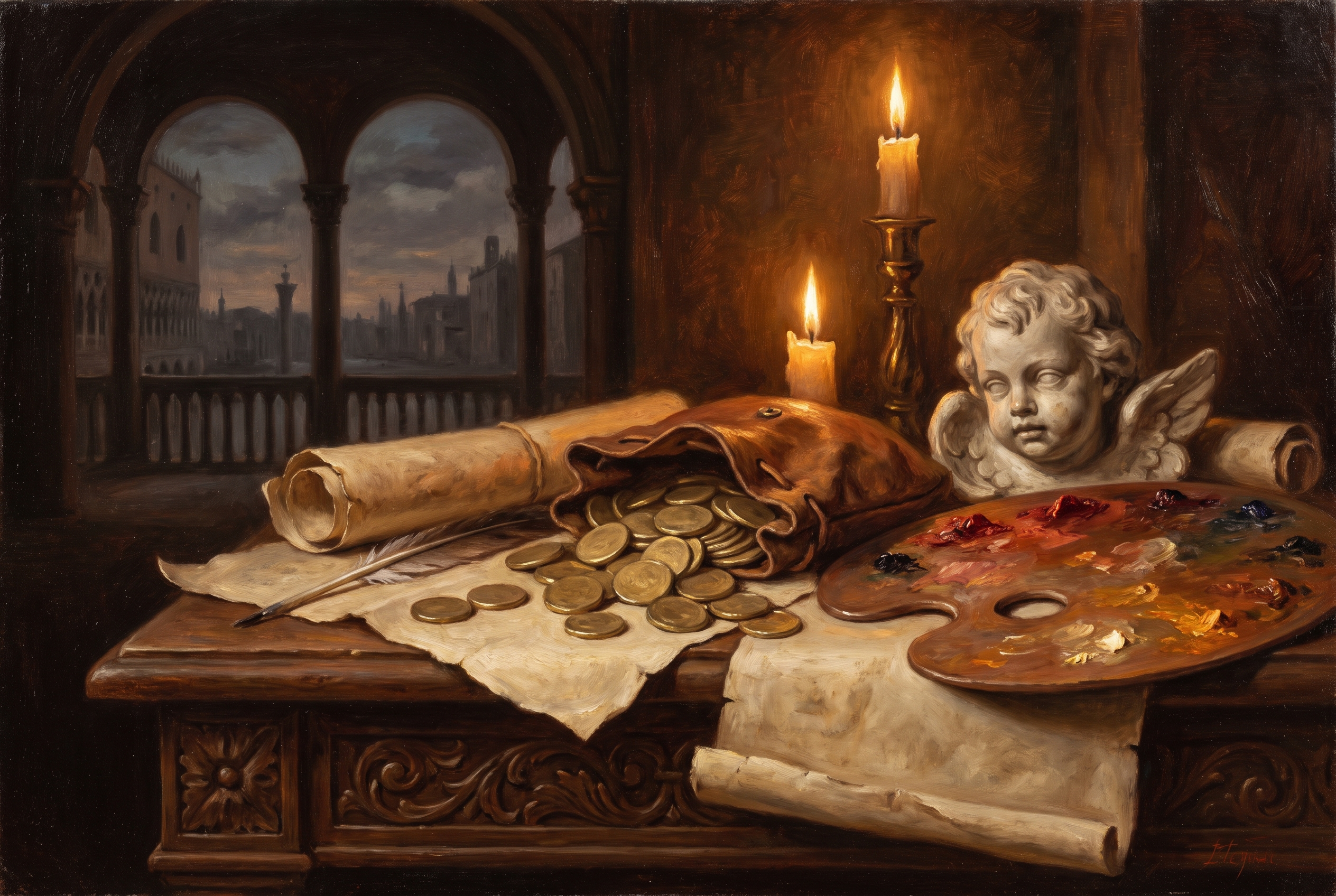
The Medici did not invent banking, but they organised it unusually well: a network of branches run as separate partnerships, careful ledgers, and the enormously valuable business of handling papal accounts. That machine produced the surplus that paid for libraries, chapels, sculpture and the training of young artists, including a teenage Michelangelo in Lorenzo's household. Patronage was piety, politics and reputation management at once. Florence became a talent magnet because the money and the commissions were there. Disclosure: MindSnap is our app.
Walk into the Palazzo Medici in Florence today and the thing that strikes you is how discreet it is from the street. Heavy rusticated stone, no coat of arms shouting from the facade, a plain door. Inside, a courtyard that would have held some of the most expensive objects in Europe. That combination, restraint outside and extraordinary spending inside, is the family in one building.
The story usually gets told as generosity, and there was some of that. But it is more interesting as accounting. To understand how the Medici paid for the Renaissance, you have to start with a ledger.
The machine: how the bank actually worked
Giovanni di Bicci de' Medici built the bank in the early fifteenth century, and its cleverness was structural rather than technological. Instead of one firm with branches, he ran a set of partnerships. The Rome branch, the Venice branch, later Geneva, Bruges and London were legally separate companies in which the Medici held the controlling share, each with a local manager who took a cut of the profits.
The effects were considerable. A failing branch could be closed without dragging down the whole house. Managers had a personal stake in prudence. And the family's exposure to any single ruler's default was limited, which mattered enormously in a century when lending to kings was how banks died.
The bookkeeping was the other half. Double-entry accounting was already spreading through Italian commerce, and the Medici used it seriously: every transaction recorded twice, so the books had to balance and errors surfaced. Combined with the bill of exchange, which let a merchant pay in florins in Florence and have a partner collect in another currency abroad, the bank could move value across Europe without moving coin along roads full of bandits. It also, conveniently, let interest hide inside an exchange rate at a time when the church condemned usury.
The account that changed everything
The single most valuable thing the Medici bank held was not a mine or a fleet. It was the papacy's business. Handling the transfer of church revenues from across Europe to Rome meant enormous flows of money passing through Medici hands, along with the deposits, fees and influence that came with being indispensable to the Curia.
That relationship ran both ways. The bank profited from Rome, and the family later put two of its own on the papal throne, Leo X and Clement VII. Money bought proximity to power, proximity produced more money, and the surplus had to go somewhere. In fifteenth-century Florence, the socially legible place to put it was art.
Patronage as piety, politics and laundry
Cosimo de' Medici, Giovanni's son, understood something that modern institutions rediscover constantly: spending on public magnificence converts wealth into standing. He rebuilt the monastery of San Marco and had Fra Angelico fresco its cells, so that each monk woke to a painting. He funded the library there and made it accessible to scholars, an early public library in effect. He commissioned Brunelleschi and Donatello, and poured money into San Lorenzo.
It would be cynical to call this purely strategic and naive to call it purely devout. A banker in that century had a genuine problem: interest was morally suspect and the afterlife was not an abstraction. Endowing a chapel was insurance. It was also branding, and it was taste. All three motives sat in the same ledger entry without contradiction.
Cosimo also never held formal office in the way you might expect. Florence remained nominally a republic, and he governed through allies, marriages, credit and the quiet leverage of being the man everyone owed. Patronage was part of that toolkit: a family that paid for the city's beauty was harder to attack as a tyrant.
Lorenzo, and the making of a talent magnet
Cosimo's grandson Lorenzo, called il Magnifico, was a weaker banker and a formidable cultural operator. Under him the bank's branches struggled and some closed, while the household became the most concentrated gathering of talent in Europe.
He collected antique gems and manuscripts, supported the Platonic circle around Marsilio Ficino, and kept a sculpture garden where promising young artists could study ancient fragments. A teenage Michelangelo lived in the Medici household, ate at the family table, and learned by copying the antiquities in that collection. Lorenzo also acted as a broker of talent, recommending Florentine artists to courts elsewhere in Italy, which spread the city's reputation further.
This is the part worth dwelling on, because it explains why so much genius appears in one small city in one century. It was not a mysterious flowering of the Tuscan spirit. It was a market. Commissions were plentiful, workshops trained apprentices in an actual craft system, competition was direct and public, and a young artist could see the best work in Europe by walking across town. Talent goes where the work is.
The pattern repeats
If this shape feels familiar, it is because it recurs whenever surplus wealth meets a competitive market for prestige. Two centuries later, Amsterdam merchants with money from shipping and finance produced their own extraordinary art market, with painters working speculatively for a middle class rather than for princes. We traced that in the Dutch Golden Age, and the same city's appetite for speculation produced the episode we unpicked in tulip mania, which is also the subject of our Tulip Fever collection at /collections/tulip-fever.
There is a limit to the flattery, though. The Medici bank eventually failed, undone by bad loans, absentee management and the political convulsions that followed Lorenzo's death, including Savonarola's brief theocracy and the bonfires that consumed part of what the family's money had helped create. The art outlived the institution that paid for it, which is the usual arrangement.
And Florence's rise itself sat inside a larger shift, as trade routes moved and older orders collapsed. If you want to stand inside one of those moments and decide for yourself, our interactive Turning Points feature drops you into exactly that kind of choice. MindSnap is our app, so treat that as a disclosed plug rather than a neutral recommendation.
What stays with me is the plainness of the mechanism. Someone kept good books, held a lucrative account, and decided that the safest place to store a fortune was in stone, pigment and manuscripts. We are still visiting the investment.
The ledger balanced, and the surplus went into paint.
Frequently asked questions
One snap tomorrow morning.
Two minutes in art, history, psychology, philosophy or economics, then the app tells you you're done.
Get MindSnap on iOSFree daily fact, forever. Pro is $9.99/month or $44.99/year.