23 Two-Minute Facts That Will Make You the Best Conversation at Dinner

Curiosity Columnist
Last updated: August 2026
9 min read

TL;DR
A good dinner fact is short, true, and has a second sentence that makes it strange. Here are twenty-three across history, science, art, economics and language, each written so you can retell it in about two minutes without anyone reaching for their phone to check.
The best conversational facts are not trivia. Trivia is a date without a reason. A good fact has a hook, one line of context, and a small twist that makes the person you told it to want to tell someone else. All twenty-three below are structured that way.
History facts worth retelling
- 1Oxford University is older than the Aztec Empire. Teaching at Oxford is documented from around 1096; Tenochtitlan was founded in 1325. Two things you would never file in the same century.
- 2Cleopatra lived closer in time to the first Pizza Hut than to the building of the Great Pyramid. The pyramid was already about 2,500 years old when she was born.
- 3The last execution by guillotine in France happened in 1977, the same year Star Wars opened in cinemas.
- 4Napoleon was not short. He was around 5 foot 7 in modern measurement, average for his time. The myth comes from French inches being longer than English ones, plus enthusiastic British cartoonists.
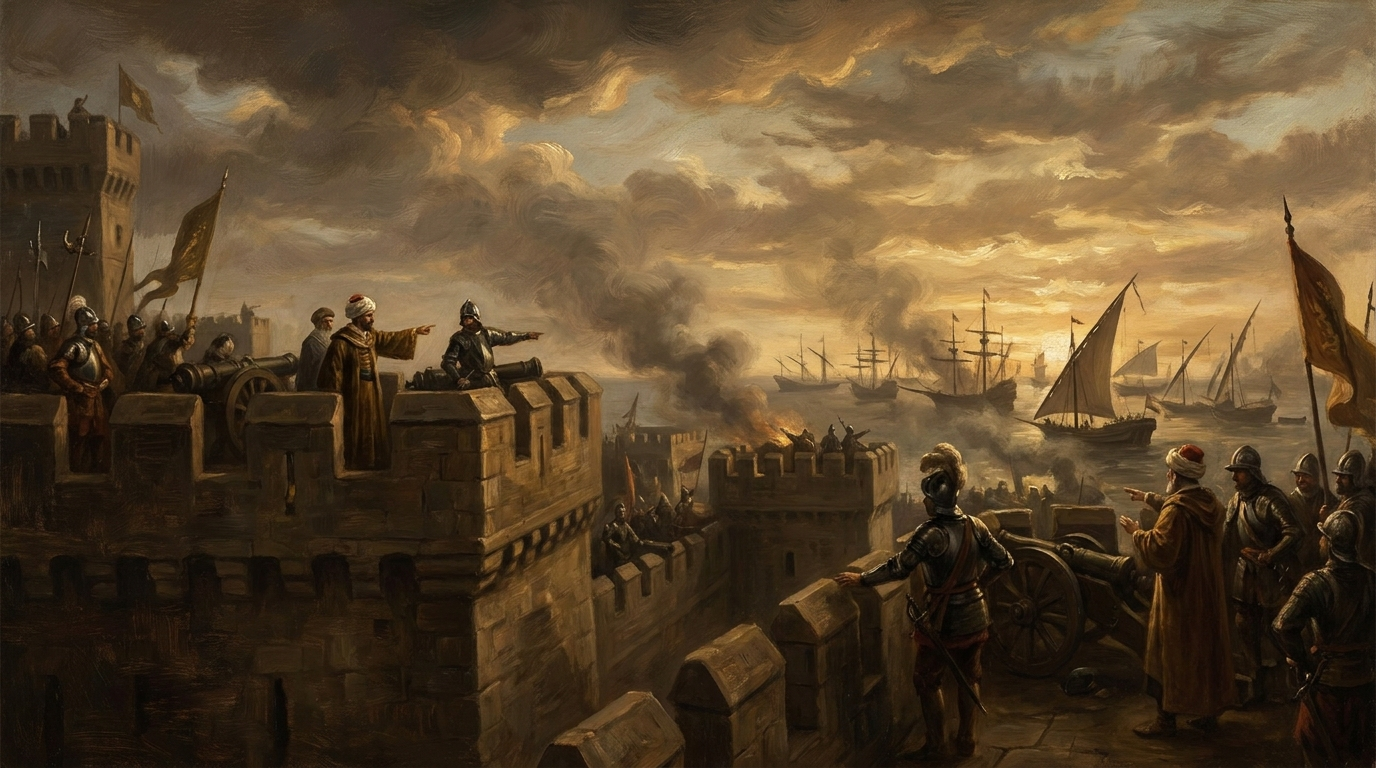
- 5Constantinople's walls held for over a thousand years and fell in 1453 partly because cannon technology finally outpaced masonry. That single afternoon is the subject of our history collection.
- 6Ancient Roman concrete gets stronger in seawater. Modern research points to lime clasts and volcanic ash reacting over time to seal cracks, which is why some Roman harbour structures are still standing.
Science facts that survive scrutiny
- 1Bananas are mildly radioactive, because they are rich in potassium, and one isotope of potassium is unstable. The dose is trivial, but the unit 'banana equivalent dose' genuinely gets used to explain radiation risk.
- 2There are more possible legal chess positions than atoms in the observable universe, by a wide margin. The game tree explodes after about four moves each.
- 3Honey found in Egyptian tombs was still edible. Low water content and acidity make it inhospitable to bacteria, so it effectively does not spoil.
- 4Your stomach lining replaces itself roughly every few days, because it is storing acid strong enough to damage the tissue holding it.
- 5Octopuses have three hearts and blue blood. Two hearts pump to the gills, one to the body, and copper-based haemocyanin carries their oxygen instead of iron-based haemoglobin.
- 6A day on Venus is longer than its year. It rotates once in about 243 Earth days and orbits the Sun in about 225.
Art facts that change what you see
- 1Ultramarine blue was once more expensive than gold, because it came from lapis lazuli mined in what is now Afghanistan. Renaissance contracts specified how much of it a painter could use.
- 2Van Gogh sold very few paintings in his lifetime and wrote hundreds of letters, which is why we know more about his intentions than about many artists who sold plenty.
- 3The Mona Lisa's fame owes a great deal to being stolen in 1911. The empty wall drew crowds, and the newspapers did the rest.
- 4Rembrandt painted roughly forty self-portraits over forty years, and the late ones abandon flattery entirely. That arc is Rembrandt's Shadow.
- 5Michelangelo signed the Pietà after overhearing someone credit it to another sculptor, and reportedly never signed another work.
Economics facts that explain the news
- 1In 1630s Amsterdam, a single rare tulip bulb could be contracted for the price of a house, and the market for those contracts collapsed in weeks. The full story is Tulip Fever.
- 2About a fifth of the world's seaborne oil passes through a strait about 33 kilometres wide at its narrowest. Geography, not policy, makes that number matter. More in our chokepoints piece.
- 3The word 'salary' descends from Latin for salt, which was a genuinely strategic commodity because it was the only reliable way to preserve food.
- 4Shipping containers, standardised in the 1950s and 60s, cut cargo handling costs so dramatically that they arguably did more for globalisation than any trade agreement.
Language facts people argue about
- 1'Set' has one of the longest entries in the Oxford English Dictionary, with hundreds of distinct senses. Ask someone to define it without using it and watch the pause.
- 2The word 'nice' originally meant foolish or ignorant, from Latin nescius. Meaning drift is the rule, not the exception.
- 3Iceland has a naming committee that rules on whether new given names fit Icelandic grammar and orthography, which means a name can be formally rejected.
- 4'Quarantine' comes from the Venetian forty days ships waited before landing during plague outbreaks. The number is baked into the word.
How to actually use these
Two rules. First, never open with 'fun fact', which sets an expectation nobody can meet. Attach the fact to what is already being discussed, or to something on the table. Second, know the second sentence. Anyone can say ultramarine cost more than gold. The version people remember explains why, and what painters did about it.
There is a learning reason this works too. Retelling a fact is retrieval practice, which is one of the strongest known ways to make something stick. Saying it out loud at dinner does more for your memory than reading it three times did, a mechanism we cover in the forgetting curve.
A fact you can retell is worth ten you merely recognise.
Frequently asked questions

One snap tomorrow morning.
Two minutes in art, history, psychology, philosophy or economics, then the app tells you you're done.
Get MindSnap on iOSFree daily fact, forever. Pro is $9.99/month or $44.99/year.