Socrates vs Plato: What Is the Difference?

Arts & History Editor
Last updated: August 2026
6 min read
TL;DR
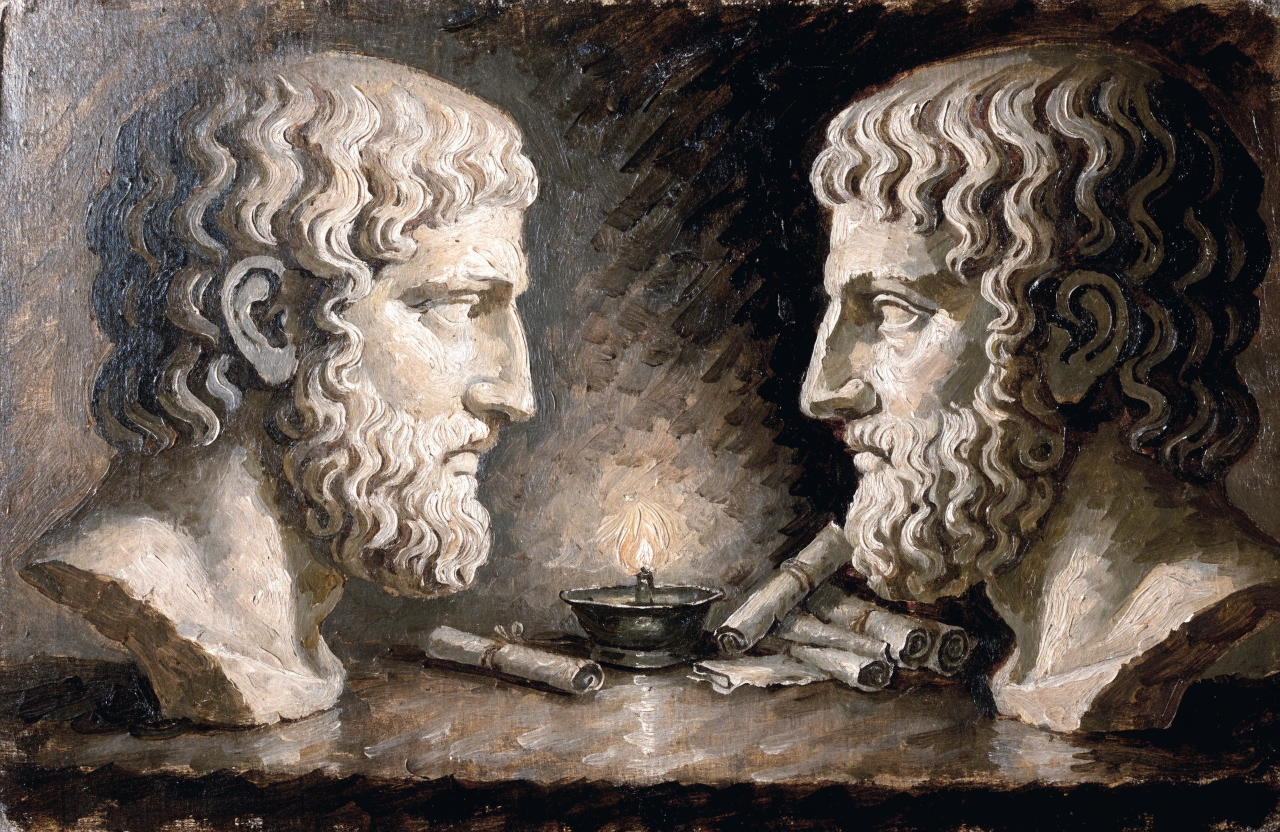
Socrates and Plato were teacher and student in Athens, and almost everything we know about the first comes from the second. Socrates wrote nothing at all. He asked relentless questions in public, claimed to know nothing worth knowing, and was executed by his city in 399 BC. Plato wrote dialogues in which Socrates is the leading character, founded the Academy, and built a full philosophical system including the theory of forms and the political argument of the Republic. That creates the Socratic problem: when a dialogue makes a grand metaphysical claim, is that the historical Socrates or Plato using him as a mouthpiece? The rough consensus is that the early dialogues sound more like the man and the later ones more like the pupil. The short version for a dinner table: Socrates is the method, Plato is the system.
Every so often a search query is a genuinely good philosophical question in disguise, and this is one of them. People type socrates vs plato expecting to be told which one had which idea. The honest answer is stranger and better: we cannot fully separate them, and the reason why is one of the most interesting problems in the history of ideas.
Let me start with the fact that reframes everything else.
Socrates wrote nothing
Not a treatise, not a note, not a shopping list that survived. The most influential figure in Western philosophy left no text whatsoever, apparently by choice. He worked in conversation, in the marketplace and the gymnasium, buttonholing generals and poets and asking them to define courage or piety and then patiently showing that they could not.
So everything we have is secondhand. Plato is our main source, in the form of dialogues where Socrates is the central speaker. Xenophon, another student, gives us a plainer and more practical Socrates who sounds rather like a sensible retired officer. Aristophanes the comic playwright gives us a Socrates as an absurd figure in a hanging basket, which tells us at least that he was famous enough in Athens to be worth mocking on stage. Aristotle, writing later, comments on him at one remove.
Four sources, four fairly different men. If that already sounds like a problem, it is, and it has a name.
The Socratic problem
The Socratic problem is the question of how to separate the historical Socrates from the literary character Plato wrote. It matters because Plato was not a stenographer. He was a philosopher of the first rank writing dramatic literature, and he used his old teacher as his protagonist for roughly his entire career, including in works composed decades after Socrates died.
Scholars mostly work with a rough developmental picture. The early dialogues tend to be short, focused on defining a single virtue, and they usually end in failure: nobody arrives at a definition, and the conversation stops with everyone more confused but more honest. That inconclusiveness feels like a portrait of a real practice rather than an author making a point. The middle and late dialogues get longer and more ambitious, Socrates starts delivering elaborate positive doctrines, and the other characters shrink into people saying yes, quite so, at intervals. That reads far more like Plato using a beloved voice.
So the working rule of thumb: the more a dialogue ends in a shrug, the more likely you are hearing Socrates. The more it ends in a system, the more likely you are hearing Plato.
How their ideas actually differ
With that caveat in place, the contrast is real and useful.
Socrates gave us a method rather than a doctrine. He asked for a definition, took the answer seriously, drew out its consequences, and produced a contradiction from the answer itself. This is elenchus, and it is destructive by design: it clears out confident nonsense without replacing it. He paired it with a professed ignorance, the famous claim that he knew that he did not know, which is either the humblest or the most infuriating opening line in intellectual history depending on whether you are the one being questioned.
His concerns were ethical and immediate. What is justice, what is courage, how should a person live, can virtue be taught. He does not appear to have cared much about cosmology or mathematics.
Plato took that method and built with it. His theory of forms holds that the things we see are imperfect instances of perfect abstract realities: every actual circle is a flawed attempt at Circle, every just act a partial reflection of Justice. He founded the Academy in Athens, a durable institution rather than a street-corner practice. And in the Republic he laid out a full political vision, including the philosopher rulers, the rigorous education programme and the argument that a just city and a just soul share a structure. None of that is street questioning. That is architecture.
| Socrates | Plato | |
|---|---|---|
| Wrote | Nothing | Dialogues, many of them, over decades |
| Method | Questioning until definitions collapse | Systematic argument, often through dialogue |
| Signature claim | He knew that he did not know | The theory of forms |
| Focus | How should a person live | Reality, knowledge, politics, education, the soul |
| Institution | The marketplace | The Academy |
| Fate | Executed by Athens in 399 BC | Died old, in Athens, having founded a school |
The other pairing: Plato and Aristotle
Worth one paragraph, because it completes the chain and it is the next thing people ask. Plato taught Aristotle, who then disagreed with him on the central point. For Plato the real is the abstract form; for Aristotle the real is the individual thing in front of you, with its form inside it rather than in another realm. Three generations, three temperaments: the questioner, the systematiser, the cataloguer. Western thought has essentially been arguing among those three positions ever since.
Why the pairing mattered so much
A method without a system dies with its practitioner. A system without a method calcifies into dogma. Socrates and Plato happen to be the rare case where both arrived together, and the combination is why this particular Athenian conversation became the spine of a tradition rather than a local curiosity.
There is also the awkward, indispensable fact of the execution. Athens tried Socrates and put him to death, and his student then spent a lifetime writing about a city that killed the best man in it for asking questions. Plato's suspicion of democratic crowds and his interest in rule by the wise are not abstract preferences: they are the thinking of someone who watched a vote go that way. We tell the story of the trial itself in why Socrates was sentenced to death.
The influence of the pair runs onward into later schools too, including the practical ethics we cover in the stoicism starter guide.
Three takeaways for a dinner table
- 1Socrates wrote nothing. If someone quotes a Socrates line, they are almost certainly quoting Plato writing Socrates, which is a fine thing to point out gently between courses.
- 2The most Socratic thing about Socrates is that his conversations usually fail to reach a conclusion, and that this was the point rather than a defect.
- 3The theory of forms is Plato's, not Socrates', and the philosopher rulers of the Republic belong to the student who watched a jury condemn his teacher.
Disclosure since I am about to mention our own product: MindSnap is our app. The trial and its aftermath are the subject of The Hemlock Hour, one of our story collections, and if you would rather test your own judgement than read about someone else's, Turning Points puts you in the room in Athens in 399 BC with the same choices Socrates had. Fair warning: most people take the deal he refused.
For more of this sort of thing, our collection of philosophy facts that sound made up is the natural next stop.
Frequently asked questions
One snap tomorrow morning.
Two minutes in art, history, psychology, philosophy or economics, then the app tells you you're done.
Get MindSnap on iOSFree daily fact, forever. Pro is $9.99/month or $44.99/year.