The Hawthorne Effect Explained: Does Being Watched Change How You Perform?

Psychology & Habits Writer
Last updated: August 2026
7 min read
TL;DR
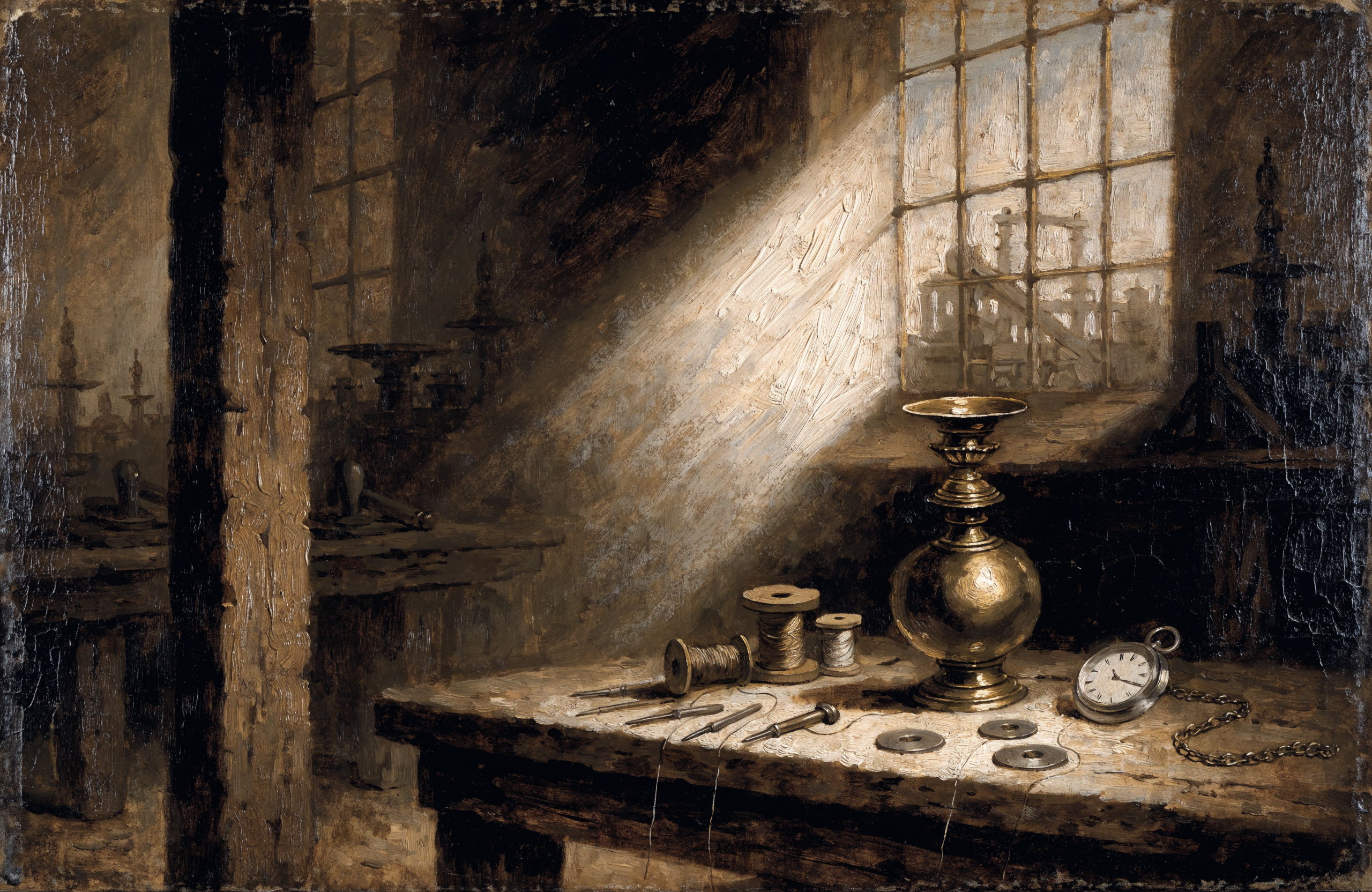
At the Hawthorne Works outside Chicago in the 1920s and 1930s, engineers changed the lighting in a workshop to see how it affected output. Output rose. Then they dimmed the lights, and output rose again. The tidy conclusion that entered every textbook was that being studied, not the lighting, was doing the work. Later re-analyses of the original records complicate that story: incentives, feedback, rest breaks, shorter hours and the replacement of workers all changed at the same time, and the lighting results are messier than the legend. What survives is more modest and still useful. Attention and measurement do change behaviour, at least for a while, which is why studies need control groups, why a new tracking app produces a flattering first fortnight, and why deliberate, gentle accountability works better than either being ignored or being surveilled.
Somewhere in the story of nearly every management course there is a factory outside Chicago where the lights went up, the workers got faster, the lights went down, and the workers got faster again. From that oddity comes one of the most widely repeated ideas in psychology: people behave differently when they know they are being watched.
It is a good idea, it is broadly supported, and the famous study behind it is considerably less clean than the version you were told. Both halves of that are worth knowing.
What actually happened at the Hawthorne Works
The Hawthorne Works was a large Western Electric plant in Cicero, Illinois, making telephone equipment. Starting in the mid 1920s and running into the early 1930s, it hosted a long series of industrial research projects, some funded with an interest in whether better lighting would raise productivity.
The illumination experiments produced the anecdote. Groups worked under varied light levels, and output tended to rise across conditions rather than tracking brightness in the way the engineers expected. Later phases, most famously the relay assembly test room, went further. A small group of women assembling telephone relays worked through a long sequence of changes: rest pauses, shorter days, a shorter week, refreshments, changes to how they were paid.
Output generally climbed. When some conditions were withdrawn, output did not simply fall back to where it started. The researchers, and later the Harvard team led by Elton Mayo who popularised the work, concluded that the social situation mattered more than the physical one. The women were a selected group, separated from the main floor, consulted about changes, given feedback on their performance, and visited constantly by observers. They were, in a word, noticed.
The name, and the neat story that followed
The phrase Hawthorne effect was coined decades after the fact, and like many coined phrases it travelled further than the evidence. In its strongest textbook form it claims that the mere act of observation causes a measurable improvement in performance, full stop.
Researchers who went back to the surviving archival records found several problems with that clean reading. Some of the more important ones:
- Many things changed at once. Pay arrangements, breaks, working hours and supervision style all moved during the same period, so isolating observation as the cause is not possible from the design.
- The lighting data are thinner and noisier than the legend suggests, and some of the most quoted patterns rest on very small groups.
- Personnel changed. In the relay assembly room, two workers were replaced partway through, which is not a neutral event when you are tracking a group's output over time.
- Feedback and supervision improved. The participants received unusually direct information about their own output and unusually friendly oversight, both of which are ordinary performance levers rather than mysterious ones.
- Ordinary learning happens. Any group doing a repetitive assembly task for months gets better at it, and a long study will capture that curve whether or not anyone is watching.
None of this means the researchers were dishonest or the work was worthless. The Hawthorne studies opened up the study of the social side of work, which had been largely ignored, and that was a genuine contribution. It means the specific causal claim was overstated by the retellings, which is a normal fate for a memorable finding.
What survives, and it is not nothing
Strip the legend back and a defensible version remains. When people know their behaviour is being recorded, attended to, or evaluated, behaviour often shifts in the direction they believe is wanted, and the shift tends to be temporary unless something else sustains it.
You can see the general mechanism in better-controlled work on adjacent effects. Expectations communicated by an observer can shape outcomes, which is the territory of the Pygmalion effect. The presence of an authority who appears to sanction what you are doing can move behaviour a very long way indeed, which is the territory of the Milgram experiments. And the private conviction that everyone is scrutinising you turns out to be mostly wrong, which is the spotlight effect. Observation matters, but who is watching and what you think they want matters more than the raw fact of being seen.
Where the idea still earns its keep
Research design
This is the least glamorous and most important use. If participating in a study can itself change the outcome, you need a control group that is also being studied, so that the observation is common to both arms and only the treatment differs. Any evaluation that compares an observed group with unobserved records is measuring two things at once.
Workplaces
The practical lesson is not that watching people makes them better. It is that attention is a real input, and it comes in two very different flavours. Interest, feedback and consultation tend to raise performance. Monitoring that feels like distrust tends to raise the appearance of performance while quietly damaging the parts nobody is measuring.
The Hawthorne participants were consulted about changes before they were made. That detail is usually dropped from the retelling, and it may be the most transferable thing in the whole affair.
Self-tracking
Anyone who has started a step counter, a food diary, a reading log or a habit streak knows the pattern. The first two weeks are excellent. Measurement focuses attention, and attention alone buys you a real improvement. Then novelty fades and you return to something nearer your baseline, unless the tracking has quietly changed what you actually do.
Treat the honeymoon as data about your potential, not your habit. Judge a new system by week six.
Accountability without anxiety
If observation is a lever, the useful question is how to pull it gently. A few things that tend to work:
- Choose the observer. A friend you have told about a goal, a small group, or a coach you asked for is different from surveillance, because you consented and you set the terms.
- Make the metric something you control. Sessions completed and pages read are yours. Outcomes like weight or exam marks are influenced by things you cannot steer, and tracking them invites anxiety rather than action.
- Report the process, not the verdict. Saying I studied four times this week invites help. Saying I am doing well invites performance.
- Keep the audience small. Broad audiences push people toward looking consistent rather than being honest, and honesty is what makes accountability work.
- Expect the drop, plan for it. When the first flush of attention fades, the system that survives is the one small enough to do on a bad day.
A daily streak in an app is a mild, voluntary version of the same lever. We use one in MindSnap, which is our app, and we try to keep it honest: a two minute lesson with a recap question, five flagship story collections plus unlimited topics you can request, and no pretence that a counter is the same thing as understanding. You can browse topics to see the range.
Where to go next
If the deeper question interests you, that situations shape behaviour more than we like to admit, the Hawthorne story is a mild entry point and Stanley Milgram's obedience research is the hard one. Our collection The Obedience Files walks through what was actually run in that basement laboratory at Yale, the variations that almost nobody quotes, and the ethical fight that followed. You can see the full set at collections.
The through line is the same in both cases. A behaviour you would explain by character often turns out to be explained by the room: who else is present, what they seem to expect, and whether anyone is paying attention.
Frequently asked questions
One snap tomorrow morning.
Two minutes in art, history, psychology, philosophy or economics, then the app tells you you're done.
Get MindSnap on iOSFree daily fact, forever. Pro is $9.99/month or $44.99/year.