Chapter 3 of 8
Enigma: the machine that could not be broken
Rotors, a plugboard, and a setting that changed every day. On paper the number of possibilities was so large that reading the traffic looked impossible.
2 min read
Enigma was a commercial invention before it was a military one. Patented in the 1920s and sold for protecting business secrets, it was adopted and progressively strengthened by the German armed forces, who by the late 1930s regarded it as effectively secure.
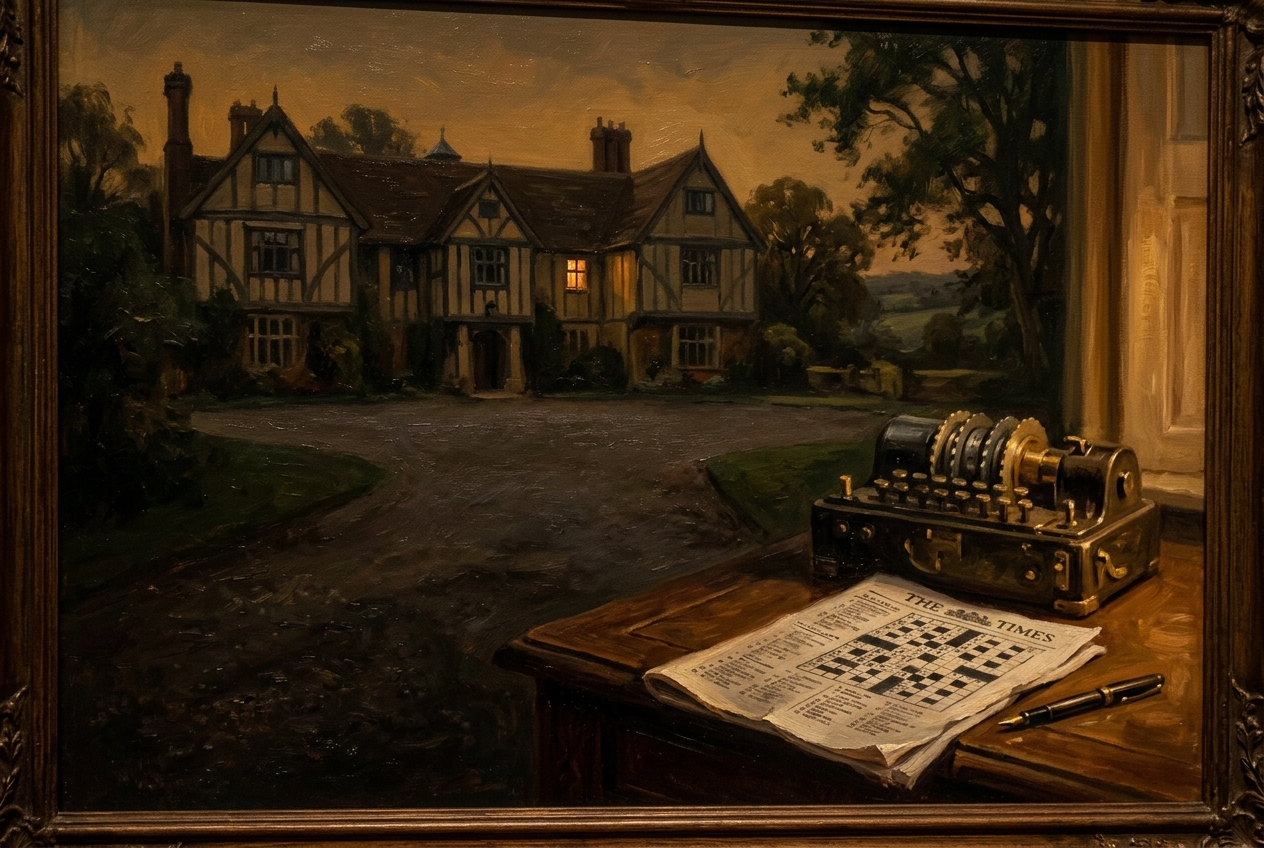
Here is the mechanism, without the mathematics. You press a key. Current runs through a plugboard at the front, which swaps certain letters in pairs, then through a stack of rotating wheels, each wired to scramble the signal in its own way. It reaches a reflector at the end, turns around, and comes back through the rotors and plugboard by a different path, lighting a lamp for the enciphered letter. Then, crucially, a rotor steps round one position, so the next time you press the same key you get a different letter.
That stepping is what defeats the classic attack on ciphers. If E always became Q, a codebreaker would simply count letter frequencies and be finished by lunchtime. In Enigma a repeated letter in the plaintext produces different letters in the ciphertext, so the message has no stable substitution to attack.
Now the size of the problem. The operator set which rotors to use and in what order, the starting position of each, the ring settings, and the plugboard pairings. The plugboard alone, with ten cables, accounts for the overwhelming majority of the possible configurations. The total number of settings runs to the order of ten to the twenty-third power. Every day at midnight the whole configuration changed, according to key sheets distributed in advance and different for each network.
So a brute force search was out of the question, and the Germans knew it. Their confidence was mathematically reasonable. It was also incomplete, because a cipher is never only a machine. It is a machine plus the humans operating it plus the procedures they are told to follow.
And Enigma had one specific structural flaw. Because the reflector sent the current back through the rotors, no letter could ever encipher as itself. A in the message never came out as A. That sounds trivial. It is not. It means that if you guess what a stretch of plaintext says, you can slide your guess along the ciphertext and instantly reject every position where a letter matches itself. The impossible search collapses into something narrower.
Turning that observation into readable German still required a mathematical framework and a machine to run it. The first version of both came from outside Britain, from a country that was overrun before the fight properly began.
Keep going
Liked making the call?
MindSnap delivers a 2-minute turning point like this every day, plus a lesson, a quiz and a daily fact.
Free daily fact · price shown up front · cancel in one tap