How Old Master Workshops Worked: Apprentices, Copies, and the Studio System
Arts & History Editor
Last updated: August 2026
8 min read

TL;DR
An Old Master workshop was a place of training and production, not always a lone genius painting in silence. Pupils learned through materials, drawing, copying, and supervised work, while collaboration varied between artists and commissions. Rembrandt taught fee-paying pupils in Amsterdam who learned his visual language, leaving attribution puzzles that still matter. A copy can be historically authentic without being painted by the master, and a signature is only one piece of evidence.
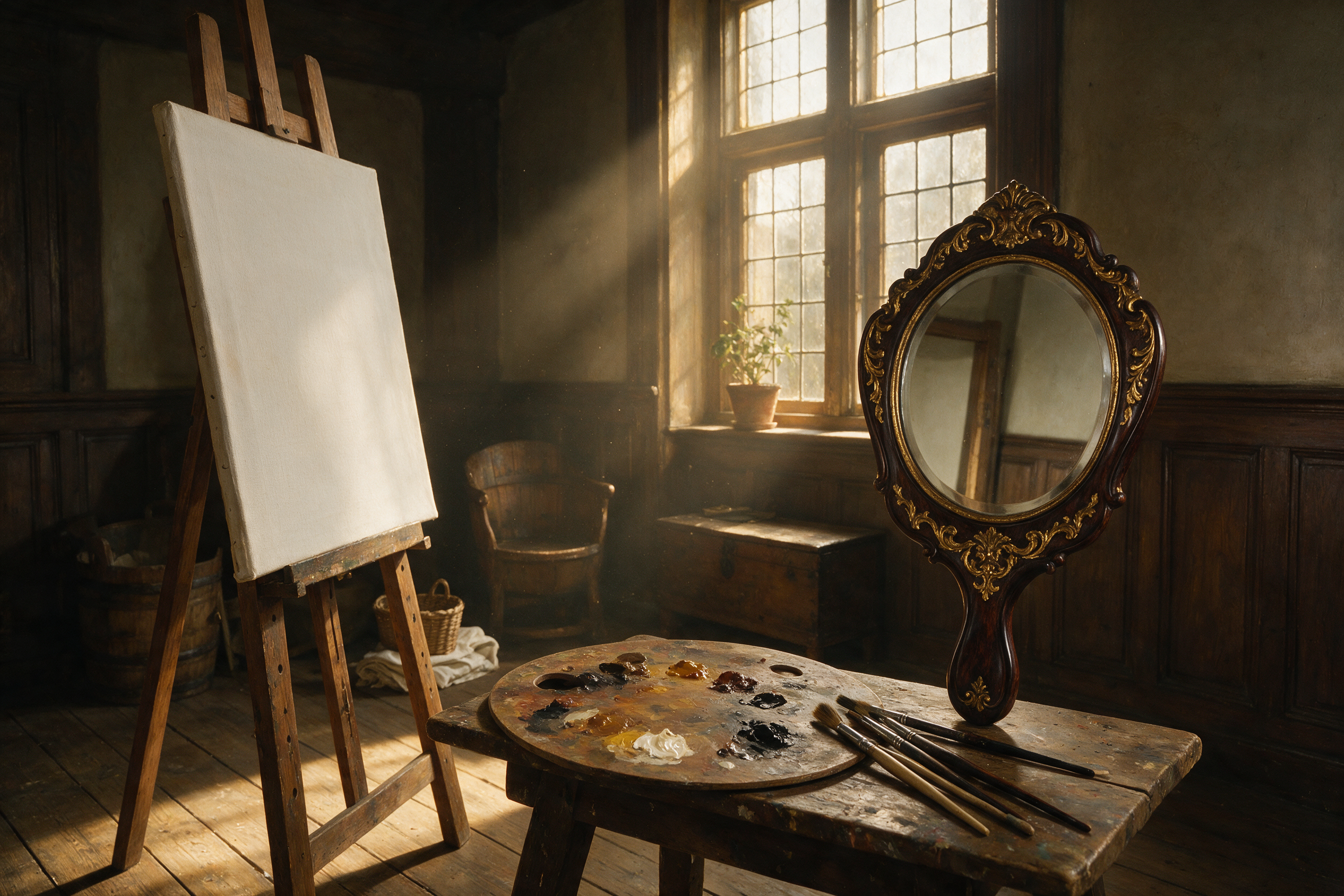
Imagine an Amsterdam painting workshop with several easels, prepared canvases, drawings to study, and pupils trying to make light behave like their teacher's light. It is a more useful starting point than the familiar image of Rembrandt alone before a masterpiece. His originality was real. So was the crowded professional world in which painting was taught, made, and sold.
Old Master is a later label, not a job title those painters used. Workshops differed across cities, periods, and personalities. A large Antwerp operation, a small Dutch studio, and an Italian apprenticeship cannot be reduced to one organizational chart. Yet their shared combination of training, labor, and reputation helps explain objects that museums now present as individual works.
Learning began with materials
Boys often entered apprenticeships while young, under arrangements made with families or guardians. They learned a trade rather than enroll in an abstract course on artistic inspiration. Fees, board, length of service, and expectations varied. Some arrived with earlier training; others had to begin with the practical business of making a painting possible.
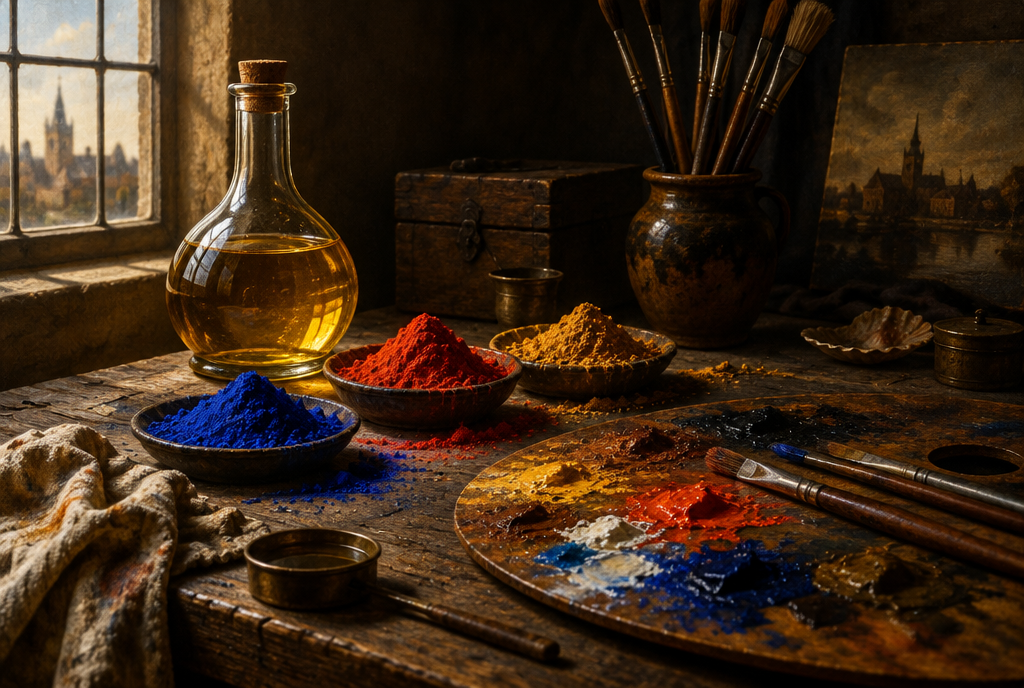
Grinding pigments, preparing grounds, handling brushes, and understanding supports could form part of that education. Panels needed suitable preparation, while canvas had its own requirements. These tasks were not merely punishments before the real art began. Knowing how a surface and paint behaved affected the durability and appearance of everything placed on it.
Specialist suppliers also existed. It would be wrong to imagine every seventeenth-century pupil spending every morning making all the studio's materials from scratch. Workshops bought prepared goods as well as preparing their own. Our account of how oil paint changed art shows why the material choices themselves mattered to what painters could achieve.
Copying was a method, not an embarrassment
Drawing and copying taught pupils to see and reproduce a master's decisions. A student might study prints, drawings, paintings, or an established composition before inventing one independently. Copying trained the eye and hand together. It also gave the teacher a clear comparison: the pupil's version revealed which relationships had been understood and which remained mechanical.
Learning a style involved more than matching colors. Pupils studied how a figure stood, how a face emerged from shadow, and how a composition directed attention. In Rembrandt's circle, a student could absorb his approach to biblical narratives and expressive faces without copying a single painting exactly. That makes resemblance informative, but not decisive, when scholars ask who painted an object.
A successful pupil eventually needed an individual career. Some maintained a strong resemblance to the teacher; others moved towards a different market or a different manner. Training under Rembrandt did not make every subsequent picture a workshop product. Artists such as Ferdinand Bol and Govert Flinck developed independent reputations, and their relationship to the master changed over time.
Who painted which part?
In some large workshops, skilled assistants or journeymen contributed backgrounds, costume, drapery, or specialist passages. A master might design the composition, supervise its execution, and add important faces or finishing touches. Such arrangements allowed a busy business to deliver more work than one pair of hands could produce alone.
That division is a useful model, not a universal formula. It is especially misleading to assume that every Rembrandt picture follows a rule in which pupils painted the clothes and he painted the face. The degree and nature of collaboration must be established for particular works. Training copies, independent pupil paintings, and jointly executed commissions are different categories.
The size and complexity of a commission could create logistical demands without proving who made each brushstroke. Even The Night Watch, often encountered as an emblem of individual genius, belongs to the world of patrons, civic institutions, and studio practice. Asking about that world adds context; it does not license confident attribution by guesswork.
Rembrandt's Amsterdam classroom
Rembrandt attracted pupils willing to pay for instruction. His workshop offered access to a successful painter's methods, collection, and professional standing. The pupils were not all raw beginners. Some had studied elsewhere and came to refine their work with a sought-after teacher, which complicates any picture of a single ladder from pigment grinding to finished portrait.
His teaching encouraged close study of his work and visual language. Students produced images whose lighting, subject matter, and handling could resemble his own. Their efforts might be accomplished paintings rather than visibly inferior exercises. Later viewers who equate quality with authorship can therefore face an uncomfortable discovery: a beautiful picture need not be by the person whose name once made it valuable.
Faces offer a particularly revealing example. Rembrandt's own studies, pupils' exercises, and imagined figures can occupy nearby visual territory. Our article on why Rembrandt painted so many self-portraits explores the range of purposes behind repeated faces. A familiar expression is not a passport proving that every surrounding stroke came from the same hand.
The guild and the business
Guilds, often named for Saint Luke, regulated aspects of artistic practice in many cities. Membership, training, the right to establish a business, and selling arrangements could fall within their rules. Regulations were local, not a single Europe-wide system. Artists also worked within markets and networks that did not fit neatly inside a guild's ideal description.
The master's name had commercial value. Pictures associated with a successful studio could circulate as workshop products, versions, or copies, and later sales descriptions might blur distinctions that matter to us. It is unsafe to assume every copy was deliberately passed off as an entirely autograph masterpiece. The original transaction and later attribution history are separate questions.
A signature does not settle them. Signatures can be added, altered, or understood differently across contexts, and an unsigned work can still be authentic. Scholars combine provenance with visual examination and technical evidence. Supports, grounds, changes beneath the surface, and relationships to other versions can help explain how a painting was made without necessarily identifying every contributor.
A better question than real or fake
Is it a real Rembrandt collapses several questions into one. Was the painting made in his lifetime? In his workshop? From his design? With his participation? By a pupil working independently? A modern forgery belongs to a different category from an honest seventeenth-century copy. Losing an attribution does not erase a painting's history.
MindSnap is our app, and Rembrandt's Shadow follows this wider world of ambition, technique, and attribution. Its Turning Points feature invites decisions before revealing outcomes. The point is not to replace scholarship with a guessing game. It is to make the choices behind an artwork visible. A workshop picture can tell a rich story even when one celebrated name is no longer the whole answer.
Frequently asked questions
One snap tomorrow morning.
Two minutes in art, history, psychology, philosophy or economics, then the app tells you you're done.
Get MindSnap on iOSFree daily fact, forever. Pro is $9.99/month or $44.99/year.