History's Greatest Hoaxes: Why Smart People Fell for Them

Curiosity Columnist
Last updated: August 2026
7 min read
TL;DR
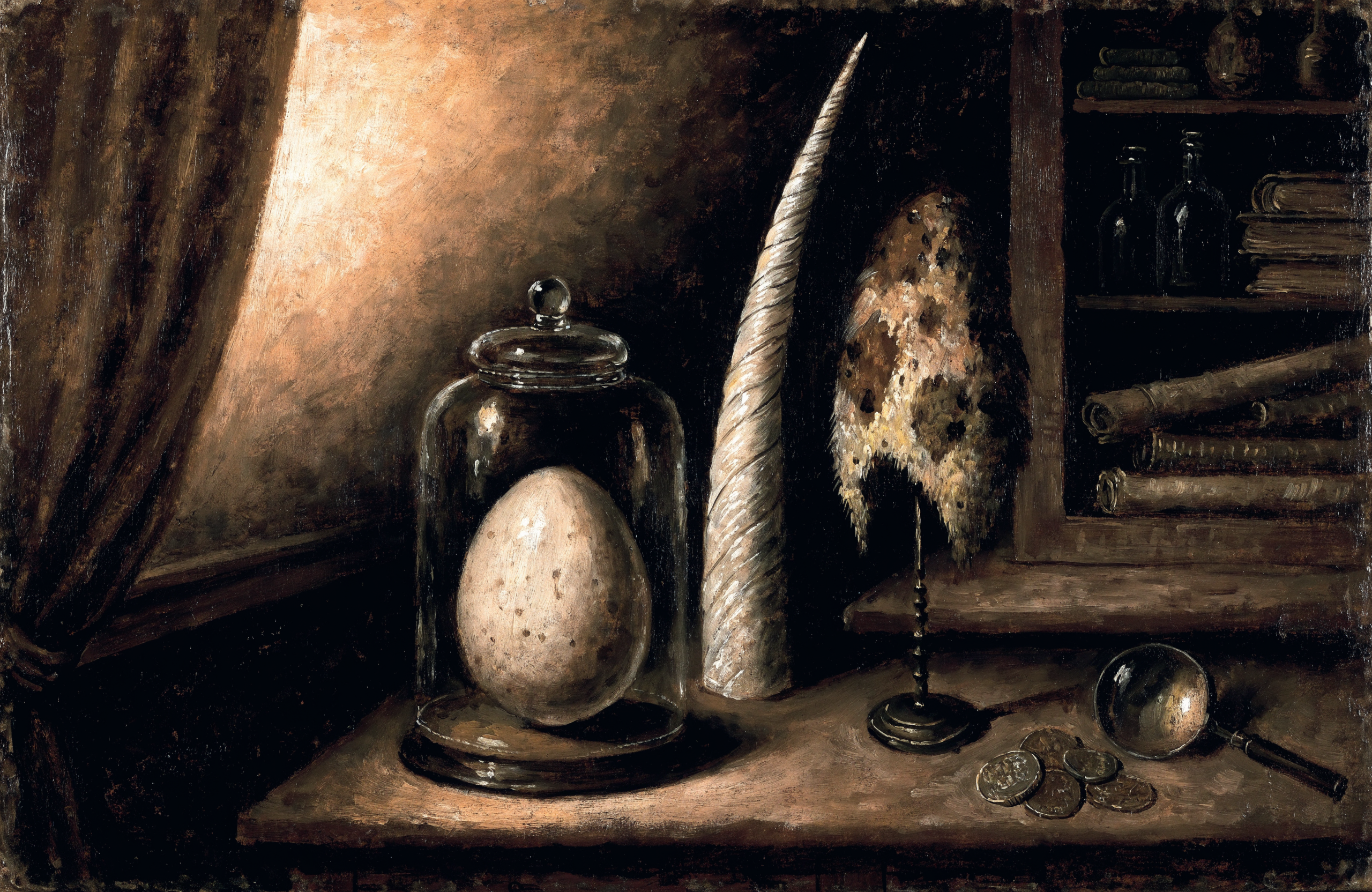
The best hoaxes are not clever forgeries. They are answers to a question the audience was already asking. Piltdown Man survived four decades because it gave British science the early human ancestor it wanted on British soil. The Cardiff Giant drew paying crowds partly because a petrified biblical giant fitted a widely held reading of scripture. The Mechanical Turk beat opponents across Europe for decades because nobody would accept that a person was hidden inside a cabinet everyone had watched being opened. The Great Moon Hoax of 1835 filled a New York paper with lunar bat-people attributed to a real and respected astronomer. The Fiji Mermaid was a monkey and a fish sewn together and presented with paperwork. In each case expertise narrowed the blind spot without closing it, because the thing that gets past a specialist is the thing that confirms what they already believe. The takeaway is curiosity, not cynicism: enjoy the wonder, ask who benefits, and keep one eyebrow raised.
There is a comforting way to read the history of hoaxes, which is that the victims were gullible and we would have known better. It is also wrong. The people fooled by the cases below included professional scientists, newspaper editors, chess champions and at least one emperor. What they had in common was not stupidity. It was wanting the thing to be true.
Here are five well-documented classics, each with the tell that eventually undid it.
Piltdown Man, 1912
In 1912 the amateur antiquarian Charles Dawson announced fossil fragments from a gravel pit at Piltdown in Sussex: a skull with a modern-looking braincase and a distinctly ape-like jaw. It was presented as the missing link, and it was British.
That last part carried more weight than it should have. Major hominin finds were emerging from continental Europe, and here at last was an ancestor on English soil, arriving conveniently in the sequence prevailing theory expected, with a large brain appearing early.
The tell was that Piltdown got lonelier every year. As genuine fossils accumulated from Africa and Asia, they described a pattern in which the jaw modernised before the skull, and Piltdown was the reverse. It fitted nothing. In 1953 a team including Kenneth Oakley, Joseph Weiner and Wilfrid Le Gros Clark applied chemical dating and close examination and found a medieval human skull paired with an orangutan jaw, with filed teeth and staining to match the gravel. Nobody has ever conclusively established who did it.
Forty one years. Not because the forgery was brilliant, but because for the first two decades almost nobody with access wanted to test it hard.
The Cardiff Giant, 1869
Workers digging a well behind a barn in Cardiff, New York, uncovered a three metre stone man. Its owner, William Newell, put up a tent and charged admission, and thousands came.
The figure had been commissioned by Newell's relative George Hull, carved from Iowa gypsum, aged with acid and buried a year earlier. Hull, an atheist, said he was provoked by an argument with a preacher about the biblical line that there were giants in the earth in those days. The audience that most wanted the giant to be real was primed by scripture to expect exactly that.
The tell was arrival, not anatomy. Geologists pointed out that nobody digs a well where there is no water and that the surrounding soil showed no sign of a body having lain there for millennia. Yale's Othniel Marsh called it a decided humbug. P. T. Barnum, refused a sale, had a copy carved and exhibited his own, which produced the delicious spectacle of two fake giants and a lawsuit.
The Mechanical Turk, 1770
Wolfgang von Kempelen unveiled a chess-playing automaton at the Habsburg court in 1770: a carved figure in Ottoman dress seated at a cabinet, moving pieces with a mechanical arm. It toured Europe and America for decades under Kempelen and later Johann Nepomuk Maelzel, and it won most of its games. Benjamin Franklin is reported to have played it. So, by tradition, did Napoleon.
There was a strong human chess player inside, working from a sliding seat with a pegboard duplicate of the position and levers to drive the arm. The cabinet's doors were opened before each performance, but the interior was partitioned and the operator moved as the doors did.
The tell was in the pattern of secrecy rather than the mechanism. Observers noticed that the machine required a lengthy setup, that the operator hovered nearby, that the candle arrangement was oddly specific, and that its play had the texture of judgment rather than routine. Edgar Allan Poe published an essay in 1836 arguing from this sort of evidence that a human must be inside, and detailed accounts after the machine's destruction by fire confirmed the arrangement.
The deep reason it worked is that the audience had no accurate intuition for what machinery could and could not do. Faced with a cabinet doing something impossible, they revised their sense of mechanics rather than suspecting the furniture.
The Great Moon Hoax, 1835
In August 1835 the New York Sun ran a series describing extraordinary discoveries on the Moon: forests, beaches, bison-like animals, temple-like structures, and winged people the articles called man-bats. The reports were attributed to the astronomer Sir John Herschel, working from an observatory at the Cape of Good Hope, and presented as extracts from a supposed scientific supplement.
Herschel was real, prominent, and genuinely observing from southern Africa at the time, which is what made the frame plausible. He had nothing to do with the articles and was reportedly amused, then annoyed. Circulation rose sharply.
The tell was straightforward and slow to be applied: no other publication had the story, no journal carried the paper, and the described telescope was well beyond anything then built. The series was never formally retracted with much energy, and it is a permanent lesson that a borrowed authoritative name will carry material no reader has independently checked.
The Fiji Mermaid, 1842
P. T. Barnum exhibited a dried creature with the upper body of a small primate and the tail of a fish, presenting it as a mermaid taken near Fiji. It was a composite, of the type made by craftsmen in Japan and the East Indies, and Barnum had it on loan from Moses Kimball.
The presentation is the interesting part. Barnum ran newspaper letters from an invented naturalist, exhibited the object in dim conditions with a period of controversy engineered in advance, and let visitors argue their way into buying tickets. He was selling the dispute more than the object.
The tell required no expertise at all: the join. Anyone permitted to inspect it closely could see two animals joined, which is precisely why close inspection was not encouraged and the lighting was poor.
The thread running through all five
Each hoax was built to fit an existing belief. A British ancestor for a scientific establishment that wanted one. A biblical giant for readers who expected giants. A thinking machine for an audience with no way to judge machinery. Lunar life for a public gripped by astronomy. A mermaid for a century collecting curiosities from places most readers would never see.
This is why expertise helps less than we assume. A specialist has better tools and a narrower field of view, and the thing that slips past them is the thing that agrees with the framework they work inside. Piltdown fooled scientists precisely because it was scientifically fashionable. The Cardiff Giant fooled the pious more than the geologists, who were unconvinced almost immediately.
The related trap is that a story repeated often enough becomes furniture, which is how so many misattributed lines survive. We collected some of the most durable in famous quotes nobody actually said. And the sensation of already knowing something you have never checked is the illusion of knowing, which is the same feeling that lets a hoax pass without a question.
Crowd behaviour matters too, though it is easy to overstate. The story of tulip mania is a good corrective: the legend of a whole nation ruined by flowers is itself substantially a later moral fable, which makes it a hoax about a bubble rather than simply a bubble.
Curious, not cynical
The wrong lesson from all this is to believe nothing. Reflexive disbelief is as lazy as reflexive belief, and it costs you the genuinely astonishing things, of which there are many. The Mechanical Turk was a fraud, and the automata built in the same era that wrote and drew really did exist.
A few habits keep wonder intact without leaving you an easy mark.
- Ask who benefits, and how. Admission fees, circulation and reputation are all motives, and they were all present in these cases.
- Notice when a claim flatters you or your side. That is the moment your standards quietly drop.
- Look for independent confirmation, not repetition. Twenty papers reprinting one source is one source.
- Ask what would settle it. If the answer is a simple test that has never been run, ask why not.
- Be suspicious of restricted inspection. Poor light, short viewings and no handling are the oldest signals there are.
That mixture, delight plus one raised eyebrow, is the actual pleasure of learning a small strange thing every day. It is roughly what we aim for at MindSnap, which is our app: two minute pieces on the odd corners of history and science, five flagship story collections plus unlimited topics you can request. Have a look at topics if you want to see the range.
And if you enjoy the sensation of being the one who spots the join, that is worth practising on purpose. It is the same muscle that separates a good story from a true one.
Frequently asked questions

One snap tomorrow morning.
Two minutes in art, history, psychology, philosophy or economics, then the app tells you you're done.
Get MindSnap on iOSFree daily fact, forever. Pro is $9.99/month or $44.99/year.