Chapter 2 of 8
The doctor who learned to listen
Before the couch there was hypnosis, pressure on the forehead, and finally the simplest method of all: let the patient talk, and do not interrupt.
2 min read
Sigmund Freud was born in 1856 in Freiberg, Moravia, and brought to Vienna as a small boy. He trained as a doctor at the university and spent his early research years in Ernst Brücke's physiology laboratory, working on nerve cells and the nervous systems of fish. His instincts were those of a laboratory scientist: look closely, describe exactly, look for mechanism. He would keep that vocabulary for the rest of his life, which is part of why his later work sounded more scientific than its evidence allowed.
He went into private neurological practice because research paid too little to marry on. That put him in front of the patients nobody could explain. In 1885 he spent several months in Paris with Jean-Martin Charcot, the most famous neurologist in Europe, who demonstrated at the Salpêtrière hospital that hysterical symptoms could be produced and removed under hypnosis. The demonstrations were theatrical and, later critics argued, partly shaped by suggestion. Their effect on Freud was decisive anyway: if a symptom can be switched off by words, its cause is not only in the tissue.
The clinical starting point came from a senior Viennese colleague, Josef Breuer. Between 1880 and 1882 Breuer treated a young woman he called Anna O, in life Bertha Pappenheim, whose symptoms included paralysis, disturbed vision and periods when she could not speak her native German. Breuer found that when she described the circumstances in which a symptom had first appeared, the symptom eased. She called it the talking cure. Freud and Breuer published the case with others in Studies on Hysteria in 1895, and the phrase entered the world.
Honesty requires a footnote here. Anna O's recovery was not as clean as the published account suggests; she was treated in sanatoriums afterwards, and she went on to become a formidable social worker and campaigner in Germany, arguably more influential in her own right than in the case notes. Later historians have used her file as the first example of a habit that runs through psychoanalysis: a story told well enough to persuade, with the untidy parts trimmed.
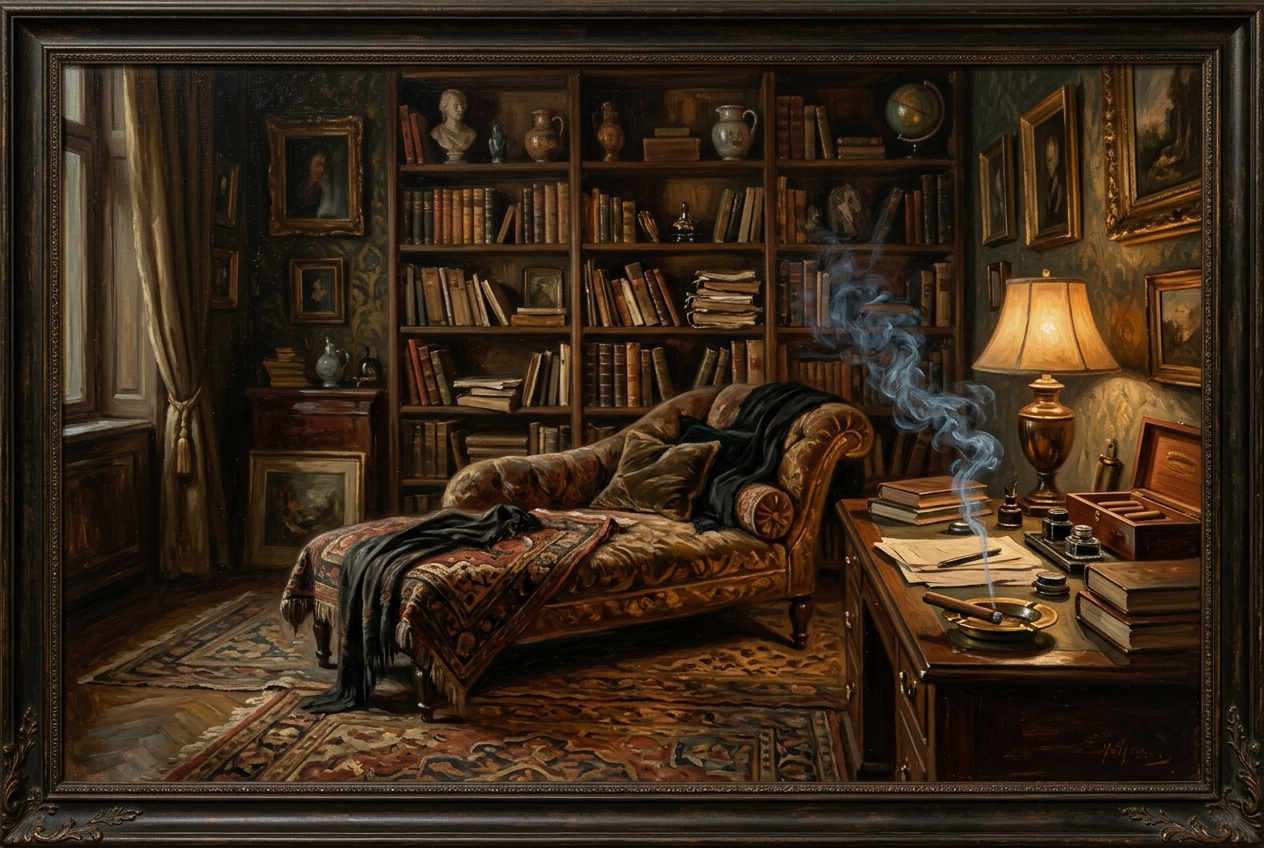
Freud's own method changed by subtraction. He found hypnosis unreliable and disliked how much it depended on the doctor's authority, so he dropped it. He tried pressing his hand on the patient's forehead and insisting a memory would come. Then he dropped that too, and arrived at free association: the patient says whatever enters their mind, in any order, without editing, while the analyst listens for what is avoided. He moved his chair out of the patient's sight, which is how the couch became furniture with a theory attached.
It was a genuinely new use of clinical time. An hour, several times a week, in which a doctor's main task was attention.
What Freud needed next was material the patient could not consciously arrange. He thought he had found it in the thing everyone produces every night.
Keep going
Liked making the call?
MindSnap delivers a 2-minute turning point like this every day, plus a lesson, a quiz and a daily fact.
Free daily fact · price shown up front · cancel in one tap